
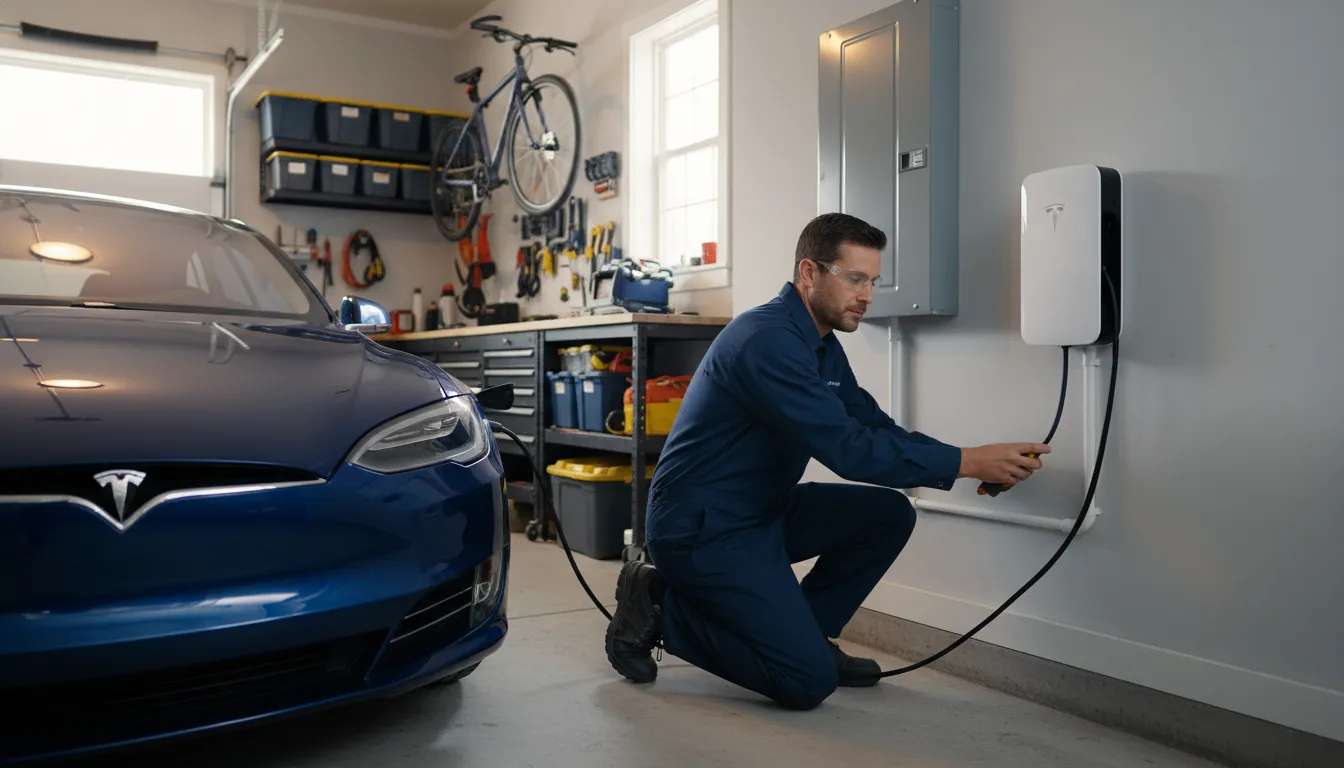
A Tesla Wall Connector can expose a DFW home’s electrical limits before the first overnight charge. Safe installation starts with panel capacity, not garage convenience.
Tesla charger installation near me should begin with a local licensed electrician checking your panel, available breaker space, and the load your home already carries. A Wall Connector adds a long-running charging load. The installer must plan a dedicated circuit, choose a useful location, and complete a load calculation before work begins. EV chargers are among the largest continuous loads on a residential panel, according to Schneider Electric, which is why panel size alone cannot confirm readiness. In DFW, TLC Electrical Services evaluates the service and charging route, explains needed changes, and installs electrical work to NEC requirements. That careful review helps protect reliable charging and the rest of your home’s electrical system.
If your search for a local installer is really a search for safe, reliable charging, the first question is whether your home’s electrical system is ready. Tesla charger installation near me starts with your electrical panel, because every sound installation decision follows its capacity. Here’s how.
Tesla charger installation near me starts with your electrical panel
Why panel capacity comes first
If you are searching for “tesla charger installation near me” in Dallas-Fort Worth, the first step is not choosing a garage wall. It is checking whether your electrical panel can serve the Wall Connector along with the loads already in your home.
EV charging is different from a brief appliance cycle. It can draw power for hours while the vehicle battery charges. An electrical load overview describes EV chargers as among the largest loads on a residential panel.
What the panel review covers
TLC Electrical includes a load calculation assessment with EV charger installation. A technician reviews the service and panel, breaker space, existing large loads, and the planned charger circuit. This check shows whether the home can carry added charging demand without overloading its electrical system.
In many DFW homes, the panel already supports air conditioning, cooking equipment, laundry equipment, and pool or shop circuits. Adding a Wall Connector changes that load picture. Homeowners planning the work can read TLC Electrical’s guide to EV charger planning guide before the site visit.
The review also helps set clear expectations. If the planned charging circuit fits the available capacity, installation planning can move ahead. If it does not, the panel concern comes first.
- Service capacity: Is there enough capacity for charging alongside the home’s regular large loads?
- Breaker and circuit plan: Is there safe space and a suitable dedicated circuit path?
- Condition concerns: Have tripping, heat, or past electrical changes raised issues to assess?
Signs your panel needs attention
A panel check is wise before installation, even when the lights seem normal. Tell the electrician about repeated main breaker trips, limited breaker space, or heat at the panel. Also mention recent additions, such as a pool pump or workshop circuit.
These details do not prove that an upgrade is needed. They tell the technician what to inspect and calculate. If existing capacity does not support the charger circuit, TLC Electrical may recommend panel work before installing the Wall Connector.
A panel upgrade recommendation is not a sales shortcut. It is a way to fit the new circuit to the home’s available capacity and required electrical work. DFW homeowners can read more about electrical panel capacity requirements while planning a charger project.
TLC Electrical explains the reason for any recommendation before work moves forward. That keeps the installation focused on a safe, practical charging setup for your home. It avoids fitting equipment to a panel that cannot support it.
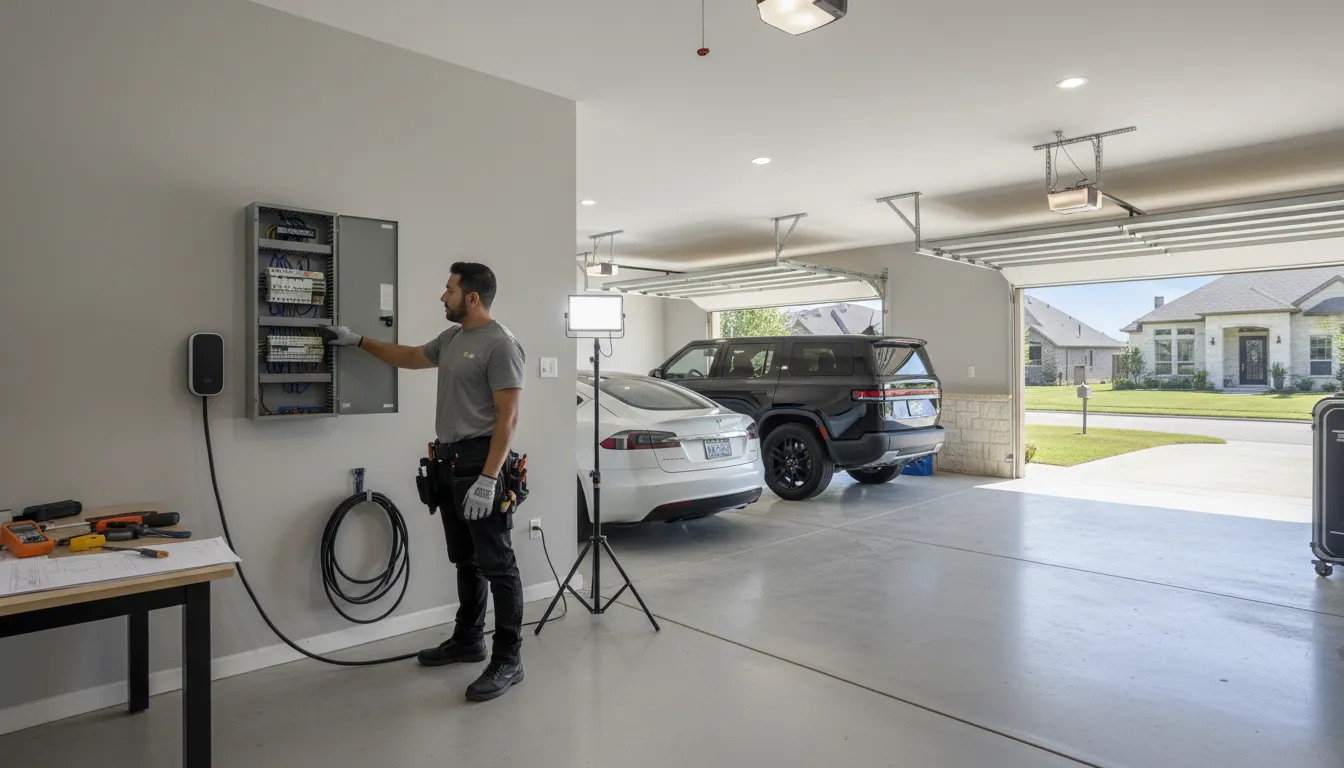
Why your Tesla charger needs a dedicated circuit
An at-home Tesla charger is not another small plug-in appliance. It can draw power for hours, so the circuit must be planned for that steady demand. An industry discussion of EV charging load demand notes that EV charging is one of a home’s large electrical loads.
A circuit reserved for charging
A dedicated circuit gives the charger its own planned path at the electrical panel. It helps keep charging from sharing a branch circuit with garage tools, freezers, or other loads. For a homeowner searching for tesla charger installation near me, this is a key question during the site check.
Breaker size is not chosen by guesswork or by the charger’s speed alone. The correct design depends on the charging equipment, wiring, panel condition, and available home capacity. A licensed electrician should review those factors before any charger is connected.
A dedicated circuit also makes the charger’s load clear during an evaluation of the panel. The electrician can compare the planned charging load with service capacity and other major loads. This keeps the recommendation tied to the home, not an off-the-shelf assumption.
Safety checks before charging
NEC Article 625 guidance covers EV charging equipment and explains that the equipment guide works with code requirements. That is why an installer checks the planned circuit and protection for the listed charger. Copying another home’s setup is not a safe plan.
When an existing panel cannot support the added demand, charging can trip the main breaker. Repeated tripping is a warning, not an inconvenience to reset and ignore. It can lead to breaker wear and extra heat, so the cause needs professional review.
Safety work is not a homeowner checklist of wire and breaker choices. Conditions can differ even in homes on the same street. Existing panel capacity, circuit condition, and the listed charger all affect the installation plan.
Licensed installation and verification
An installation visit should include a load assessment, a review of panel condition, and verification of the finished circuit. TLC Electrical includes load calculation assessments for EV charger installation and performs electrical work to code requirements. Homeowners can review home EV charger installation basics before scheduling a visit.
In a DFW home, the right plan may be a dedicated charger circuit on a capable panel. A broader electrical update may need to come first. The site assessment separates those paths and gives the homeowner a clear explanation before work begins.
During verification, an electrician checks that the completed work matches the planned charger circuit and panel assessment. The homeowner can then understand what was installed and why it fits the home’s charging needs.
Where should you place a Tesla Wall Connector?
Start with your parking routine
The right Wall Connector location begins with the place your Tesla normally parks. A short, clear charging path makes daily use easier. It also helps keep the cable away from walkways and garage traffic. Before choosing a wall, park as you do each night and note the charge port location.
In a garage, a wall near the driver’s side may fit a single parking space. A spot between two bays may serve more than one vehicle. For a driveway, start with a protected mounting area that limits cable crossings. Avoid areas where tires, gates, or lawn equipment may catch the cord.
Plan the electrical route
The parking spot is only one part of placement. Your electrician should also review the panel location and a practical path for wiring or conduit. A nearby wall may help keep the run simple. A detached garage may need a different route. The goal is a clean installation that fits the home, not a charger placed only for looks.
A Wall Connector adds a demanding load to the home’s electrical system. EV charging can draw power for hours, according to this electrical load guidance. That is why placement planning should include a load calculation before work begins. The panel, route, and final charger position need to work together.
Account for DFW homes and future vehicles
DFW home layouts vary. Some homes have a front-entry garage beside the panel. Others have rear-entry parking, long driveways, alley access, or a detached garage. An outdoor location should account for rain, irrigation spray, sunlight, and paths used around parked cars.
Think beyond the Tesla parked there today. A two-car household may later add another EV or switch which car uses the garage. Place the unit so its cord reaches the intended bay without crossing common travel paths. This choice can preserve options and help avoid changes to a finished installation later.
Homeowners searching for tesla charger installation near me often need more than a mounting recommendation. TLC Electrical’s DFW home EV charger checklist helps you prepare for the site review. A site visit can confirm the charger location, wire route, panel load, and parking pattern before work starts.
What is a load calculation for EV charger installation?
A load calculation is a review of how much electrical demand your home can handle safely. It compares available service and panel space with current equipment, then includes the planned EV charging load. If you search for tesla charger installation near me, this check should come before choosing charging amperage.
Why the calculation matters
An EV charger is not just another outlet. It can draw power for hours during a charge, so the new demand must fit the home’s existing electrical system. Industry guidance notes that EV chargers are among the largest residential panel loads because they draw power for long periods.
A careful review helps keep charging from pushing the system beyond its workable capacity. As explained in this EV load demand guidance, repeated overloads can trip the main breaker. Excess heat can follow repeated breaker trips. The goal is a safe setting your electrical system can support.
What an electrician reviews
The calculation starts with facts about the home and the charger you plan to install. During licensed EV charger setup, an electrician can explain which findings affect the circuit size and charging rate. The review follows a clear sequence:
Check the service rating and main panel to see what capacity is available for added charging demand.
List major home loads, such as heating, cooling, cooking, drying, pool equipment, and other large electrical equipment.
Review the charger’s instructions, planned location, circuit needs, and the charging setting requested for daily use.
Calculate combined demand to learn whether the charger fits the present system or requires another plan.
Select a safe circuit and charging amperage, then confirm the installation plan before work begins.
A panel label or open breaker position does not answer every capacity question. The load calculation connects the home’s service with the electrical demand already placed on it. That is why charger planning starts with the panel, not just the parking spot.
From panel capacity to charging amperage
The result guides a practical decision. If capacity supports the planned circuit, the electrician can size the installation for that charging rate. When capacity is limited, choices may include a lower setting, more electrical planning, or panel work before installation starts.
The installation plan must also account for the selected charging equipment. This Article 625 installation overview states that NEC Article 625 covers equipment for on-road EV charging. It also says the equipment guide provides model-specific instructions. A load calculation helps apply that information to your home’s available capacity.
Tesla Wall Connector vs outlet charging: what should you choose?
A Tesla Wall Connector is a fixed charging station on a dedicated home circuit. An outlet-based setup uses a compatible mobile charging cord and receptacle. Either choice starts with the same question: can the home’s electrical system carry the charging load safely?
For a DFW homeowner searching for tesla charger installation near me, the unit itself is only part of the decision. The panel, circuit route, garage layout, and local approval steps shape the right plan. A DFW EV charging installation guidance review can clarify those items before work begins.
Everyday charging fit
Wall Connector is often the simpler daily routine. The cable stays mounted where the vehicle parks, so the driver can plug in after arriving home. An outlet setup may make sense when a driver wants a removable charging cord or a less permanent arrangement.
| Decision point | Tesla Wall Connector | Outlet-based charging |
|---|---|---|
| Daily use | Mounted cable ready at parking spot | Portable cord connects at outlet |
| Installation style | Hardwired charging equipment | Receptacle and compatible cord |
| Best fit | Regular home charging routine | Flexible or temporary charging needs |
| Electrical review | Panel and dedicated circuit checked | Panel, circuit, and receptacle checked |
| Local process | Permit and inspection confirmed | Permit and inspection confirmed |
Safety and code planning
Do not select either option from convenience alone. EV charging can draw power for hours, so an installer must check available panel capacity and the planned circuit. Repeated overload problems can damage equipment and raise heat risks.
The National Electrical Code includes installation rules for electric vehicle charging equipment in Article 625. Those rules supplement the maker’s installation guide, rather than replacing it. An overview of NEC Article 625 requirements explains why the equipment guide and code both matter.
A qualified electrician should also confirm the permit and inspection path for the home. Requirements can vary by city and by the work involved. For either option, the review should cover breaker sizing, wiring path, mounting or outlet location, and safe clearances.
Which choice fits your home?
Choose based on parking habits, charging routine, and electrical readiness. Wall Connector may suit a household that charges in one parking spot most nights. Outlet charging may suit a driver who values a portable cord, once a proper receptacle and circuit are confirmed.
If a panel has limited available load, choosing a charger style does not settle the issue. The electrical plan comes first. TLC Electrical includes load calculation assessments for EV charger work. Its pre-installation checklist helps homeowners prepare site details for an electrician.
How can DFW homeowners prepare before the electrician arrives?
A search for tesla charger installation near me should lead to a safe, well-planned visit, not a guess about the work needed. Before your appointment, gather key details. Your electrician can then assess the charging spot and your home’s electrical needs.
EV charging equipment has model-specific installation needs. The installer’s guide works with NEC rules, as noted in this overview of Article 625.
What to have ready
Do not open equipment or remove the panel cover for the appointment. Useful first steps are simple: confirm what you bought and show where you park. Make access points easy to view.
- Write down the charger brand and exact model, such as a Tesla Wall Connector. Include any product guide or order confirmation you have.
- Choose where the car will park and where the charger may sit. Note needed cable reach, without planning any wiring yourself.
- Clear safe access to your electrical panel, garage wall, attic door, or other areas you expect may need review.
- Take clear photos of the panel door, breaker labels, planned charger wall, and usual parking spot.
- List Wi-Fi coverage at the parking location and any app or connection goals for the charger.
- Ask about permits, scheduling, load review, final testing, and how the finished setup will be explained.
For a detailed homeowner list, review TLC Electrical’s checklist for charger installation before your visit.
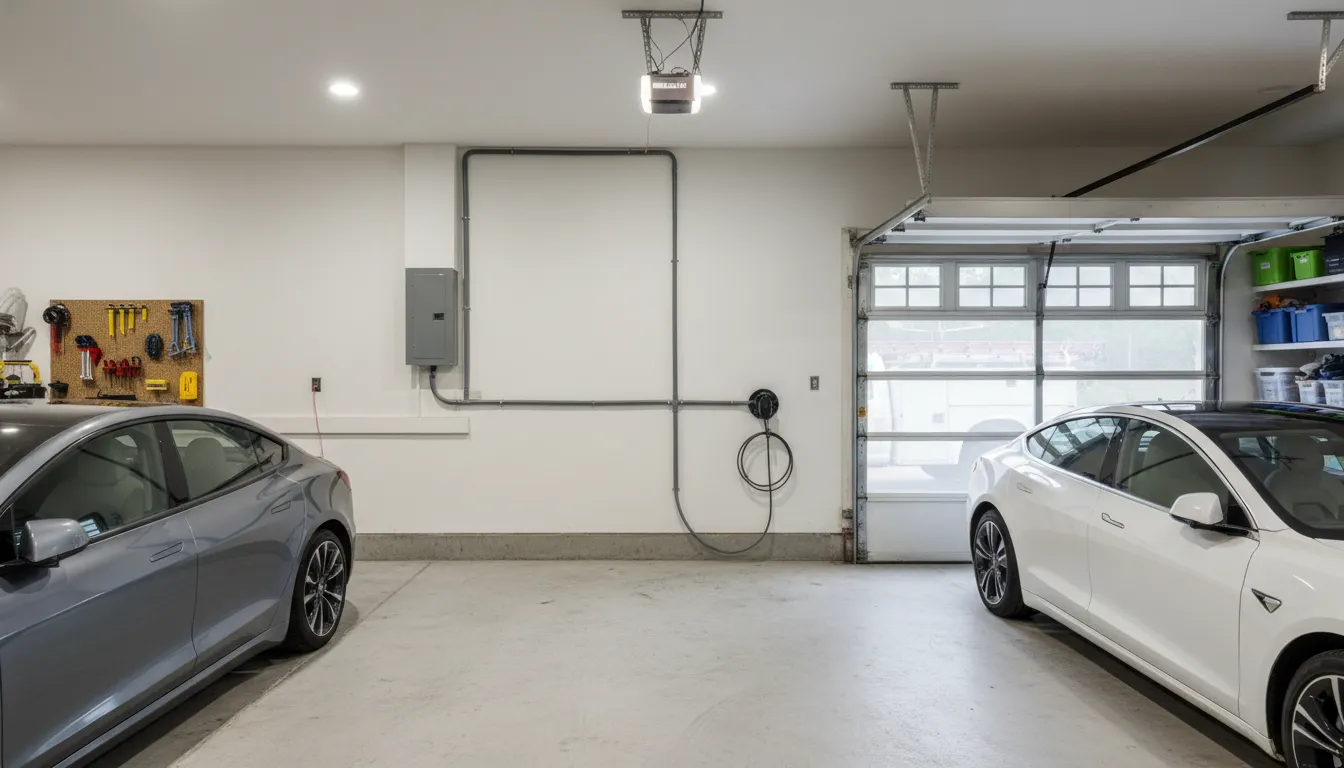
Panel and parking details
Your electrician needs a clear view of the panel and charging area. That review helps show what work fits your home and selected charger. Share whether gates, cars, stored boxes, or pets could affect access that day.
If your garage is detached or the charger is planned outdoors, point that out when scheduling. Share the panel-to-parking distance as an estimate. The technician can confirm the route during the visit.
TLC Electrical includes a load calculation assessment in EV charger installation service. Electrical work is performed to NEC requirements. Panel access and correct equipment details matter before work begins.
Questions and visit expectations
Keep questions short and specific: Will my chosen location work? Does the charger need Wi-Fi there? Will a permit or panel change be part of the plan? What should I know once installation is complete?
TLC Electrical sends licensed technicians and uses a two-hour arrival window with proactive communication. Before the visit, move obstacles. Keep an adult available to discuss the home, parking habits, and charger goals.
Why choose a licensed electrician for Tesla charger installation?
Safety starts at the panel
A Tesla home charger is more than a device mounted on a garage wall. It adds a steady electrical demand while the vehicle charges. A licensed electrician checks the panel, breaker space, wiring route, grounding, and the planned charging setting before installation begins.
That review helps match the charger to the home’s available power. TLC Electrical includes load calculation assessments with EV charger work. Homeowners who want more detail can review the company’s guide to professional EV charger installation before scheduling service.
Code and equipment requirements
EV charging equipment must be installed with care for both electrical rules and the maker’s instructions. An electrician can check the dedicated circuit plan, conductor size, breaker choice, mounting point, and cable placement. These details support safe daily use and a clean finished installation.
The National Electrical Code covers electric vehicle charging equipment through Article 625. It also works alongside the installer’s guide supplied with the charger. This Article 625 installation overview explains that relationship. For Tesla equipment, the chosen model and home setup guide the final plan.
A licensed electrician can also tell you which local approval steps may apply to your project. That keeps permit and inspection questions in view before drywall, garage layout, or panel limits cause delays.
A DFW installation team you can verify
When searching for “tesla charger installation near me,” choose a provider that can explain the electrical work clearly. TLC Electrical technicians are licensed, and the company is fully insured and bonded. The team serves DFW homeowners from its Southlake and Frisco offices.
TLC’s approach is based on clear answers, not a rushed wall mount. Your electrician can explain panel capacity, charging needs, wire routing, and any upgrade options found during the assessment. For Tesla charging at home, TLC’s EV charger installation service offers a local path from review to completed work.
A neat install should fit the garage and protect normal use of the space. That includes a sensible charger location, secured wiring, and a cable path that is simple to use each day.
Frequently asked questions about Tesla charger installation near me
How do I find a Tesla certified installer for my home charger?
Start with local licensed electricians who install EV chargers and understand residential panel capacity. Tesla also lists certified installers for homeowners who want a Tesla-specific path. In DFW, TLC Electrical can review your home, panel, charger location, and circuit needs before installation.
What is the typical cost for a Tesla wall charger installation?
Cost depends on panel capacity, charger location, wiring distance, permits, and whether your panel needs work first. A short garage run is usually simpler than a long run to a detached garage or outdoor parking area. Ask for a site-specific estimate instead of relying on a generic online price.
Do I need a Tesla certified electrician for my installation?
You need a qualified licensed electrician who can install the charger safely and follow local requirements. Tesla certification may be helpful, but the key is electrical skill, permit awareness, and load calculation experience. Do not treat EV charger wiring as a DIY project.
What electrical panel work is required for Tesla charger installation?
Some homes only need a new dedicated circuit. Others may need breaker changes, load management, or a panel upgrade before the charger can be added safely. The right answer comes from a load calculation and a panel inspection by a licensed electrician.
Ready to plan your Tesla charger installation?
Waiting to plan home charging can leave your routine tied to extra stops, uncertain charging access, and last-minute installation decisions during busy weeks. Reviewing readiness now gives you time to address panel capacity, a dedicated circuit, and charger location before charging at home matters most. A clear installation plan also helps you avoid arranging electrical work only after your vehicle and schedule already depend on it.
Ready to prepare your DFW home for convenient charging? Take the next step before installation questions slow your plans or limit your charging routine. Schedule an EV charger installation consultation to discuss your home, your preferred charger location, and practical next steps with a licensed electrician serving DFW homeowners.