
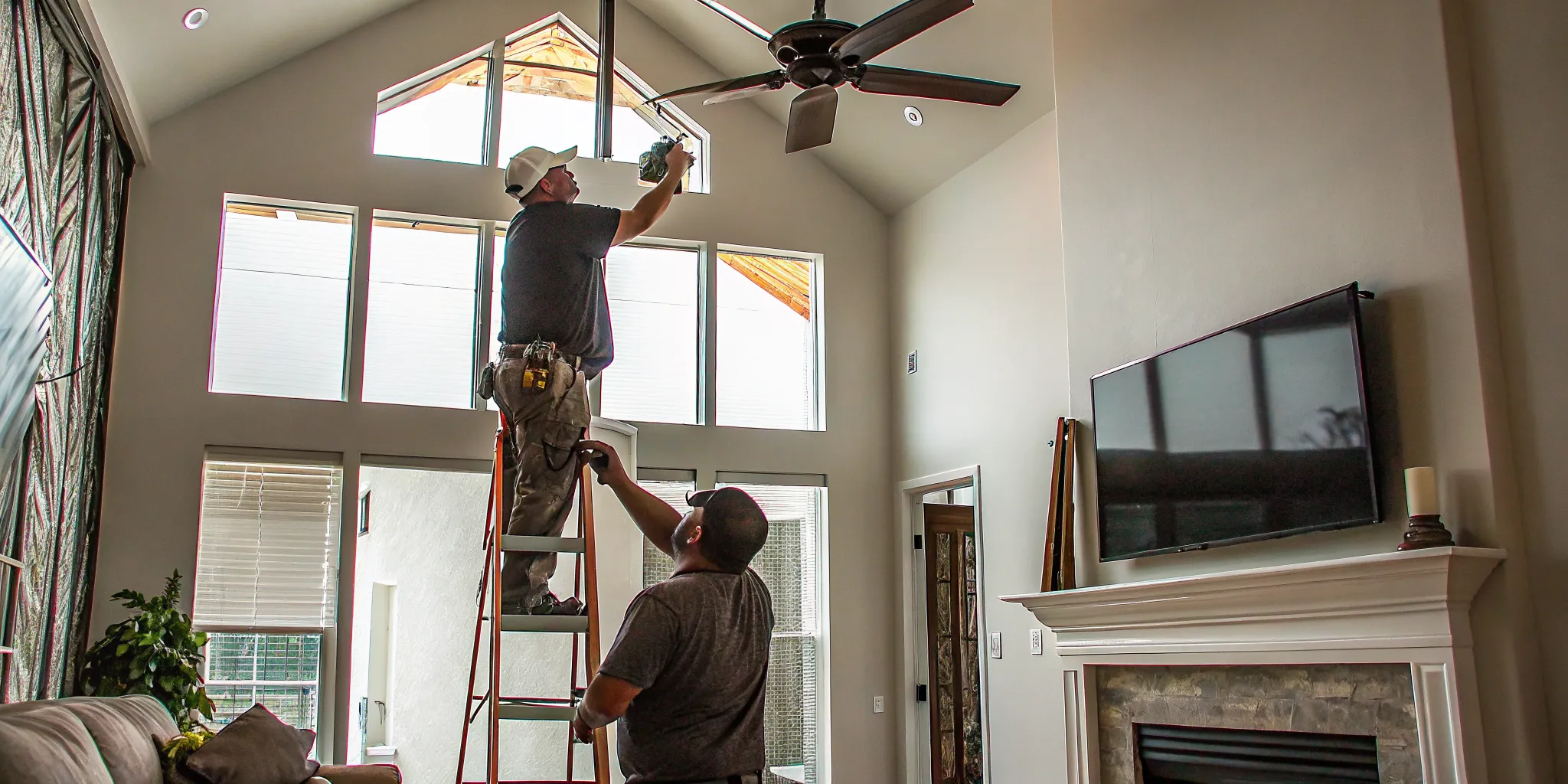
High ceilings and humid patios in North Texas make standard ceiling fan setups tricky for most homeowners. You must choose the right gear and a skilled team to stay cool and safe.
Professional ceiling fan installation DFW homeowners trust ensures that high-ceiling units and outdoor patio fans stay safe and work well. For high ceilings, a licensed pro uses long poles called downrods and special kits to hang the fan at the best height. Outdoor fans need to be damp or wet-rated to handle the Texas heat and rain without causing electrical fires or motor breaks. A pro checks that your electrical box is strong enough to hold a heavy fan so it does not wobble or fall. This expert work keeps your family safe from harm and electrical shorts while giving you the best cooling in any room or outdoor porch.
Homeowners in North Texas must plan for unique weather and local home designs when they upgrade their cooling. You need to know the specific steps for safe work in these tricky spots. The path to a safe and cool home begins with What makes ceiling fan installation in DFW different?
Ceiling Fan Installation Dfw: What makes ceiling fan installation in DFW different?
Dallas-Fort Worth homes often have unique features that change how you plan for a new fan. Our local weather stays hot for many months each year. This means fans are not just for looks; they are vital for comfort. Many homes in areas like Frisco or Plano also have open floor plans with high ceilings. These styles need a special way to plan for professional ceiling fan installation DFW to make sure the air moves well.
Managing high and sloped ceilings
Many modern DFW houses have living rooms with ceilings that reach 15 to 20 feet high. In these spaces, a fan mounted straight to the ceiling will not help much. You must use a downrod to bring the fan blades to the right level. The high-ceiling fixture installation experience of a local pro helps here. They can pick the right rod length so the fan hangs about eight or nine feet above the floor.
If your ceiling is not flat, you will also need a sloped ceiling kit. These kits keep the fan level so it does not wobble or make noise. Proper tools and tall ladders are a must for these jobs. Working at these heights can be risky for an owner to do alone. A pro can make sure the fan box is strong enough to hold the weight and shake of a large unit.
Outdoor cooling for DFW patios
Outdoor living is a big part of life in North Texas. Many people have covered porches or sunrooms where they want to stay cool. But you cannot use just any fan in these spots. Fans for outdoor patios must have a damp or wet rating to handle our damp air. A damp-rated fan works for covered areas that do not get direct rain. If the fan might get hit by water, it must be wet-rated to prevent shorts.
Choosing the right motor is also a smart move for local homes. Some high-power fans use brushless motors. These motors stay cool and use less power, which is great during a long Texas summer. You can find more about energy-saving standards through the EPA Energy Star program. These fans help lower your power bills while keeping your patio breezy.
Staying safe and up to code
Local building codes in the DFW area are strict for a good reason. Bad wiring can lead to fires or shocks. It can also cause the fan to fall, which is risky. A study on ceiling fan injuries shows that bad setups can cause serious head trauma. Hiring a licensed team makes sure your home stays safe and follows all local rules.
A pro will check your existing circuits and electrical boxes. Most old boxes cannot hold the weight and shake of a moving fan. They may need to swap your old box for a fan-rated one that can handle the load. They also offer comprehensive lighting installation services if you want to add a light kit to your fan. This full approach keeps your home bright, cool, and safe.
Start with a fan-rated box and solid support
Before your professional ceiling fan installation DFW, check the box in your ceiling. A standard light box is often too weak to hold a heavy fan. Normal boxes are not made to hold the weight and shake of a spinning fan. Using the wrong box can cause the fan to wobble or even fall. This is why a fan-rated box is a must for any new fan setup.
What is a fan-rated box?
A fan-rated box is a strong metal or plastic box built to hold a fan’s weight. It can take the weight and the shake from the motor. These boxes have a mark to show they are safe for fans. Many of these boxes can hold fans that weigh 70 pounds or more. Proper box setup is needed for fans to hold the unit’s weight and shake, mainly for big or heavy fans.
If you live in an older house, you might need a new box. Putting fans in old homes often means you must swap the wires or the box to meet new rules. This helps you stay safe and keeps your fan working well for a long time. Licensed teams at TLC make sure your home meets local codes during comprehensive lighting installation services.
Signs you need a new support box
You can often tell if your box is not right for a fan. If a fan shakes a lot when it is on, the box or the mount might be loose. A box that is not fan-rated will not have the right screws to hold the fan part. If you see cracks in the ceiling near the box, it could be a sign of too much stress. Poorly fixed fans are a safety risk and can lead to big harm over time.
Safety is the most vital part of any job with wires. Poor fan setup can lead to bad hurts, like head harm, if the fan falls. Data shows that fan hurts can range from small cuts to skull breaks in severe medical cases. To avoid these risks, always use a fan-rated box and a solid brace between your ceiling beams.
Braces and beam support
A fan-rated box needs to be fixed to a solid part of your home. Most boxes are screwed into a wood beam or a metal brace. If there is no beam near your box, you must use a fan brace. This brace fits between two beams to provide a strong base for the fan. This base keeps the fan from pulling on the ceiling board. It also stops the fan from shaking and making noise while it runs.
How do you size a downrod for a high ceiling?
Many DFW homes have tall or vaulted ceilings that make a room feel large and open. But these high spaces can also trap heat near the top of the room. To keep your home cool, you must bring the fan closer to where people sit or stand. A downrod is a metal pipe that hangs the fan at the right height. Picking the right size for this rod is key for your comfort and safety.
Find your downrod length
The height of your ceiling tells you how long your downrod needs to be. For a standard eight-foot ceiling, you might not need a rod at all. But for rooms with nine or ten-foot ceilings, a short rod helps the air move better. As the ceiling gets higher, the rod must get longer to keep the fan useful.
A good rule is to keep the fan blades between eight and nine feet above the floor. This range is the best for energy use and safe work. If your ceiling is 12 feet high, you will need a rod that is about 36 inches long. Most professional ceiling fan installation DFW teams use these rules to get the best airflow in large rooms. Using the right rod helps your fan work well without wasting power.
Clearance for vaulted ceilings
If your ceiling is sloped or vaulted, you have to think about more than just the height. The fan blades must be far enough from the ceiling to pull in air. Blades should stay at least eight inches below the ceiling. This gap lets the fan move air with ease. If the fan is too close to the ceiling, it will not cool the room well.
Sloped ceilings also need a special mount or adapter kit. These tools make sure the fan hangs straight and does not wobble as it spins. Without the right kit, a fan on a slope can become loud or even break its mount. Our team has deep high-ceiling fixture installation experience. We can help you find the right parts for any roof angle to keep your fan quiet and safe.
Safety and airflow rules
Safety is the most needed part of any electrical project. A fan that hangs too low can be a hazard for tall people or when moving items. On the other hand, a fan that hangs too high will not move enough air to keep you cool. Proper sizing keeps the fan in the “sweet spot” where it works best without being a risk to anyone in the room.
Fans that are not hung right can cause serious harm. Some medical studies show that ceiling fan injuries can range from small cuts to head trauma. Making sure your fan is tight and level is the only way to avoid these risks. For any high-ceiling job, it is best to use a licensed pro who knows the local DFW codes. This makes sure your home stays both cool and safe for years to come.
Choose the right fan rating for a DFW patio
Picking the right fan for your yard is a key step for any ceiling fan installation DFW job. In North Texas, heat and moist air can wear down standard indoor fans fast. You must check the UL rating on the box before you buy a new unit. This mark tells you if the motor and blades can handle the local weather. Using an indoor fan on a porch can lead to bent blades and fire risks. It is best to work with pros who offer professional ceiling fan installation DFW. They make sure your new fan meets all local safety rules and stays level.
The DFW area sees high heat in the summer and damp air in the spring. This mix can rust the metal parts of a standard fan. If the fan blades are not made for the outdoors, they will sag over time. Sagging blades do not move air well and can throw the motor out of balance. This leads to loud noise and a shorter life for the fan. Our team at TLC helps you pick fans that stand up to the Texas sun. We ensure your outdoor living space stays cool and safe all year long.
Damp-rated fans for covered spaces
Damp-rated fans are built for areas that have moisture but no direct rain. These are great for screened porches, sunrooms, or patios with a solid roof. The parts are made to stop rust and keep the motor dry in damp air. They use seals to protect the wiring from the humid DFW air. But they cannot handle a direct spray from a garden hose or heavy rain. If your patio has a full roof, a damp-rated fan will move air well and stay safe for years. These fans often match your full lighting installation services to give your home a clean look.
Wet-rated fans for open areas
Wet-rated fans are the toughest choice for outdoor living. You need these if the fan will be in a pergola or on a deck with no roof. They can handle direct rain, snow, and even a wash with a hose. The motor case has tight seals to stop power shorts and keep water out. Using the wrong fan in a wet spot is a big safety risk for your home. Studies on ceiling fan injuries show that poor setup or the wrong gear can lead to bad hurts. A wet-rated fan keeps your family safe while cooling your yard.
You may also want to look for the Energy Star mark on your new fan. The EPA sets high rules for fan power use to help homeowners save. These fans use better motors and sleek blade shapes to save you money on power bills. Picking a wet-rated, sleek fan is a smart way to fix up your DFW home. Our team can help you find the best model for your space. We handle the wiring and the mount so you can just relax and enjoy the breeze.
| Fan Rating | Best Location | Moisture Limit |
|---|---|---|
| Dry Rated | Living rooms or bedrooms | No moisture or damp air |
| Damp Rated | Covered porches or sunrooms | Damp air but no rain |
| Wet Rated | Pergolas or open decks | Direct rain and hose water |
Which wall control or remote setup works best?
Choosing the right way to run your fan makes a big change in how you use your room. While pull chains are simple, modern setups offer more ease and better looks. Many people now choose wall switches or small remotes to manage speed and light levels without reaching up. A professional ceiling fan installation DFW expert can help you decide which system fits your wiring and your daily habits best.
Wall controls and smart options
Wall controls offer a clean, central way to run your fan and light. They stay in one place, so you never have to search for a lost remote. These switches can often dim lights and change fan speeds with a single touch. For even more ease, smart controls let you run your fan from a phone or by voice. Wall controls for ceiling fans offer easy, central use compared to pull chains, which helps keep your space safe and tidy.
If you have an older home, you may need to update your wiring to use a new wall switch. Some fans need two separate hot wires to run the light and the fan on their own. If your room only has one switch, a pro can often add the extra wiring needed. This ensures your comprehensive lighting installation services work exactly as you want without noise or flicker.
The ease of remote controls
Small remotes are a top choice for bedrooms and living areas. They let you change the air flow or dim the lights from your bed or couch. This is very helpful for fans on high ceilings where pull chains are hard to reach. Remote controls for ceiling fans provide extra ways to change speed and lighting without a wall switch. Most modern remotes use radio signals, so you do not even need to point them at the fan.
When you use a remote, you must make sure the receiver is wired right inside the fan. Poor wiring can lead to a weak signal or even a short circuit. Professional help is key here to make sure everything stays safe and follows local laws. Working with a licensed and insured electrician ensures your fan is put up safely and the controls work for a long time.
Wiring and match checks
Before you buy a fan, check how your room is wired now. If you want separate wall switches for the fan and the light, you usually need a three-wire setup. Many new fans come with a remote that only needs a basic two-wire link. If you plan to use a smart home system, you must check if the parts match first. Some smart dimmers do not work well with all fan motors and can cause a loud hum.
In many DFW homes, the ceiling box must be checked before a new fan goes in. Regular light boxes are often too weak to hold the weight of a moving fan. A fan-rated box is a must to keep the fan from shaking or falling. Per the EPA’s Energy Star program, choosing good fans and controls can also help lower your power bills over time.
What happens during professional ceiling fan installation?
Why you need a licensed expert
A pro ceiling fan installation DFW starts with a clear plan for safety. Our team offers a 2-hour arrival window so you do not have to wait all day. An expert checks your home to find the best spot for the new fixture. They look at your light box first. Most old boxes cannot hold the weight of a moving fan. A pro replaces it with a fan-rated box. This keeps the fan from shaking or falling. You can learn more about our professional ceiling fan installation DFW for your home.
Wiring is the next big step. A licensed pro makes sure the fan fits your power grid. They check that the circuit can handle the load. This prevents power trips and fire risks. Bad wiring can lead to a lot of harm. Studies show that a loose fan can cause head injuries if it falls. Hiring a pro ensures your fan stays on the ceiling where it belongs. We give you a clear price before we start so you know the cost.
The step-by-step setup path
Following a set path keeps the work fast and safe. Most pros use these steps to get the job done right:
- Site Check: The tech checks room size and ceiling height. They make sure blades stay at least 18 inches from walls for good air flow.
- Power Safety: The pro turns off the power at the main breaker. They test the wires to be sure no power is on before they touch anything.
- Mounting: The tech puts up a strong ceiling bracket. If the ceiling is sloped, they use a special kit to keep the fan level.
- Wiring: The pro joins the fan wires to your home’s power. They use wire nuts and tape to make tight, safe links that meet local codes.
- Blade Setup: The tech puts on the motor and the blades. For high ceilings, they use a downrod to hang the fan at the best height.
- Final Test: The tech turns the power back on to check the fan. They make sure it spins at all speeds without any noise or wobble.
Care for high ceilings and outdoor fans
Tall rooms and outdoor decks need a unique touch. For high ceilings, a pro uses ladders or lifts to reach the spot. They also pick the right downrod length. This brings the fan down so you feel the breeze. Without a rod, the air stays trapped near the roof. If the blades are too high, you will not feel the cool air.
Outdoor spaces need wet-rated fans. These fans can handle rain and heat. A pro checks that your patio fan can stand up to the DFW weather. This keeps your motor from rusting or sparking. Standard fans made for indoor use will fail fast if they get wet. Our team offers full lighting installation services for every part of your home. We make sure every fan we hang is safe and lasts for many years.
When should you call a licensed electrician?
People who own homes often try to fix ceiling fans on their own. While simple cleaning is easy, some issues need a pro. A professional ceiling fan installation DFW expert makes sure your home stays safe. Many people think they can handle the wiring, but mistakes can lead to big risks.
You should call a pro when you see signs of wear or need a new setup. Expert help stops fires and shocks in your home. Wiring is not the only risk you face. Heavy fans can fall if you do not mount them the right way.
A pro knows how to check your home’s power load. This stops power surges and trips. They also check that your home meets local safety codes. This gives you peace of mind during hot DFW summers. Safe fans keep your family cool.
Persistent wobbling and noise
A fan that shakes while it spins is more than just a bother. It can be a real safety hazard. Over time, power repairs may be needed to fix loose mounts. If a fan is not secure, it could wobble or fall.
This can lead to serious head hurts or skull breaks for those below (Source: NIH). Fixing a wobble right away is vital for safety. Strange noises like grinding or clicking also signal a problem.
These sounds often come from a motor that is off balance or has worn parts. Fixing these issues helps the motor last much longer. An expert will check the balance and tighten every part to keep it quiet.
This is the best way to avoid a full replacement later. Quiet fans help you sleep at night. You should never ignore a fan that makes loud sounds while it runs.
High ceilings and difficult locations
Some fans are hard to reach without the right tools. High ceilings in many DFW homes need extra care. Pros use specific skill to reach these spots safely. They also know which length of downrod you need based on how high your ceiling is.
This helps air move through the room in the best way. Good airflow keeps your bills low. It also makes the room feel much cooler. Outdoor fans also need a licensed touch.
Fans for porches or patios must have a wet or damp rating. This rating shows the fan can handle wet air without causing a short circuit. Using the wrong fan outside can be a fire risk.
Rain can ruin a fan that is not rated for the outdoors. The EPA and Energy Star programs track these output rules to keep you safe. Expert help ensures your outdoor fan lasts through the seasons.
Old wiring and missing support
Many older homes in the DFW area have weak power boxes. A standard box for a light is not strong enough for a fan. You need a fan-rated box to hold the weight and shaking.
If the box is wrong, the fan could pull away from the ceiling. A licensed pro will check your home’s support and wiring first. They make sure the box can handle the spinning fan.
Wiring a fan into a circuit needs careful math. If you add too much load, you might trip your breakers often. Licensed pros perform full lighting installation services to avoid these power issues.
They make sure the new fan works well with your current home panel. This keeps your lights from flickering when the fan is on high. It also keeps your home’s power stable and safe.
Frequently Asked Questions
What size ceiling fan do I need for my room?
Room size helps you find the right fan size for air flow. A small room of about 80 square feet needs a 30-inch fan. Medium rooms around 144 square feet work best with 42-inch fans. For large spaces of 300 square feet, a 52-inch fan is the best choice. This info from Berkeys ensures you get enough air movement. Picking the correct size keeps the motor from working too hard.
How far should ceiling fan blades be from the walls?
Fan blades must stay at least 18 inches away from all walls for safety. They should also hang 8 to 9 feet above the floor. If you have a high ceiling, a downrod helps move the blades to this height. Proper spacing stops the fan from hitting things and helps air move well. This setup keeps your home cool while protecting your walls. Following these rules from experts makes your fan work better.
Do I need a professional for ceiling fan installation?
Yes, you should hire a licensed electrician to install your fan. Pros check that your ceiling box can hold the weight and shake of the fan. They also do the wiring to stop fires or shocks. According to TLC Electrical Services, professional help is key for safety and code rules. Expert work stops problems like wobbling or loud noise. This gives you peace of mind knowing the job is done right.
Can I use a regular ceiling fan on my outdoor patio?
No, you must use a fan made for moisture on an outdoor patio. Damp rated fans are best for covered porches where they do not get wet. If the fan might be hit by rain, you need a wet rated fan. Using an indoor fan outside can cause a fire because water damages the motor. Experts at TLC Electrical Services say the right rating is vital for safety. This helps the fan last longer in the Texas air.
Ready to stay cool with a new ceiling fan?
Living in North Texas means dealing with high heat and sticky air for most of the year. If you wait to set up your new fan, your home will stay too warm. Your energy bills will also go up while your AC unit works too hard to cool your rooms. Putting off this task means you might try to do it yourself, which is not safe on a tall ladder. Our team can come to your home quickly to make sure your fans are safe and ready to use before the heat hits. You will get a fan that works well and stays quiet so you can enjoy your patio or living room in peace. We also help with lighting installation to make your whole home look great. Do not let the DFW heat make your home too hot when expert help is just one call away.
Ready to schedule ceiling fan installation? Call (817) 424-2684 to schedule your ceiling fan installation with our local team today.