
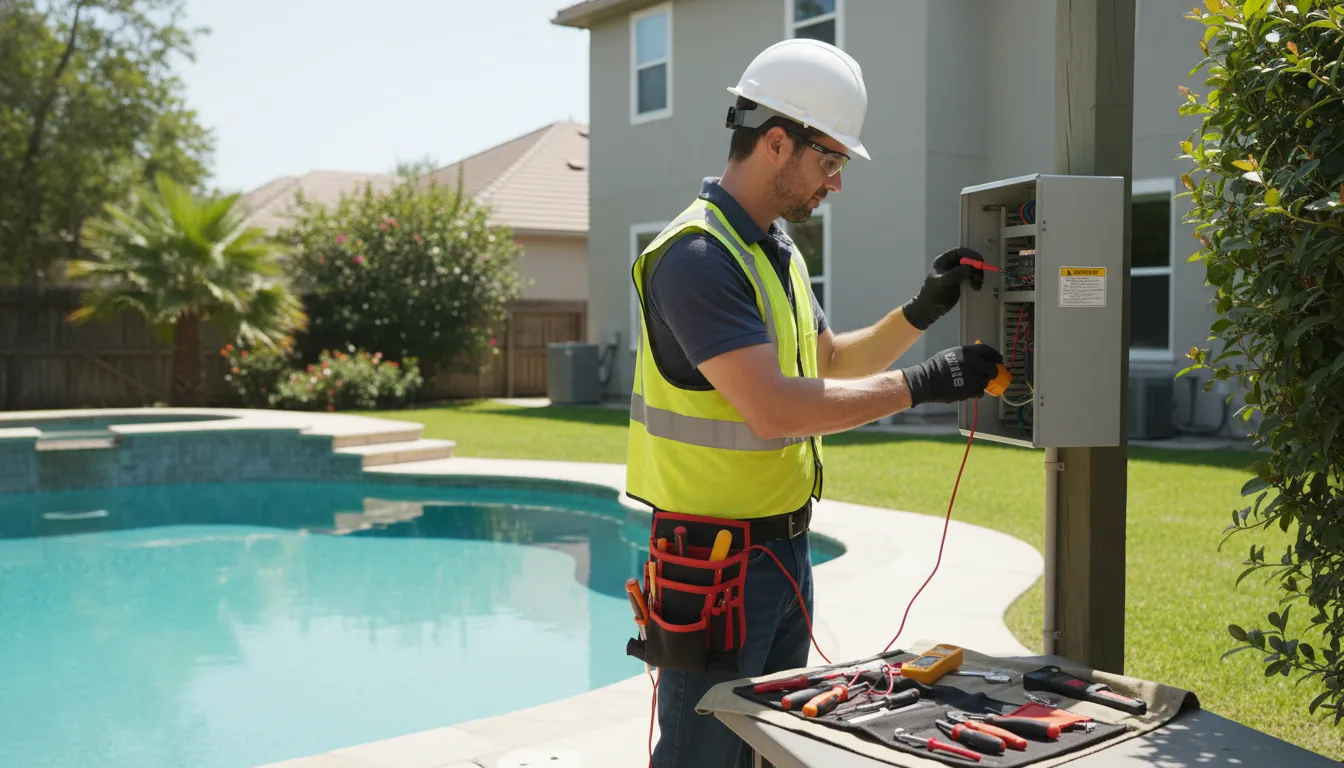
A silent pool pump or repeatedly tripped breaker is more than a summer nuisance. Near water, a possible electrical fault is a warning to stop guessing.
Pool pump electrical problems may appear as sudden no-start operation, loud humming, repeated breaker trips, flickering nearby lights, or moisture around outdoor equipment. Homeowners may check for a tripped breaker and observe sounds or visible moisture from a safe distance, without opening panels or touching wiring. Repeated trips, humming, or a dead pump can point to a ground fault, failing motor, capacitor trouble, damaged wiring, or moisture. Safety guidance states that pool electrical work should be completed by a licensed electrician, since faulty components can create electrocution risks. If a breaker trips again or the pump hums without starting, leave equipment off and schedule professional pool pump electrical repairs with TLC.
Knowing what you can safely observe, and where inspection must stop, helps protect your family and your pool equipment. Next comes “Pool pump electrical problems: symptoms homeowners can safely check,” before deciding whether TLC should diagnose the repair. Here’s how.
Pool pump electrical problems: symptoms homeowners can safely check
Pool pump electrical problems often show themselves before a homeowner knows the cause. The safe first step is observation from a dry area, not repair. Water and electricity can be deadly together, so do not touch wet equipment, remove covers, or reach into a panel.
Buncombe County pool safety guidance treats pump or motor replacement, and disconnecting or reconnecting pump wires, as electrical work. Its guidance calls for this work to be done by a licensed electrician and inspected under local requirements. Your local rules may differ, but the safety boundary is clear: watch, note, and step away.
Signs at the pump and breaker
A pump that stays silent when its schedule calls for operation is a symptom to record. First, confirm from a safe distance whether other pool features have power. You may also look at the breaker handle for an off or tripped position. Only do this if the panel area is dry and safely reached.
A breaker that trips again after being reset is not a cue to keep trying. Stop running the equipment and note what was operating when it tripped. TLC’s guide to troubleshooting a tripping breaker explains why repeated trips need careful attention.
Listen without leaning over the motor. A hum with no water movement or sudden stopping can point to a pump problem. Buzzing or operation that starts and stops can also signal a control issue. These signs help an electrician narrow the search, but do not tell a homeowner which part to touch.
Red flags around water, wiring, and controls
Look for signs you can see without moving parts or opening boxes. Red flags include a burning smell, scorch marks, melted surfaces, cracked cable covering, green corrosion, or moisture near electrical equipment. If you notice smoke, heat, or a sharp electrical odor, keep away from the equipment and arrange service.
Lights can add another clue. Pool or nearby patio lights that flicker when the pump starts may be worth reporting. So can an automation panel that is blank, shows an error, misses schedules, or switches the pump off without explanation.
Keep the check visual and simple:
- Stand on dry ground and keep hands away from equipment.
- Record whether the pump is off, humming, stopping, or making a new sound.
- Note any tripped breaker, flicker, control message, moisture, smell, or visible damage.
- Do not open panels, lift motor covers, reset a repeatedly tripping breaker, or handle wiring.
If you see these warning signs, request professional pool pump electrical repairs before using the system again. A clear note about the symptom, time, and recent weather helps the electrician assess the issue safely.
Why does my pool pump breaker keep tripping?
A pool pump breaker trips when the circuit sees a condition it should not allow. That trip may keep heat, shock, or equipment damage from getting worse. With pool equipment, water and electricity are close together, so a repeated trip is a warning. It is not just an inconvenience.
Likely causes of repeated trips
Many pool pump electrical problems begin inside the motor or along its power path. A motor under too much load may draw more current than the circuit can handle. Worn motor windings may also fail as the pump starts or runs. In either case, the breaker may trip again soon after a reset.
- Moisture or a short: Water inside wiring, a junction box, or the motor can create an unsafe fault path.
- Damaged wiring: Cracked insulation, loose terminals, corrosion, or damaged conduit can lead to a trip.
- Wrong breaker size: A breaker that is not right for the pump and circuit may trip during normal demand.
- GFCI or grounding trouble: A ground-fault trip can point to leakage current, bonding concerns, or failed equipment.
The pattern can give useful clues, but it does not prove the cause. A trip as soon as the pump starts can point toward a motor fault or short. A trip after the pump runs may point toward heat, load, or a loose connection. See TLC’s guide to troubleshooting a tripping breaker for general warning signs.
Before touching anything, look from a safe, dry spot. Note pooled water, rust, an odd pump sound, or a burned smell. These signs help an electrician narrow the cause. They do not make it safe to remove covers or handle pool wiring.
When a reset stops being safe
If the area is dry, no wire is exposed, and there is no smoke or burning smell, you may reset the breaker once. Stay clear of wet equipment and do not open the panel or motor housing. If it trips again, leave it off. Repeated resets can expose a fault without fixing it.
A qualified electrician can test the pump circuit, motor, breaker, GFCI protection, grounding, and bonding. Pool safety guidance from Buncombe County says pool pumps should be properly grounded. It also advises GFCI protection for pool power sources. The guidance calls for licensed electrical work and inspection when repairs are needed.
Call for help sooner if water has reached electrical parts, the breaker will not reset, or the pump hums and stops. Do the same if a wire looks burned or split. An electrician can find the fault without turning a poolside hazard into a DIY test. TLC provides professional pool pump electrical repairs for pump and motor issues.
Safe troubleshooting steps before you call
A safe starting point
Pool pump electrical problems call for caution because water and powered equipment are close together. Start with observations, not repairs. If you see smoke, sparking, standing water near electrical gear, or burned material, stay back. Turn the system off only from a dry, safe control you already use.
Do not open an electrical panel, remove a pump cover, test voltage, disconnect wiring, or replace a capacitor. Pool electrical work should be handled by a licensed electrician, as explained in this pool electrical safety guidance. Your notes can still help the electrician find the fault faster.
Your six-step observation checklist
Use this sequence only when the equipment area is dry and there is no sign of immediate danger. Stop at any step if you find damage, moisture, heat, smoke, or a burning odor.
Stop unsafe operation. If the pump is making a harsh noise, smoking, or near visible water, do not keep trying it. Keep people away from the equipment area.
Check the schedule and controls. Look at the timer, automation screen, freeze guard, or normal on/off control. Note whether the pump is scheduled to run, turned off, or showing an alert.
View the breaker status. From a dry and safe position, see whether the labeled pool pump breaker appears tripped or off. Do not open a panel cover or repeatedly reset a breaker.
Look from a safe distance. Check for visible moisture, rust, corrosion, melted plastic, damaged conduit, or burned marks. Do not touch wiring, motor parts, or wet surfaces.
Listen and record. Note whether the pump is silent, humming, clicking, or starting and stopping. Write down error codes on the display, without removing covers or reaching into equipment.
Record what changed. Note when the issue began and whether it followed a storm, freeze, service visit, timer change, or pool cleaning. Include any breaker status and control message you saw.
Notes that guide the service call
A clear record helps separate a setting issue from a condition that needs hands-on diagnosis. If a timer or automation display is involved, TLC’s page on pool pump control electrical issues explains why the controls matter. Do not change programming if you are not sure what it runs.
Call for help if the breaker appears tripped, a hum continues without normal operation, or you see moisture, corrosion, or damage. TLC provides professional pool pump electrical repairs for issues that require safe testing or repair. Keep your observations ready, and leave wiring and enclosed electrical parts untouched.
What you can check yourself versus what needs an electrician
Pool pump electrical problems call for a clear line between observation and repair. You can note symptoms from a dry, safe position. Do not remove covers, open a panel, or touch wiring near water. Pool safety guidance says pump and motor wiring work belongs with a licensed electrician.
Checks you can make without opening equipment
Start with what you can see or hear without handling electrical parts. Note whether the pump is silent, humming, or stopping soon after it starts. From a safe location, check whether a breaker appears tripped. If it trips again, leave it off and arrange service.
You can also record when the trouble began and whether pool controls stopped at the same time. That detail helps narrow the source of the problem. For general guidance on the symptom, see TLC’s page about troubleshooting a tripping breaker.
Where a safe check must stop
A pump area combines electricity with water, so a small-looking issue can carry real risk. A county pool electrical safety guide says pump wiring work needs a licensed electrician. The same pool electrical safety guidance lists intact bonding wires, proper grounding, and GFCI protection as key safety checks.
| Item or symptom | Homeowner-safe check | Stop-and-call sign or electrician-only repair |
|---|---|---|
| Pump has no power | Note pump status and visible breaker position. | Repeated trip, panel work, or disconnect work. |
| Humming or failed start | Listen from a safe distance and report the sound. | Capacitor testing or replacement, plus motor wiring repair. |
| Wet, damaged, or loose parts | Stay clear and note visible water or damage. | Any wiring, terminal, motor, or disconnect inspection. |
| Shock protection | Report a GFCI that will not stay reset. | GFCI diagnosis, replacement, or new protection. |
| Pool safety path | Do not touch exposed metal or loose wire. | Bonding, grounding, and panel repairs. |
Repairs for a pool and spa electrician
A capacitor, motor lead, bonding wire, ground path, GFCI, disconnect, or panel is not a do-it-yourself test point. These parts can stay hazardous even when a pump will not run. Stop if you see damaged wiring, water at equipment, or repeated breaker trips.
In the DFW area, TLC can diagnose pool and spa equipment while keeping the repair focused on electrical safety. Its professional pool pump electrical repairs cover pumps and motors. That is the right next step when safe observation does not explain the fault.
How do I fix a pool pump that hums but will not start?
A pump that hums without starting is getting some power, but the motor is not turning as it should. Possible causes include a jammed motor, a failed capacitor, low or unstable voltage, damaged wiring, or a failing motor. Turn the pump off if it keeps humming, smells hot, or trips the breaker.
What the humming sound may mean
The sound is a useful symptom, not a full diagnosis. A jammed shaft can keep the motor from turning. A failed start capacitor can also leave a motor humming at start-up. A motor with worn or damaged parts may show the same symptom.
Voltage and wiring problems can also be involved in pool pump electrical problems. A loose connection, damaged conductor, or supply issue may keep the motor from starting safely. Pool wiring requires extra care because water and electricity are close together.
Homeowners can make a few safe observations after switching the equipment off. Note whether the breaker tripped and when the hum began. Write down any heat, burnt odor, or water near the equipment. Do not remove a motor cover, open a panel, disconnect wiring, or try to replace a capacitor.
Pool electrical safety guidance identifies pump replacement, motor replacement, and disconnecting or reconnecting pump wires as electrical work. It also advises licensed electrical work for pool systems. See the pool electrical safety guidance for examples of work that needs qualified handling.
What an electrician checks before repair
An electrician starts by confirming the symptom and making the circuit safe to test. Checks may include voltage, breaker and GFCI operation, wire condition, grounding, bonding, capacitor condition, and motor response. This process separates a connection issue from a motor fault.
The technician can also compare conditions at start-up with the pump switched off. A repair choice should follow those test results. Simply trying the switch again does not explain why the motor stalled, and it may allow more heat to build.
If the breaker has tripped, leave the pump off when it trips again or will not stay reset. Repeated tripping is a sign to stop testing from the pool deck. A guide to troubleshooting a tripping breaker explains why repeated resets are not a repair.
The right fix depends on the test result, not the hum alone. It may be a corrected connection, an installed capacitor, a cleared mechanical fault, or motor replacement. For motor wiring or internal parts, arrange professional pool pump electrical repairs rather than opening the equipment yourself.
Pool controls, GFCI, bonding, and grounding issues
Controls and protective devices
Pool pump electrical problems do not always begin inside the pump motor. A timer or automation panel can keep a working pump from starting at the right time. A homeowner can note a blank display, a lost schedule, or a control that does not respond. Do not open the enclosure.
The control system may also run freeze protection and other pool equipment. TLC’s page on pool pump control electrical issues explains the role of pool and spa automation. When the pump will not follow a set schedule, an electrician can test power, controls, relays, and the motor circuit safely.
A service disconnect gives an electrician a safe point to shut off equipment during service. It is not a DIY test point. If its cover is cracked, its handle is damaged, or nearby wiring looks loose, stop using the equipment. Request an electrical inspection.
GFCI protection is meant to respond to unsafe current flow near water. Pool electrical safety guidance recommends GFCI protection for pool power sources. The same guidance states that pumps and electrical devices in a pump room should stay properly grounded at all times.
Bonding, grounding, and electrician-only repairs
Bonding and grounding serve different safety roles, and both must be intact. A bonding wire helps connect metal parts around the pool system, while grounding provides a fault path in the electrical system. Damage to either is not a cosmetic issue and should not be patched by a homeowner.
During a pool equipment check, look only from a safe distance for clear damage. Government safety guidance says the copper bonding wire at the pump should be intact, attached, and undamaged. It also says motor power wire should not be wrapped in tape or joined with wire nuts. These checks and the advice on GFCI and grounding appear in the pool electrical safety guidance.
Cold weather can expose a control failure because the pump may not run when freeze protection calls for it. TLC explains the electrical side of preventing pool pump electrical damage during cold conditions. If a freeze guard, timer, or automation control does not run the pump, do not bypass it or move wires.
Call an electrician when a GFCI will not reset or a breaker repeats a trip. Call for a damaged disconnect or missing bonding wire. The same applies to taped motor wiring, damaged grounding parts, or water inside electrical equipment. Electricity and pool water are a dangerous mix, so repairs must be tested before the pump returns to service.
What an electrician checks during a pool pump service call
A pool pump sits close to water, so an electrical diagnosis starts with safe access, not guesswork. An electrician isolates power before opening equipment or handling motor leads. Public safety guidance lists pump replacement and disconnecting or reconnecting pump wires as electrical work for a qualified professional.
Safe circuit and equipment checks
The electrician first confirms the disconnect works and the pump cannot start during testing. Next comes the breaker and GFCI protection that serve the equipment. A tripped device may be a symptom, not the cause, so repeated resets do not replace diagnosis.
With safe test methods, the electrician can check voltage at the right points and review the motor load. This helps separate a supply issue from a failing pump motor. For homeowners comparing symptoms first, TLC also explains troubleshooting a tripping breaker without asking them to open energized equipment.
The next check is the pump assembly and its connections. The electrician looks for heat damage, corrosion, loose terminals, damaged insulation, and moisture near wiring. A motor that hums or trips may call for checks of the capacitor and windings, rather than a quick part swap.
Bonding, controls, and clear repair choices
Pool equipment safety is wider than the motor itself. The electrician checks grounding and inspects the bonding connection at the pump. A county electrical safety guide says the copper bonding wire should be intact, attached, and undamaged. It also says pump room electrical devices should remain properly grounded. See the pool electrical safety guidance for these inspection points.
If the circuit feeds a timer, automation panel, relay, or freeze control, the electrician reviews that control path too. The pump may be sound while a control is not sending power as expected. TLC’s page on pool pump control electrical issues covers systems that manage pump operation.
After testing, the homeowner should get a plain explanation of what failed, what tested correctly, and what repair choices make sense. That may mean repairing wiring, replacing a faulty control, or addressing a motor issue. It should not mean replacing parts before the cause is clear.
For pool pump electrical problems in Southlake, Frisco, and the DFW area, TLC brings this safety-first diagnostic approach to the service call. TLC offers a two-hour arrival window with text updates, then explains the findings before repair work begins. Electricity near water is high risk; panel, capacitor, wiring, bonding, and grounding work belongs with an electrician.
Frequently Asked Questions
Can I use my pool if the pump breaker tripped only once?
No. A tripped pump breaker may indicate a fault involving moisture, damaged wiring, or the motor. Keep swimmers out until the equipment has been checked and safe operation is clear. From a dry location, you may note the breaker position and visible warning signs. If it trips again, smells burned, or equipment is wet, leave the pump off and arrange electrical service.
When does rain make a pool pump electrical problem urgent?
Treat the issue as urgent when rain or pooling water reaches electrical equipment, or when the pump trips, hums, sparks, or smells burned after wet weather. Keep away from wet equipment and do not reset breakers from a damp area. Water can expose damaged insulation or connections. An electrician should inspect the circuit, pump, disconnect, GFCI protection, grounding, and bonding before the system runs again.
Do I need an electrician for pool pump wiring repairs?
Yes. Replacing a pump or motor, and disconnecting or reconnecting pump wires, are electrical work involving equipment near water. The pool electrical safety guidance states that pool electrical work should be completed by a licensed electrician and inspected under applicable rules. A homeowner can record symptoms, but should not open panels, repair motor leads, replace capacitors, or handle bonding and grounding connections.
Does a pool pump control problem mean I need a new motor?
No. A pump that misses a schedule or fails to start may have a timer, relay, automation, freeze protection, power supply, GFCI, wiring, or motor issue. These symptoms cannot confirm a failed motor by themselves. Note any display message and operating pattern without opening the control panel. Electrical testing can identify the failed point before a repair or replacement decision is made.
Ready to Solve Your Pool Pump Electrical Problem?
When a pool pump electrical warning is ignored, a small concern can become a stressful interruption at the worst time. Guessing around electrical parts near water can also put your safety and pool equipment at risk. Starting with a professional inspection now gives you a clear repair plan before another trip, shutdown, or failed restart disrupts pool use.
Do not wait for a silent pump, repeated breaker trouble, or a burning smell to force a hurried decision. If your checks point beyond basic controls, stop there and let an electrician inspect the electrical system. A planned visit gives you time to discuss the symptoms and the repair scope. Ready to schedule service? Schedule a pool pump electrical inspection with TLC for clear next steps.