
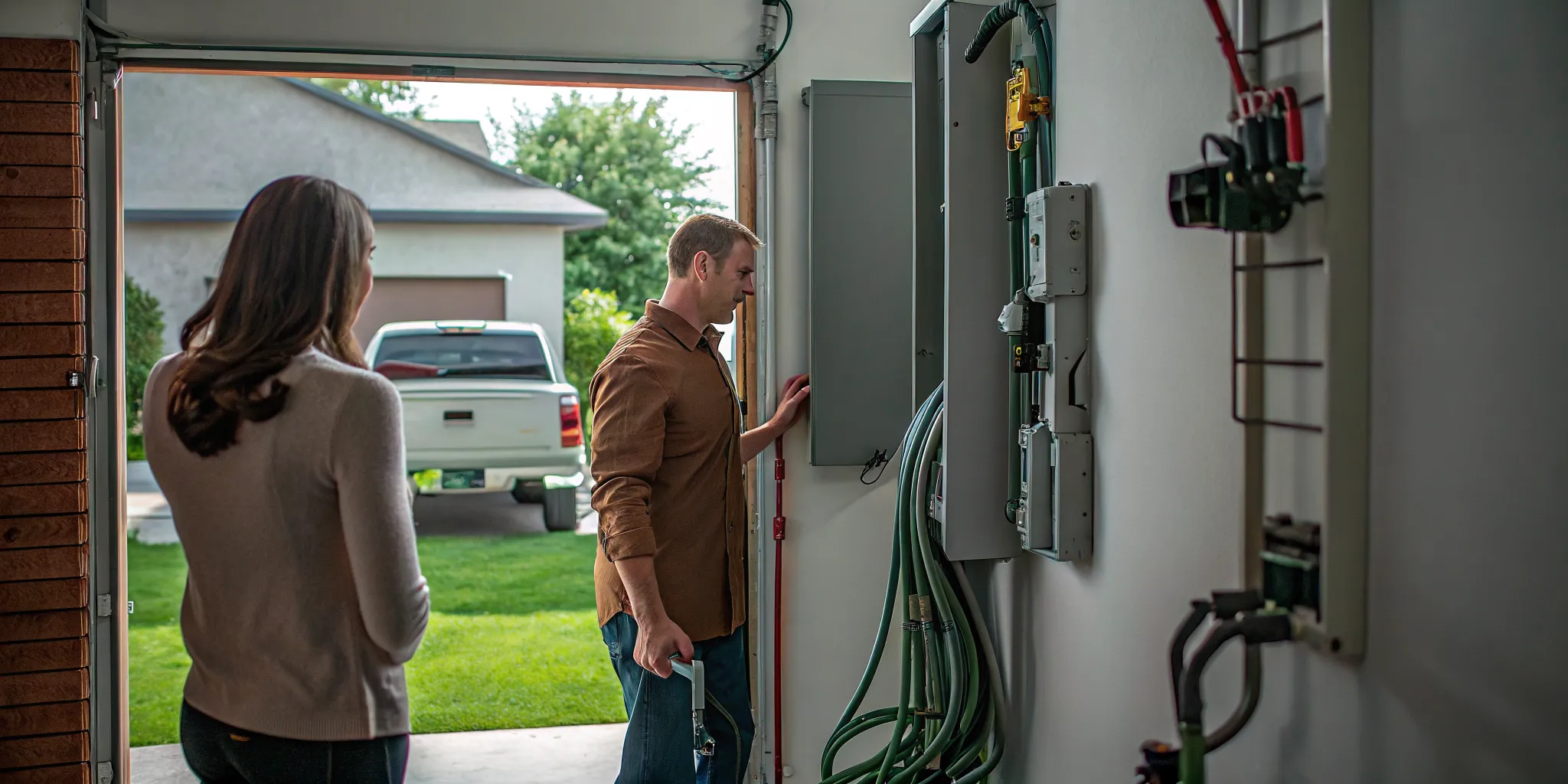
An EV charger and standby generator can push a crowded panel past its safe working limit. Planning them together keeps the lights on without leaving your car or critical circuits fighting for capacity.
Schedule service with TLC Electrical before adding backup power and EV charging so a licensed electrician can confirm panel capacity, load calculations, and transfer equipment before work begins.
Backup power and EV charging can share one electrical panel when the service, panel, and equipment are sized for the home’s calculated load. A licensed electrician must total demand, add the charger’s dedicated circuit, and decide whether the generator will power, shed, or exclude that charger during an outage. The transfer switch or approved interlock must safely isolate utility power, while load-management equipment may help a tight panel avoid running major loads at once. A 200-amp label does not guarantee enough capacity, and a 100-amp service does not automatically rule out every design. If the calculation shows inadequate capacity, outdated equipment, or no safe transfer arrangement, a panel or service upgrade may be required before installation.
The real question is not whether both systems fit on paper, but how they will perform during daily charging and a DFW outage. Backup power and EV charging start with a load calculation, because that result guides every safe equipment choice for your home. To see what your panel can safely carry, start with the load calculation below.
Backup power and EV charging start with a load calculation
An open breaker slot does not prove that an electrical service has room for another large load. The slot only shows physical space in the panel. A load calculation shows how much power the home may need when several systems run at once.
A licensed electrician starts by reviewing the service rating, panel, breakers, wiring, and major appliances. This review is a key part of installing home EV charging alongside backup power. It helps prevent a plan that exceeds the safe capacity of the service.
Existing loads and voltage
Household loads include air conditioning, electric heat, water heating, cooking equipment, dryers, pool equipment, and other fixed appliances. Smaller devices often use 120-volt circuits. Many large appliances and Level 2 EV chargers use 240-volt circuits and place greater demand on the service.
The electrician does not simply add every breaker rating together. The calculation follows code rules for the type, size, and expected use of each load. It also accounts for loads that may run for long periods and need extra capacity for safe operation.
EV charger demand
EV charger amperage matters because the charger may draw power for hours. The electrician reviews the charger’s rated output, required circuit, vehicle needs, and charging schedule. A lower charging rate or approved load management system may fit some homes without a full panel upgrade.
Other homes need more service capacity before a charger can be added. A site review can show when to upgrade your electrical panel instead of relying on its age or the number of empty slots. The answer depends on the whole home’s demand, not one device alone.
Generator size and backed-up circuits
A generator must be sized for the loads it will supply during an outage. That plan may cover essential circuits, most of the home, or a selected group of appliances. The design must also decide whether EV charging stays available, receives limited power, or remains off during backup operation.
Generator capacity does not add unlimited power to the home’s normal electrical service. A transfer switch or approved interlock must keep generator power separate from utility power. Load controls may also turn off selected equipment when demand is high.
This planning should reflect how the household expects to use power during a DFW outage. Charging an EV while cooling the home can create a different demand than running only lights, refrigeration, and a few outlets.
Key takeaway: before combining backup power and EV charging, a licensed electrician must calculate both normal and outage demand. The result guides charger amperage, generator size, circuit choices, load controls, and any needed panel work.
Can a 100 amp or 200 amp panel handle both systems?
Either panel size may support backup power and EV charging, but the amp rating alone cannot answer the question. A licensed electrician must check existing loads, breaker space, service rating, and planned equipment. The generator design also must define which circuits receive backup power during an outage.
How the two panel sizes compare
A 200 amp panel often gives a DFW home more room for a Level 2 charger and other large electric loads. Still, it is not automatic approval. Large air conditioners, electric heat, pool equipment, and other appliances can use much of the available capacity.
A 100 amp home may have less room for a dedicated charging circuit. That does not always mean an immediate upgrade is required. A load calculation can show whether the home has enough capacity or needs another plan. Homeowners can review when to upgrade your electrical panel before the site visit.
| Planning factor | 100 amp panel | 200 amp panel |
|---|---|---|
| Level 2 charger | May need load management or an upgrade. | Often has more room, but still needs review. |
| Existing home loads | Capacity can become tight sooner. | More capacity, not unlimited capacity. |
| Generator plan | Selected backup circuits may be practical. | Can support a broader plan if sized correctly. |
| Next step | Site calculation first. | Site calculation first. |

Why generator capacity is a separate question
A generator does not add utility-service capacity to the panel. During an outage, transfer equipment keeps generator power separate from utility power. The design must decide which loads stay on, which turn off, and whether EV charging remains available.
For example, a DFW homeowner may want backup power for refrigeration, lights, and one air conditioner. Leaving the EV charger off during an outage can reduce the generator load. Another homeowner may want some emergency charging, which calls for careful generator sizing and a clear control plan.
The U.S. Department of Energy’s home charging guide explains that Level 2 equipment uses 240-volt power. That added load must fit the home’s normal service plan. The backup plan must separately account for the generator’s output and selected circuits.
Options when capacity is limited
When a 100 amp service cannot support the charger with existing loads, a panel or service upgrade may be the right fix. In some homes, approved load-management equipment can pause or reduce charging when other large loads run. The right choice depends on the site’s wiring, equipment, and local inspection needs.
Even with a 200 amp panel, the electrician should plan the charger and generator together. This prevents one project from limiting the other later. It also creates a safer path for storm readiness and daily charging. Start with EV charger installation preparation, then confirm the full plan through an on-site load calculation.
How transfer switches protect your home during an outage
A generator must never send power into utility lines during an outage. A transfer switch or approved interlock prevents that unsafe flow, called backfeed. It ensures the home receives power from either the utility or generator, but not both at once.
This isolation protects utility crews and keeps two power sources from meeting inside the home’s electrical system. OSHA’s portable generator guidance warns that improper generator connections can energize utility lines. A licensed electrician should design and install this equipment.
Transfer switches and interlocks
A transfer switch changes the home’s power source through purpose-built equipment. Automatic transfer switches are common with standby generators because they can detect an outage and start the changeover. Manual switches require a person to move the selected loads to generator power.
An approved panel interlock serves a related purpose. It blocks the main utility breaker from being on while the generator breaker is on. The right option depends on the panel, generator, local rules, and planned loads. TLC Electrical’s backup generator installation process includes safety interlocks and load sizing.
Critical loads during an outage
A critical load panel supplies only the circuits chosen for backup power. Those circuits may include refrigeration, lighting, internet equipment, and selected heating or cooling equipment. This approach keeps the generator from carrying every circuit in the main panel.
- Whole-home transfer switch: can make many circuits available, but load controls may still limit demand.
- Critical load panel: places selected circuits on a smaller backup panel.
- Managed system: can shed large loads when generator demand rises.
Standby generator circuits must match the generator’s safe output and the home’s load plan. A backup system does not add unlimited electrical capacity. The design defines which circuits stay available and which remain off until utility service returns.
EV charging on generator power
An EV charger is a large electrical load, so it needs a clear role in the backup plan. The charger may be excluded from backup circuits, limited by load management, or supplied only under set conditions. This choice affects generator size, transfer equipment, and critical load priorities.
Planning backup power and EV charging starts with a review of the home’s demand and charging equipment. That review can show whether a lower charging rate is practical during an outage. Proper EV charger installation preparation helps align the dedicated circuit with the generator plan.
Planning a backup generator? Ask TLC Electrical to review the transfer switch, critical circuits, and EV charger plan together so the system supports the loads that matter most during an outage.
Should your EV charger be on backup power?
Putting an EV charger on backup power can help during a long outage. Still, it should not be the first choice for every home. Start by deciding what the generator must keep running during a DFW storm. Most homes should protect the refrigerator, HVAC, medical devices, lighting, and other essential circuits before adding vehicle charging.
Whole-home and critical-load plans
A whole-home generator plan may include the EV charger, but the generator still has a fixed output. It cannot supply every large load at once without careful planning. The electrician must compare the generator capacity with the home’s likely demand during an outage.
A critical-load plan sends backup power only to selected circuits. In that setup, excluding the charger often leaves more power for cooling, food storage, lights, and health needs. Homeowners planning installing home EV charging should discuss the backup panel before choosing the charger circuit location.
Capacity and load shedding
An EV charger can be a large, steady load. If it runs while the HVAC system, water heater, or other large equipment starts, demand may exceed generator capacity. A site-specific load calculation shows which loads can operate together and which ones need limits.
Load shedding can turn off or reduce a lower-priority load when essential equipment needs power. For example, a control may pause EV charging when the HVAC system starts. This approach can make backup power and EV charging work together without treating the generator as an unlimited power source.
- Give essential circuits first access to generator power.
- Set a lower charging rate during an outage when the equipment allows it.
- Pause charging automatically when higher-priority loads need capacity.
- Keep the charger off the backup panel when generator capacity is limited.
The right setup depends on the charger, generator, transfer equipment, panel, and normal home loads. Licensed electricians should handle the load calculation and generator interconnection. TLC Electrical’s Backup Generator Installation service can help homeowners plan these systems together.
Practical storm-prep choices
Consider how the car will be used during an outage. A homeowner who charges before severe weather may only need enough range for short local trips. In that case, keeping the charger off backup power may protect more important circuits and fuel reserves.
Some households may need the EV for work, medical visits, or evacuation. Those homes may benefit from controlled charging on backup power after essential loads are stable. A slower charging limit or planned charging window can reduce strain while adding useful driving range.
Before storm season, choose priorities and test the backup plan with a licensed electrician. Confirm whether the charger is backed up, shed, limited, or excluded. Clear settings prevent guesswork when utility power goes out and the household needs its essential circuits most.
When a panel upgrade may be the safer long-term move.
Signs the panel needs a closer look.
A 100-amp service may have little room left after adding an EV charger, electric appliances, HVAC equipment, or pool and spa equipment. An older fuse panel can also limit safe options for new dedicated circuits.
Frequent breaker trips, a full panel, or no space for dedicated circuits are reasons to schedule a professional load review. TLC’s guide explains when to upgrade your electrical panel before adding more demand.
A trip does not always mean the service is too small. It may point to an overloaded circuit, a fault, or another issue that needs repair. A licensed electrician should find the cause before recommending an upgrade.
Planning high-demand systems together
Backup power and EV charging should be planned with the home’s full electrical load in mind. The review should account for current loads and planned additions, not just the equipment being installed today.
An EV charger needs a dedicated circuit and a site-specific load calculation. TLC’s page about installing home EV charging outlines why the panel and available capacity are checked before installation.
A generator also needs careful load sizing and safe transfer equipment. The plan must state which circuits receive backup power during an outage. It should also decide whether the charger is backed up, shed, or left out.
The review should cover both normal use and outage plans. For example, charging may be paused while the generator supplies heating, cooling, refrigeration, and other chosen loads. That choice can change the needed generator size and transfer setup.
Upgrade or load management
A panel upgrade may be safer when the existing service cannot support planned dedicated circuits. It can also make sense when several projects are coming. These may include a generator, EV charger, pool equipment, and more electric appliances.
In some homes, code-compliant load management may avoid a full upgrade. This equipment can limit or pause selected loads when demand rises. The right choice depends on a site-specific calculation, equipment compatibility, and the home’s future plans.
Panel work must follow local rules and pass required inspections. The federal Energy Saver guide to EV chargers also advises using a qualified electrician for home charging equipment. Homeowners should not open the panel or attempt this work themselves.
TLC Electrical has served Dallas-Fort Worth since 2003. Its licensed, insured, and bonded electricians coordinate required permits and inspections while keeping safety first. They explain the options and provide upfront, quote-based pricing before work begins.
Steps to plan EV charging and generator installation together
Planning both systems together helps your electrician see how each new load affects the home’s electrical service. It also keeps backup power and EV charging choices tied to your daily needs.
Define what each system must do
Start with your goals, not equipment sizes. Decide which circuits must run during an outage, such as refrigeration, lights, medical equipment, or heating and cooling.
Next, note your EV model, usual driving distance, parking location, and preferred charging time. The U.S. Department of Energy offers a useful overview of charging electric vehicles at home.
- List essential circuits that should receive generator power during an outage. Separate true needs from optional loads, including the EV charger.
- Confirm your EV charging goal and charger specifications. Record where the vehicle parks and how quickly its battery must recharge.
- Gather panel details for the electrician. Photos of the panel label, main breaker, open spaces, and nearby equipment can help prepare the visit.
- Request a professional load calculation. TLC Electrical evaluates the existing service, household loads, proposed charger, and backup plan before recommending equipment.
- Review generator size and transfer switch options. Decide whether the EV charger should receive backup power, pause during outages, or stay outside the backed-up circuits.
- Discuss permits, utility needs, and inspection steps. A licensed electrician can explain the local process and coordinate code-compliant work.
- Choose between a panel upgrade and approved load management when suitable. The final choice must follow the load calculation and site conditions.
Prepare for the electrical evaluation
Before the visit, complete TLC Electrical’s EV charger installation preparation steps. Also note major electric appliances, future projects, and any signs of panel trouble.
TLC Electrical handles the professional electrical evaluation for Dallas-Fort Worth homeowners. The electrician can check capacity, explain tradeoffs, and show how transfer equipment will control backed-up loads safely.
Compare capacity options
A panel upgrade may be needed when the current system cannot safely support the planned loads. In some homes, approved load management may control charging demand without a full upgrade.
The right path depends on the service, equipment, and calculated load. Review when to upgrade your electrical panel before discussing the final scope and quote.
What DFW homeowners should ask before scheduling work
Your outage plan
Start by naming what must keep running during an outage. Ask whether the plan covers the whole home or only selected loads. Your list might include air conditioning, refrigeration, lights, medical equipment, and one EV charger. Then ask which loads the system will shed when demand rises.
Also discuss whether EV charging should continue during backup operation. Charging may need to slow, pause, or stay outside the backed-up circuits. Ask which generator type and brand fit the plan. The transfer switch location, ventilation, fuel source, and safe utility isolation also need clear answers.
Your electrical capacity
Tell the electrician your preferred charging speed and usual driving schedule. A site-specific load calculation should review the service size, panel space, existing demand, and planned equipment. TLC’s guide to EV charger installation preparation can help you gather useful details before the visit.
Ask whether the current service can support backup power and EV charging together. A panel upgrade is not the only possible answer in every home. Code-compliant load management may control when the charger runs. Ask the electrician to explain each option, its limits, and its effect on future plans.
Share any appliances you may add later, such as a second EV, electric range, pool equipment, or larger HVAC system. These plans can change the best design today. Review when to upgrade your electrical panel before comparing capacity options.
Permits, inspection, and the final quote
Ask who will handle permits and schedule the local inspection. Confirm that licensed electricians will complete panel work, load calculations, and the generator connection. Texas provides information about electrician licensing and regulation for homeowners who want to check these requirements.
Before scheduling, request a written scope that names the charger, generator, transfer equipment, backed-up loads, and excluded loads. It should also explain permit duties and inspection steps. Ask how changes will affect the upfront, quote-based price.
TLC Electrical serves DFW homeowners with licensed, insured, and bonded electricians. Homeowners can also ask about its Generac Certified Installer experience, safety steps, and two-hour arrival windows. Clear answers help ensure the planned system matches both outage goals and daily charging needs.
Frequently Asked Questions
Can my electrical panel handle both an EV charger and backup power?
Possibly, but the panel’s amp rating alone does not decide it. A licensed electrician must calculate the home’s existing demand, EV charger load, and planned backup loads. The design also needs breaker space and a code-compliant transfer switch or interlock. If capacity is tight, load management or a panel upgrade may allow both systems to operate safely.
What electrical panel capacity is required for an EV charger and a home generator?
There is no single required panel capacity for every home. The correct size depends on existing electrical demand, EV charger output, generator size, and which circuits receive backup power. A licensed electrician must complete a site-specific load calculation before recommending equipment. Even a higher-capacity panel may need changes if it lacks breaker space or suitable transfer equipment.
When is an electrical panel upgrade necessary for EV charger installation?
An upgrade may be necessary when the existing service cannot safely support the charger’s added load or the panel lacks breaker space. Frequent trips, outdated equipment, and planned future loads can also affect the decision. In some homes, approved load-management equipment may avoid a full upgrade. Review when to upgrade your electrical panel before scheduling an assessment.
Can I charge an electric car with a home generator?
Yes, if the generator, transfer equipment, wiring, and EV charger are designed to work together. Charging can place a large demand on backup power, leaving less capacity for essential home circuits. Many systems exclude or shed the charger during an outage. A licensed electrician should determine whether charging is practical and configure the transfer system to prevent unsafe utility backfeed.
How do load calculations determine if my panel can support an EV charger?
A load calculation estimates the home’s expected electrical demand using installed appliances, heating and cooling equipment, and other major loads. The electrician then includes the proposed EV charger and compares the result with the service and panel capacity. This review helps identify whether the charger can be added directly, needs load management, or requires a service or panel upgrade.
Ready to confirm your panel can handle both systems?
Delaying an assessment can lead to scheduling setbacks when you are ready to add backup power or charge your EV at home. Starting now gives a licensed electrician time to calculate household demand, confirm available panel capacity, and identify the right transfer switch setup. You can then decide whether your existing equipment works or a panel upgrade should happen before either installation moves forward.
A coordinated evaluation also helps you plan the electrical work in the right order, reducing surprises before your charger or generator project begins.
Ready to make an informed plan? Call (817) 424-2684 or schedule service online for an electrical panel, EV charger, or backup generator evaluation at your DFW home.