
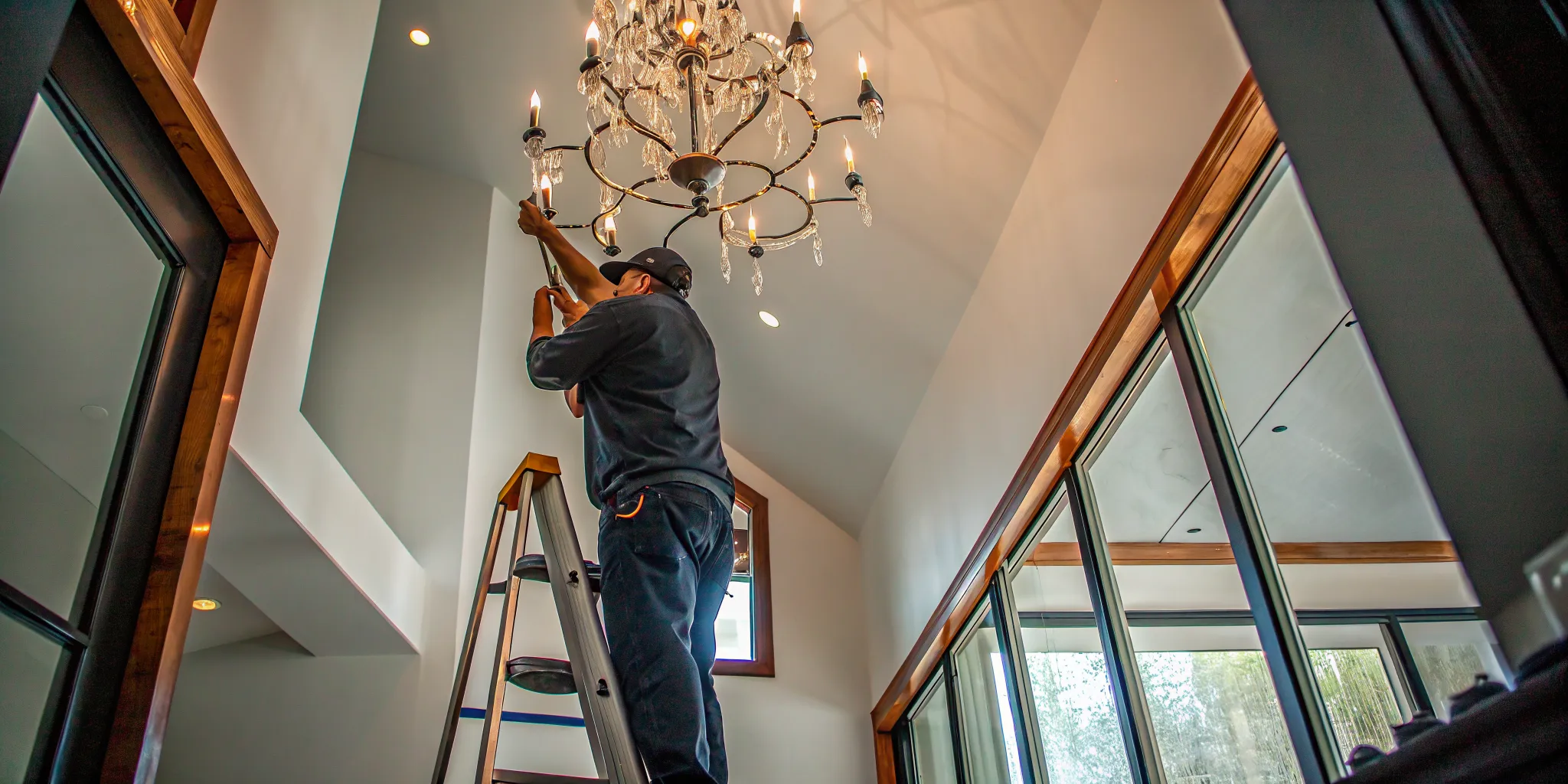
A grand chandelier can become dangerous before it ever lights a high-ceiling room. In Dallas-Fort Worth homes, ceiling height turns fixture weight, wiring, and access into one connected safety decision.
Chandelier installation in a high-ceiling home requires a support box rated for the fixture, sound wiring, correct grounding, and safe access equipment. The electrician must confirm the ceiling structure can carry the fixture, then set a hanging height that provides clearance and balanced light. They should also inspect the circuit, connect and test every wire, and match any dimmer to the chandelier’s bulb type. A standard ceiling box may not support a heavy chandelier, while improvised ladder access can turn one installation error into a serious injury. The CDC notes that falls are the leading cause of construction worker deaths, so hire a licensed electrician when height, weight, or wiring creates doubt.
The question is not simply whether the fixture will fit; it is whether the ceiling, circuit, controls, and access plan can support it safely. Next, we explain Chandelier installation in high-ceiling homes: what makes it different for DFW homeowners. Here’s how.
Chandelier installation in high-ceiling homes: what makes it different
A high-ceiling chandelier installation is not a simple swap of one light for another. In many DFW foyers, living rooms, and stairwells, the work area sits far beyond normal reach. The installer must plan safe access, control a large fixture, and make secure electrical connections at the same time.
This guide explains those added challenges so homeowners can better understand the work. It is different from TLC’s chandelier installation service page, which covers options for hiring help with the installation itself.
Height changes the work plan
Ceiling height affects much more than ladder length. An installer needs access equipment that can stand level on the floor and reach the work area safely. Stairwells may require a scaffold or another setup made for uneven surfaces. Tall entryways also leave less room to move a long chain, canopy, and fixture without striking walls or railings.
Working overhead while holding a bulky fixture adds another risk. A helper or lift may be needed to raise and steady the chandelier while connections are made. Falls are a serious jobsite hazard. The CDC identifies falls as the leading cause of construction worker deaths. The access plan should come before any electrical work begins.
Fixture size affects support and placement
A large chandelier creates handling and support concerns that a standard ceiling light may not. Before installation, the fixture weight must be checked against the electrical box and its attachment to the framing. A box that held a small light may not be rated for the new load. The mounting hardware must also fit the fixture and ceiling structure.
Size also affects how the chandelier looks and works in the room. The installer must judge hanging height, clearance, and sight lines from nearby rooms. In a stairwell, the fixture should remain clear of people using the stairs. In a foyer, the canopy and chain should look centered from the main approach.
Visible wiring and safe connections
High ceilings can make small alignment problems easy to see. A twisted chain, exposed cord, loose canopy, or off-center mount may stand out from the floor below. Careful measuring and controlled lifting help keep the finished fixture straight. Longer drops may also need added planning for the cord, chain, or downrod supplied with the chandelier.
The electrical work still requires the right circuit, secure connections, and proper grounding. Those tasks become harder when tools and materials must be managed at height. TLC’s professional lighting installation information explains when complex wiring, structural support, or hard-to-reach fixtures call for a licensed electrician.
How ceiling height, fixture weight, and support affect the job
A chandelier installation starts with more than choosing a fixture. Ceiling height affects access, while fixture weight affects the mount and support needed above it. The room layout also sets the right hanging position.
Check these details before scheduling the work. Clear information helps the electrician plan for safe access, the correct electrical box, and any added brace or joist work.
Ceiling height and hanging position
First, measure the floor-to-ceiling height and note where the chandelier will hang. A fixture over a dining table can sit lower because the table keeps people from walking beneath it. In an open room or entryway, the fixture needs enough clearance for people and nearby doors.
Also note stairs, furniture, narrow halls, and other items that may limit access. Tall ceilings may require lifts, scaffolding, or other work-at-height equipment. This planning matters because falls are a leading cause of construction worker deaths.
Fixture weight and ceiling support
Find the chandelier’s listed weight before the appointment. Then check whether the existing ceiling box has a visible weight rating. The box must be rated for the fixture, and a standard lighting box may not support a heavy chandelier.
The electrician may need to replace the box or add a brace tied to nearby joists. Support must hold the fixture itself, not just its wires. TLC Electrical’s page on high-ceiling electrical mounts explains why box rating and fixture weight must match.
| Planning detail. | Standard replacement. | High-ceiling or heavy chandelier. |
|---|---|---|
| Access. | Standard ceiling access. | Special access equipment may be needed. |
| Existing box. | May work if properly rated. | Often needs a higher-rated box. |
| Structural support. | Existing secure mount may be enough. | Brace or joist attachment may be needed. |
| Room planning. | Check basic floor clearance. | Check drop length, open space, and access path. |
| Work scope. | Fixture swap with wiring checks. | Mount, support, access, and wiring checks. |
Details to share before the visit
Share the ceiling height, fixture weight, mounting instructions, and a photo of the current ceiling box. Include a wide photo of the room and access path. For a dining fixture, measure the table position and planned drop; for an open room, show the walking area below.
Do not assume an existing box is safe because it held a lighter fixture. A licensed electrician can inspect the box, grounding, wiring, and framing before mounting the chandelier. That review is part of a safe professional lighting installation, especially when height or weight changes the job.
Wiring, dimmers, and controls to decide before installation day
The existing wiring and grounding
Before chandelier installation begins, the electrician should turn off the correct circuit and confirm that it is de-energized. A wall switch alone does not make the ceiling wiring safe. This check matters even more in a tall foyer, where reaching the fixture adds a serious fall hazard.
The CDC identifies falls as the leading cause of construction worker deaths. That risk is one reason to leave high-ceiling wiring checks to a licensed electrician with proper access equipment.
At a high level, the hot conductor supplies power, the neutral completes the circuit, and the ground provides a safety path. The electrician must confirm each conductor and the switch leg before connecting the fixture. Correct grounding is vital because it helps protect people if a fault energizes metal parts.
Dimmer and LED compatibility
Choose the chandelier bulbs before selecting a dimmer. LED bulbs and drivers must be marked as dimmable, and the dimmer must support their load type. A poor match can cause flicker, buzzing, limited dimming range, or lights that do not shut off cleanly.
Also consider the total fixture load and whether the chandelier uses an integrated LED driver. These details help the electrician select a control that works as intended. TLC’s professional lighting installation service covers dimmers and other lighting controls along with fixture installation.
Smart and multi-location controls
A two-story foyer often needs control from more than one floor or doorway. Tell the electrician every location where you want to operate the chandelier. Existing multi-location switching may use traveler wires, while some smart controls need a neutral conductor in the switch box.
Smart dimmers also vary in bulb support, wireless connection, companion switches, and setup needs. Decide whether you want app control, schedules, voice control, or only wall control before installation day. This avoids choosing a device that the existing wiring cannot support.
New wiring or troubleshooting may be needed when conductors are missing, damaged, mislabeled, or arranged for an older control. Other warning signs include repeated breaker trips, heat marks, buzzing, or lights that flicker with a known compatible dimmer. An electrician can diagnose the cause before installing the chandelier or replacing controls.
Do you need an electrician to install a chandelier?
You should hire a licensed electrician for most chandelier installations. A simple like-for-like swap may seem manageable when the wiring, ceiling box, and switch are already suitable. Still, the fixture must be grounded, mounted securely, and connected with the power off. Any doubt about those steps is a good reason to call an electrician.
When a direct replacement may be manageable
A homeowner with electrical experience may consider replacing a light with a similar, lightweight chandelier. The existing box must be in good shape and rated for the new fixture’s weight. The wiring should also be modern, easy to reach, and free from damage. Stop if the box shifts, the wire covering cracks, or the connections do not match the instructions.
A dimmer adds another point to check. It must work with the chandelier’s bulbs and electrical load. An incompatible dimmer can cause flickering or put stress on the lighting system. TLC’s professional lighting installation service can address the fixture, controls, mounting, and wiring as one project.
Cases that call for an electrician
Call an electrician when the chandelier is heavy, the ceiling is high, or the existing electrical box needs an upgrade. A standard box may not safely hold a large fixture. Professional access equipment also reduces the risks that come with working overhead. The CDC identifies falls as a leading cause of construction worker deaths, which shows why high work needs care.
- There is no existing light fixture, switch, or wiring at the planned location.
- The home has old, damaged, or aluminum wiring that needs a trained review.
- The chandelier needs new structural support or a fixture-rated ceiling box.
- The project includes a new dimmer, added circuit, or changed switch location.
- The lights flicker, the breaker trips, or the wiring shows signs of heat.
- Local permit or code questions apply, or the installation is in a commercial space.
These conditions can turn a fixture swap into a wiring, support, or troubleshooting job. Do not keep testing a chandelier that flickers or trips a breaker. That response may point to a loose connection, an overloaded circuit, or another fault. A professional can find the cause before completing the installation.
Professional chandelier installation in DFW
TLC Electrical serves homes and businesses across the Dallas-Fort Worth area. Its licensed, insured, and bonded electricians handle chandelier installation with safety and secure mounting in mind. They can review ceiling height, fixture weight, wiring, box support, switches, and code concerns before work starts.
TLC provides clear, quote-based pricing rather than making a broad price promise before seeing the job. Customers also receive a two-hour arrival window, which makes scheduling easier. For a high ceiling or complex mount, TLC’s experience with high-ceiling electrical mounts is directly relevant to the work.
How to prepare for a high-ceiling chandelier appointment
A little planning helps the electrician assess the work and protect your home. It also makes it easier to discuss fixture placement, controls, access needs, and the quote before chandelier installation begins.
Fixture and ceiling details
Gather the details below before the appointment. Fixture weight matters because the electrical box must support the load, while ceiling height helps determine the right access equipment. Working at height carries serious risk, and the CDC identifies falls as a leading cause of construction worker deaths.
- Collect the fixture specifications. Keep the product page, model number, weight, width, and assembly guide ready. Leave the chandelier packed safely unless the electrician asks you to unpack it.
- Measure and photograph the space. Note the floor-to-ceiling height and the planned hanging height. Share clear photos of the ceiling, existing fixture, switch, and electrical box if it is safely visible.
- Clear the work area. Move tables, rugs, decor, and breakable items away from the space below the fixture. Keep a clear route from the entry door to the room.
- Choose bulbs and controls. Decide on bulb color, brightness, and whether you want a dimmer. Bring the bulb and dimmer specifications because LED bulbs and controls need to work together.
- Plan for people and pets. Keep children and pets away from the work zone. Tell the electrician about tight entries, stairs, delicate floors, or furniture that cannot be moved.
- Share your goals and concerns. Explain the desired fixture position and hanging height. Mention flickering, damaged wiring, a loose box, or any past electrical work near the ceiling.
- Ask about scope, quote, and timing. Confirm whether assembly, added ceiling support, switch work, or dimmer installation is included. Ask how long the work may take and what could change the quote.
Access and safety planning
Do not climb a high ladder just to take photos or inspect the box. Photos from floor level can still show useful details, and the electrician can complete a safe inspection on site. For more context on access and support needs, review TLC Electrical’s guide to high-ceiling electrical mounts.
Make sure an adult can provide access and answer questions during the visit. If the fixture will hang above a stairwell or large piece of furniture, mention that when scheduling. That detail may affect equipment and setup.
Quote and scheduling questions
A high-ceiling chandelier quote depends on the fixture, ceiling support, wiring, controls, and access conditions. Ask what the quote covers before approving work, rather than relying on a general price range.
DFW homeowners can call TLC Electrical at (817) 424-2684 to discuss the appointment. Have the fixture details, ceiling height, photos, and preferred schedule ready so the team can plan the next step.
How much does chandelier installation cost in DFW?
There is no single DFW price for chandelier installation because each fixture and mounting location calls for a different amount of work. A useful quote should explain the work needed before installation starts. That approach gives homeowners clear, upfront pricing without relying on a made-up range.
Height, weight, and assembly
Ceiling height affects both access and the equipment needed to work safely. Tall foyers may call for specialty ladders, scaffolding, or a lift, which adds setup time. The CDC identifies falls as a leading jobsite hazard, so safe access is part of the work, not an optional extra.
Fixture weight matters too. A heavy chandelier may need a fixture-rated box and added ceiling support before it can be hung. Assembly time also varies because some fixtures arrive ready to mount, while others have many parts or crystals to prepare.
Existing wiring and controls
The electrician must check the existing electrical box, wiring, grounding, and switch before mounting the new light. An older or damaged box may need repair or replacement. If the desired spot has no wiring, the quote must include a new circuit path and any needed wall or ceiling access.
Dimmers add another variable. The switch and bulbs must work together to prevent poor performance or electrical stress. TLC’s professional lighting installation service covers dimmers and other indoor lighting needs, which may be included in the same visit.
What an accurate quote should cover
Before requesting a quote, note the ceiling height, fixture weight, mounting location, and whether a light already exists there. Photos of the ceiling area and fixture label can also help define the work. Still, an on-site check may be needed to confirm the box condition and access plan.
A complete quote should separate chandelier assembly, mounting, electrical work, access equipment, and likely repair needs. It should also explain what could change after the electrician opens the existing box. Request a quote from TLC Electrical for a clear scope and upfront price based on the actual DFW installation.
Frequently asked questions about chandelier installation
How much does it cost to have someone install a chandelier?
Chandelier installation cost depends on ceiling height, fixture weight, existing wiring, box support, dimmers, and access needs. A high foyer or heavy fixture usually needs more planning than a standard replacement. TLC Electrical provides quote-based pricing after the job scope is clear.
Do you need an electrician to install a chandelier?
Use a licensed electrician when the ceiling is high, the fixture is heavy. The box rating is unknown, new wiring is needed, or the project includes a dimmer or smart control. The electrician can check grounding, support, wiring condition, and code concerns before the fixture is mounted.
Can a chandelier be installed where no light exists now?
Yes, but it becomes more than a fixture swap. The electrician may need to run wiring, add a switch, install a rated ceiling box, and confirm the ceiling structure can support the fixture. The quote should include those electrical and support details.
What should I do before a chandelier installation appointment?
Gather the fixture weight, model number, assembly guide, ceiling height, bulb type, dimmer preference, and photos of the room. Clear the area below the fixture and keep pets and children away from the work zone. These steps help the electrician plan safe access and the right mounting approach.
Ready to Schedule Your High-Ceiling Chandelier?
Delaying a high-ceiling chandelier installation can leave a valued fixture boxed up while an unfinished lighting plan limits the room’s comfort and use. Rushing the work later may also create avoidable problems with access, mounting support, or the electrical connection. Starting now gives you time to review the fixture, prepare the installation area, and choose a service date that fits your plans.
Ready to complete your lighting project? Call (817) 424-2684 to schedule chandelier installation service for your Dallas-Fort Worth home. Scheduling ahead leaves time to coordinate ladder access and protect nearby furnishings before work begins. A clear plan now can help you avoid last-minute delays and move forward with the right equipment, mounting approach, and electrical setup.