
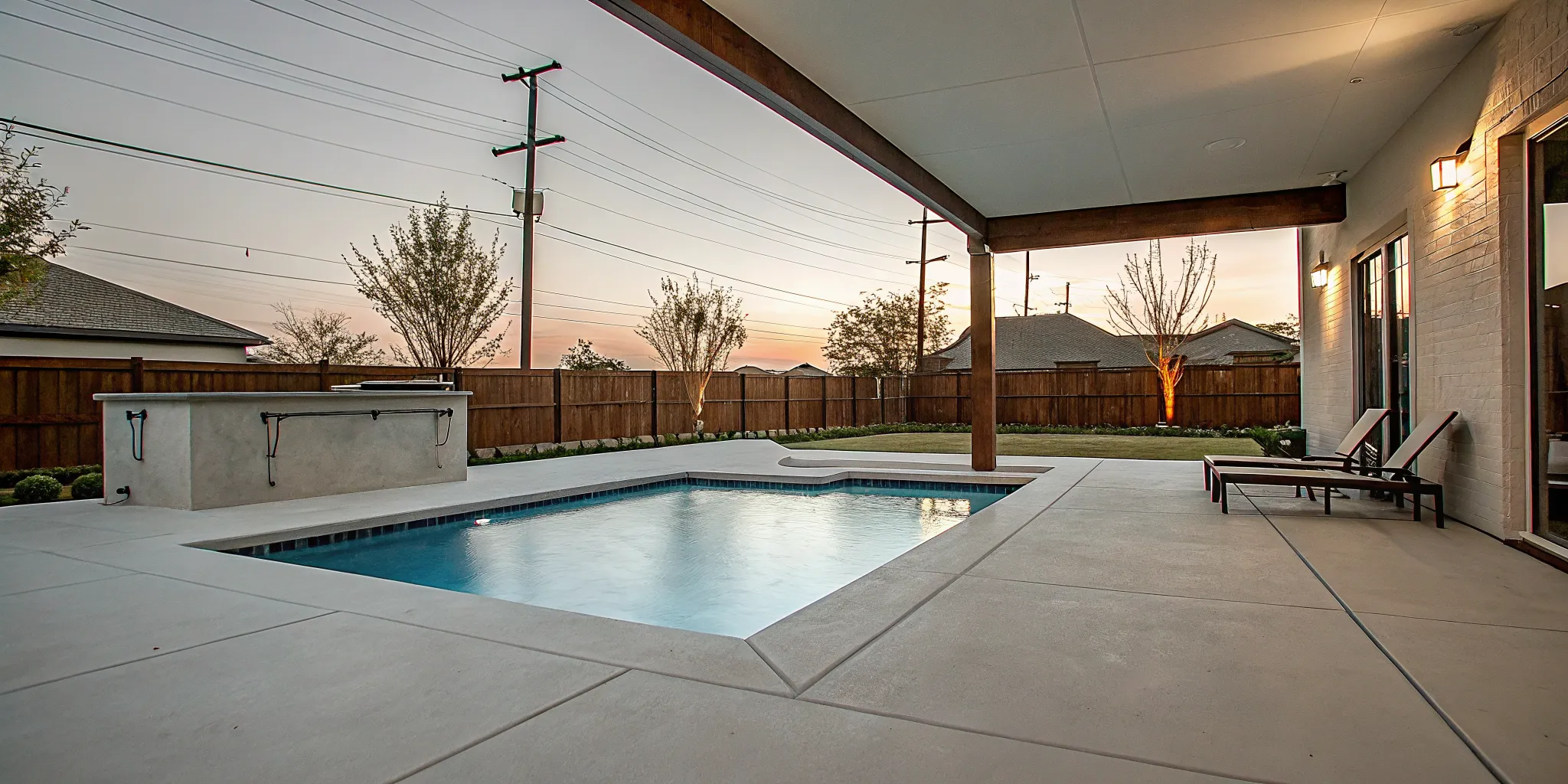
Pool lighting should make a backyard safer, not create another electrical worry.
Need a licensed electrician to inspect your pool lights? Schedule pool and spa electrical service with TLC Electrical today.
LED pool lights vs traditional pool lights comes down to efficiency, visibility, controls, compatibility, and safety. LEDs usually fit homeowners who want lower energy use and color scenes. Traditional lights can still work for basic repairs when the existing fixture is safe and compatible.
This comparison is written for DFW homeowners who want a clear answer before calling for service. We will start with LED pool lights vs traditional pool lights: the quick comparison, then move into safety, compatibility, controls, and when to schedule licensed pool and spa electrical work. Here’s how the options stack up.
LED pool lights vs traditional pool lights: the quick comparison
For most DFW homeowners, LED pool lights offer the better mix of clear light, lower energy use, and flexible controls. Traditional incandescent or halogen lights can still suit an existing fixture when a simple like-for-like repair is practical.
The right choice also depends on the pool’s niche, transformer, wiring, and control system. A safe upgrade starts with checking those parts, not just choosing a bulb.
Key differences at a glance
LEDs can produce useful underwater brightness while drawing less power than incandescent lighting. Industry pool-lighting guidance commonly notes that LED pool lights use less energy and can last longer than traditional bulbs when the fixture, voltage, and controls are compatible.
| Comparison point | LED pool lights | Incandescent or halogen lights |
|---|---|---|
| Brightness. | Clear output. | Strong warm light. |
| Energy use. | Lower. | Higher. |
| Heat. | Runs cooler. | Creates more heat. |
| Color options. | White or color scenes. | Usually one color. |
| Service life. | Often longer. | More bulb changes. |
| Controls. | Can pair with automation. | Basic switching. |
Light, heat, and everyday use
LED lighting gives homeowners more control over the pool’s look after dark. White light supports clear visibility, while color-changing modes suit parties or quiet evenings. Compatible automated pool lighting controls may also manage schedules and scenes from one system.
Traditional lights remain a workable choice when the current fixture is sound and the owner wants basic white light. They use more energy and give off more heat. LEDs run cooler, yet their internal parts still need proper heat flow to avoid early loss of light.
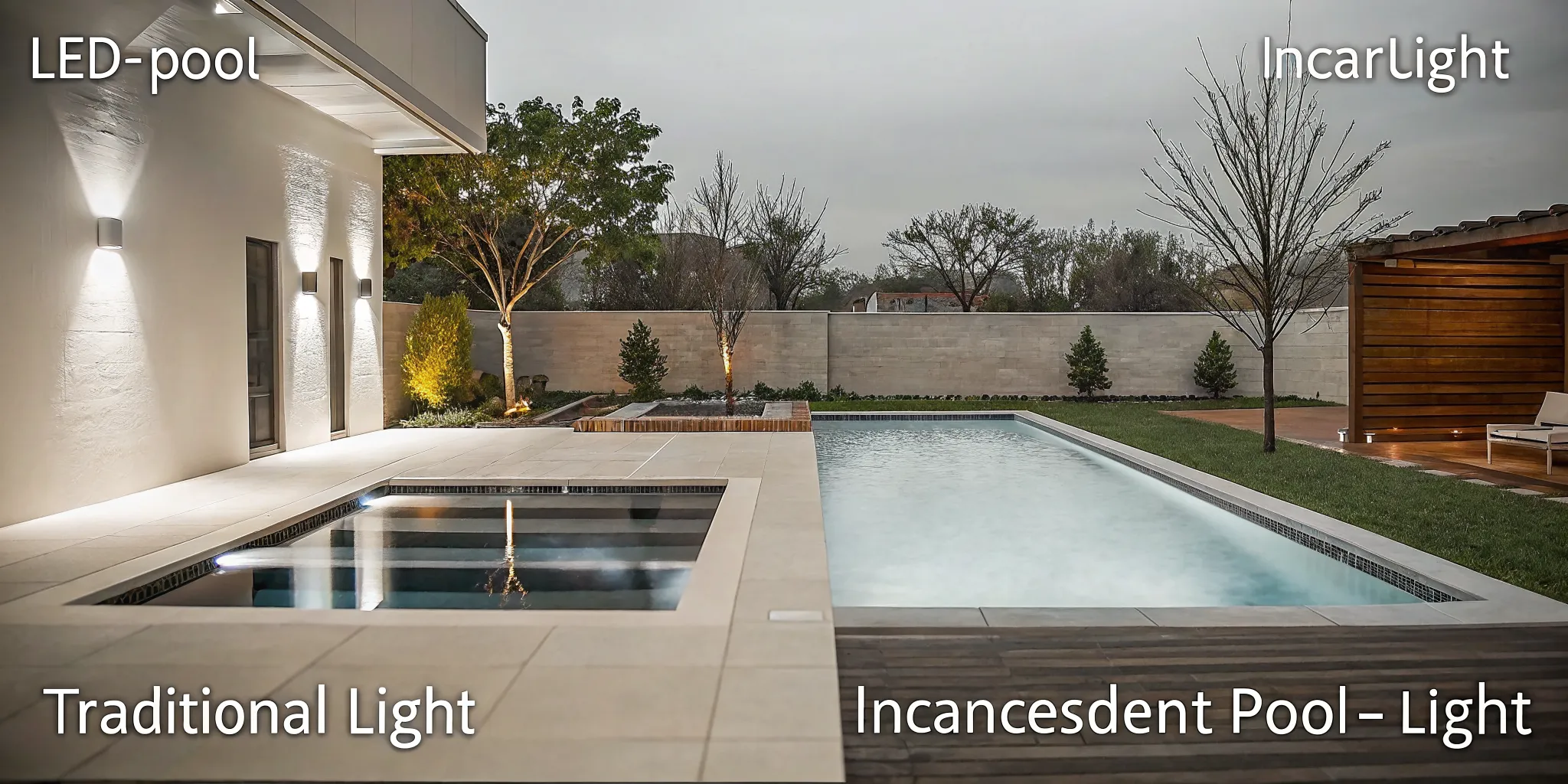
The safest fit for each pool
Neither type is safe simply because of the bulb technology. Pool lights operate in a wet setting, so the fixture seal, niche, voltage, transformer, wiring, and bonding all matter. A replacement must match the existing system and local code requirements.
LEDs make sense for planned upgrades, frequent nighttime use, color effects, or pools tied to smart controls. Traditional lights may fit a limited repair when all existing parts remain compatible. Before either option is installed, arrange a LED pool light upgrade assessment with a licensed pool electrician.
Why DFW pool owners are switching to LED lighting
More useful light after sunset
For many DFW homeowners, the choice between LED pool lights vs traditional pool lights starts with how the backyard is used. A clear, even glow can improve visibility around the water and make evening swims more inviting. A professional LED pool light upgrade can also replace a dim or unreliable older fixture.
LED fixtures give owners more choices than a single white bulb. Color-changing models can set a calm tone for a quiet night or add color for a gathering. Programmable scenes also make it easier to match the pool lighting to the rest of the yard. The result is useful light with more control over its look.
Lower energy use and less radiant heat
Traditional incandescent lights use more power to create light, while much of their energy becomes heat. LED technology uses energy in a different way. An EPA assessment of solid-state lighting notes its strong potential to be more energy efficient than incandescent and fluorescent lighting. Actual energy costs will still depend on the fixture, run time, and local electric rate.
Lower heat is another practical reason to switch, but it needs some context. LEDs do create heat inside the device, even though they do not emit heat as infrared radiation like incandescent bulbs. Good fixture design moves that heat away from the LED. This helps protect light output and supports reliable operation.
A longer-term maintenance choice
Pool lights sit in a demanding setting, so maintenance matters as much as color or brightness. LED lights often last longer than traditional bulbs, which can reduce how often a fixture needs attention. Still, no light is maintenance-free. The Department of Energy guidance hosted by Stanford explains that excess heat can reduce LED light output over time.
A sound upgrade starts with checking the existing niche, transformer, voltage, wiring, and seals. These parts must work with the new fixture and keep water away from electrical connections. Proper installation also matters because a failed sealed LED fixture may require full replacement rather than a simple bulb change.
For DFW pool owners, the value is not based on a promised savings figure. It comes from combining lower energy use, flexible color scenes, cooler operation, and fewer routine bulb changes. Those benefits are strongest when the new light fits the pool system and is installed with long-term service in mind.
What safety issues matter most with pool lights?
Pool light safety depends on the whole electrical system, not just the bulb type. Water, damaged seals, and faulty wiring can turn a lighting problem into a serious hazard. Keep swimmers out of the pool when a light acts strangely, then have the system checked.
Protection around water
GFCI protection helps shut off power when it senses a fault. Bonding connects metal parts around the pool to reduce harmful voltage differences. A licensed electrician should check both protections when comparing LED pool lights vs traditional pool lights.
The fixture must also remain sealed against water intrusion. Its housing, lens, gasket, cord, and niche need to work together as one safe assembly. An LED retrofit may not fit an older niche or match the existing electrical setup. TLC provides licensed electrical service for your pool, including checks for bonding and code concerns.
Warning signs that need attention
A breaker or GFCI that trips is a warning, not an inconvenience to bypass. It may point to moisture, damaged wiring, or a fault elsewhere in the pool system. Leave the circuit off until an electrician finds the cause.
- Flickering or dimming
- Water behind the lens
- Cracked lenses or worn seals
- Rust around the niche
- Repeated breaker or GFCI trips
Flicker can come from a failing light, a poor connection, or an incompatible control. It does not prove that an LED or incandescent bulb is unsafe by itself. The cause matters, so avoid repeated resets and do not open a fixture near water. Buzzing, heat, or a change in color can also signal trouble that needs a professional check.
Safe upgrades and professional checks
Switching from an incandescent fixture to LED does not remove the need for GFCI protection, bonding, and a sound seal. LED technology can use less energy than incandescent lighting, as noted in an EPA lighting assessment. Yet the new light still must suit the niche, transformer, wiring, and controls.
Older niches deserve close review during an upgrade. An electrician can check for corrosion, water intrusion, damaged conductors, and a poor fixture fit. This is also the right time to confirm that the light and pool equipment share the proper safety protections. The inspection should cover nearby controls and junction points, since the fault may not begin inside the light.
Pool and spa electrical work is not a safe DIY project. TLC can troubleshoot faults, assess older equipment, and plan an LED pool light upgrade for the existing system. A professional check helps separate a simple failed light from a wider electrical issue.
Planning a safer backyard lighting upgrade? Request LED pool light service from TLC Electrical before replacing fixtures or controls.
Can LED pool lights fit your existing fixture?
Sometimes an LED pool light can fit an existing setup, but a direct swap is not always safe or practical. Compatibility depends on the light, niche, wiring, transformer, and controls already serving the pool.
Bulb replacement or full fixture
Some traditional pool lights use a replaceable bulb inside a sealed housing. In those cases, a listed LED replacement bulb may fit the housing. The new bulb must still suit that housing and its electrical limits.
Other LED pool lights are sealed units, so the whole fixture must be replaced when the light fails. A full LED pool light upgrade may be safer when an old housing or cord shows wear. Worn lenses and gaskets also need attention.
Heat control matters even with LEDs. Unlike incandescent bulbs, LEDs do not release heat as infrared radiation. Their heat must leave through conduction or convection, according to this Stanford-hosted lighting report. A fixture not made for the selected LED may not manage that heat well.
Niche, voltage, and wiring checks
The niche is the recessed housing built into the pool wall. Its size, mounting point, and condition must match the new fixture. A light that appears to fit can still leave a poor seal or fail to mount firmly.
Voltage must also match the existing pool lighting system and transformer. An electrician should confirm the supply voltage, transformer rating, breaker protection, bonding, and grounding before selecting a light. The conduit and cord path also need inspection for damage, water, or limited space.
- Confirm whether the old unit uses a bulb or a sealed fixture.
- Check the niche size, mounting method, lens, gasket, and cord.
- Verify the light voltage and the transformer’s limits.
- Inspect conduit, wiring, bonding, grounding, and protective devices.
Controls and older pool equipment
Color-changing LEDs may need a compatible switch, timer, relay, or control panel. Some lights change modes through simple power cycling. Others need brand-specific controls, so an older automation system may not support every feature.
Before buying a light, review how it should work with your automated pool lighting controls. Replacing several lights may also require a plan for matching color and operation across the pool.
A licensed electrician should inspect the complete system before replacement. Pool lighting combines electricity, water, old seals, and hidden wiring. That review helps determine whether a bulb replacement, full fixture, transformer, or control update is the right scope.
How smart controls change backyard pool lighting
Smart controls can make LED pool lighting easier to schedule, dim, and coordinate with other backyard systems when the lights, transformer, and automation equipment are compatible.
The largest day-to-day difference in LED pool lights vs traditional pool lights may be how they are controlled. A basic incandescent light often acts like a single-color fixture, while a compatible LED system can add color choices and planned operation.
Color choices and scenes
Many color-capable LED fixtures let the owner choose a steady color or cycle through a preset light show. The exact choices depend on the light, controller, and whether both were made to work together. This range of color adds design flexibility when the fixture and control system are compatible.
Controls may change colors by toggling a wall switch in a set pattern. Other systems save scenes in an automation panel. The pool and nearby landscape lights can then follow one plan. Before buying an LED pool light upgrade, confirm which control method the fixture supports.
Timers, remotes, and apps
A timer can turn pool lights on and off at set times without changing their color mode. Compatible automation panels may also offer a handheld remote, wall keypad, or phone app. These controls make it easier to start a scene, check light status, or adjust a schedule from one place.
App control does not come with every LED fixture. It may require a matching automation panel, network connection, or added control module. Homeowners should ask what still works if the internet is down and whether manual control remains available. TLC’s automated pool lighting controls page explains common control and timer options.
When electrical updates are needed
Adding smart control is not always a simple fixture swap. An electrician may need to inspect the existing switch, controller, transformer, wiring, and panel before connecting new equipment. The new light’s voltage and wattage must match the pool lighting transformer. The control equipment must also support the chosen fixture.
If the current timer cannot run the desired color commands, it may need a compatible control module or automation panel. Damaged wiring, old equipment, or a mismatched transformer can also change the scope of work. Because electricity and water share this setting, a licensed electrician should verify the final setup and test each control mode.
When should you replace a traditional pool light?
A failed bulb does not always mean the full fixture must go. Still, repeated failures can point to worn seals, damaged wiring, or an aging fixture. Replacement is often the safer choice when repairs no longer give steady, dependable light.
Warning signs that call for an inspection
Stop using the light and schedule an inspection if you see moisture behind the lens. Flickering, breaker trips, or a light that fails soon after bulb changes also need prompt attention. These signs may involve more than the bulb, so leave testing and repairs to a licensed electrician.
Dim areas and poor underwater visibility can also support replacement, even when the old light still works. A planned LED pool light upgrade can improve coverage while resolving an aging fixture. An upgrade is also worth considering during resurfacing or other pool remodel work.
Repair, replace, or upgrade?
The inspection should separate a simple bulb issue from a fixture, seal, wiring, or control problem. If bulbs keep failing or water has entered the lens, replacing the full light may be more practical. The electrician should also check whether the existing niche, transformer, and controls match the proposed fixture.
When comparing LED pool lights vs traditional pool lights, consider long-term upkeep as well as the first cost. LED lights can last much longer than traditional bulbs, but actual service life still depends on the product, installation, water sealing, heat management, and operating conditions.
Outdated switches or limited controls may be another reason to upgrade. If you want timers, color settings, or remote operation, ask whether automated pool lighting controls can work with the new fixture. Planning the light and controls together can prevent compatibility problems later.
How to schedule a safe inspection
Do not remove the fixture, open the lens, or reset a breaker that keeps tripping. Instead, gather a few details before calling an electrician. This helps the electrician prepare for the visit without asking you to handle electrical parts.
- Note the symptoms, including flickering, dim output, moisture, repeated failures, or breaker trips.
- Record when the problem began and whether it happens every time the light is switched on.
- Find any fixture, transformer, or control model information that is visible without opening equipment.
- Share planned remodel work and the lighting features you want, such as better coverage or color options.
- Schedule an on-site inspection with a licensed pool electrician and keep the problem light off until then.
A clear inspection can show whether a repair will restore safe service or replacement offers better value. It also gives you a sound basis for comparing fixture options and planning related pool work.
How to choose the right pool lighting upgrade
Start with an electrical inspection
Start with the condition of the whole lighting system, not the bulb alone. An electrician should inspect the fixture, niche, seal, wiring, transformer, bonding, and controls before recommending an upgrade. That check can uncover water entry, worn parts, or a voltage mismatch that would make a simple bulb swap unsafe.
DFW heat and long pool seasons can put added strain on seals and electrical parts. The inspection should also confirm that the planned work fits current electrical codes. A licensed electrical service for your pool can explain any repairs needed before new lighting goes in.
Match the upgrade to your goals
The right choice depends on the system’s condition, how often the pool is used after dark, and the desired features. Compare LED pool lights vs traditional pool lights based on the full cost and expected use. The EPA notes that LED technology can be more energy-efficient than incandescent and fluorescent lighting.
- Keep traditional lighting: This may suit an intact system when low upfront cost matters more than added features or lower energy use.
- Replace the bulb: A bulb replacement may work when the fixture, seal, wiring, and niche remain in sound condition.
- Install an LED fixture: Consider a full fixture upgrade for lower energy use, brighter visibility, or color-changing options.
- Add compatible controls: Timers and automation can help manage light schedules, colors, and other pool equipment from one system.
A new LED bulb does not fit every old housing or transformer. Confirm the niche size, voltage, wattage, fixture type, and control brand before buying parts. Pools with two lights may also need matched fixtures to keep color and light spread consistent.
Compare clear, complete estimates
Ask for an upfront estimate that separates repair needs, fixture costs, controls, labor, and any code updates. A lower initial price can hide needed electrical work or leave an older fixture in place. A complete estimate makes it easier to compare the value of a bulb change with a full LED upgrade.
If automation is part of the plan, check compatibility before choosing a fixture. Existing timers or panels may limit available colors and functions. Review automated pool lighting controls alongside the lighting quote so both parts work together as intended.
Frequently Asked Questions
Is upgrading to LED pool lights worth the extra cost?
LED pool lights usually cost more upfront, but they use less electricity and need replacement less often than incandescent lights. One comparison found that a 45-watt LED delivers brightness similar to a 300-watt incandescent bulb, according to Pinch A Penny. The upgrade often makes sense for frequently used lights, especially when owners also want programmable colors.
How long do LED pool lights last compared with traditional pool lights?
LED pool lights generally last much longer than traditional incandescent pool lights. A cited comparison reports up to 50,000 hours for LEDs, versus about 1,000 to 2,000 hours for traditional bulbs. Actual service life depends on fixture quality, correct installation, water sealing, and heat management. Premature failure can still require replacement of the complete LED fixture rather than only a bulb.
How do LED pool lights save on energy costs?
LEDs create comparable pool illumination with much lower wattage because they convert more electricity into light instead of heat. Lower wattage means the fixture draws less power during every hour of operation. Savings increase when lights run frequently or the pool has several fixtures. Actual dollar savings depend on local electricity rates, fixture wattage, operating hours, and the number of lights.
What are the common problems with LED pool lights?
Common problems include premature fixture failure, failed color controls, water intrusion, and poor compatibility with an existing niche or transformer. Some integrated LED fixtures are not repairable, so a failure can require complete replacement. Proper heat management also matters because excess heat can reduce LED light output. A licensed electrician should inspect flickering, tripped breakers, visible moisture, or damaged seals promptly.
Can an LED pool light replace any traditional pool light?
No. An LED retrofit must match the existing niche dimensions, supply voltage, transformer capacity, and control system. The housing and seal must also be suitable for underwater use. A mismatched fixture can perform poorly or create a safety risk. Before purchasing a retrofit, have a licensed electrician verify compatibility, wiring condition, bonding, and code requirements for the pool’s electrical system.
Ready to Plan a Safer LED Pool Light Upgrade?
Putting off an aging or unreliable pool light can mean another season of poor visibility, limited controls, and uncertainty around the existing electrical setup. Starting now gives a licensed electrician time to inspect the fixture, wiring, transformer, and controls before your next evening swim, party, or family gathering. An early assessment also gives you more time to choose a compatible LED upgrade and address concerns before the work becomes urgent.
Ready to build a practical plan for safer, more useful backyard lighting? A conversation now can clarify compatibility, control options, and the right timing for service without forcing a rushed decision later. Call (817) 424-2684 to schedule licensed pool and spa electrical service and discuss the next steps for your DFW backyard.