
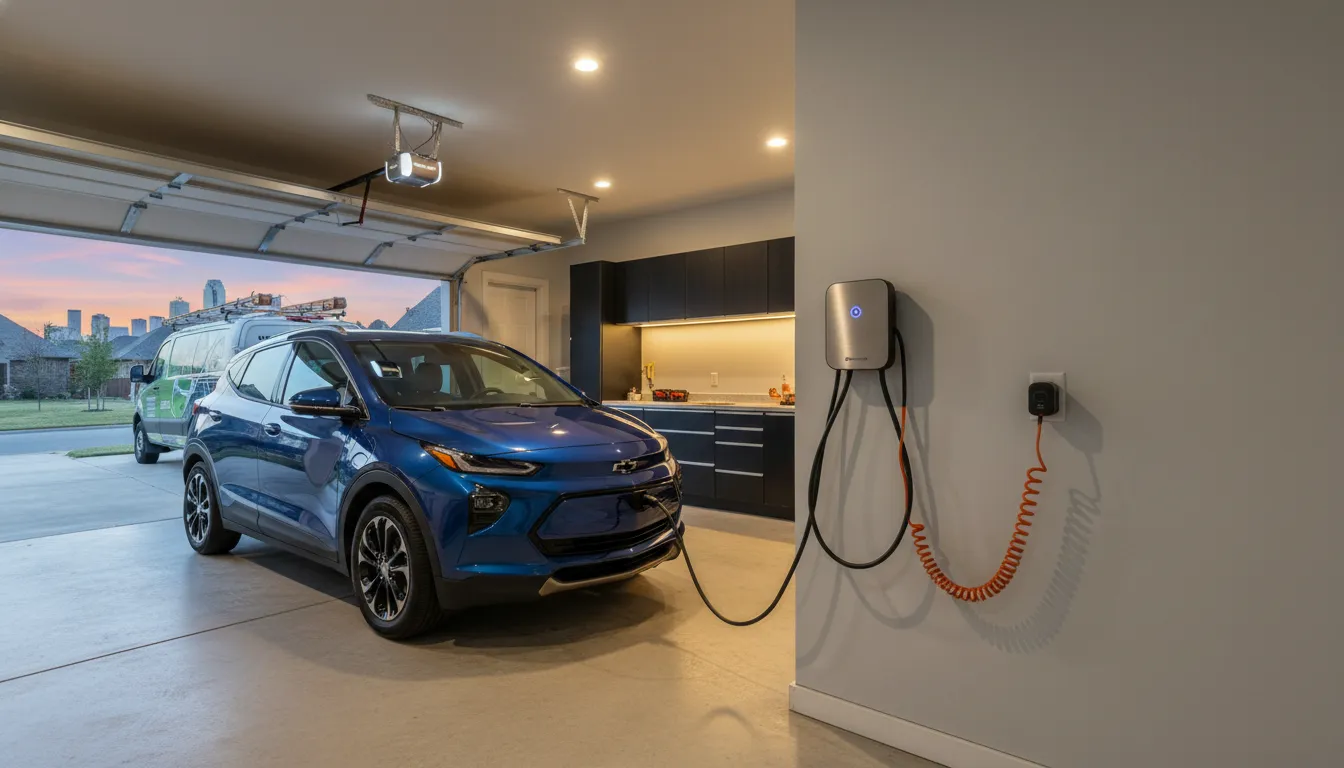
A standard household outlet takes up to fifty hours to fully charge your electric vehicle. That slow pace disrupts your routine and limits your daily range. DFW homeowners need a faster, more reliable charging setup to keep their vehicles ready.
Schedule your EV charger assessment with TLC Electrical before you choose your home charging setup.
Level 1 vs Level 2 EV charging options differ primarily in their electrical voltage, charging speed, and professional home installation requirements. Standard Level 1 setups run on a common 120-volt household outlet and can take up to fifty hours to fully charge an electric vehicle. According to the U.S. Department of Energy, Level 2 systems require a 240-volt power supply and professional installation to operate safely. This dedicated electrical circuit delivers seven to eleven kilowatts of power to fully charge a battery electric vehicle in six to ten hours. DFW homeowners with longer daily commutes often choose Level 2 charging to ensure their vehicles are always ready for the road. This upgrade requires a qualified electrician to check your electrical panel capacity before starting the installation.
Deciding which system fits your lifestyle requires comparing daily charging times, installation costs, and home electrical capacity. To help you choose, we will examine Level 1 vs Level 2 EV charging: the quick difference. Finding your ideal home setup begins with
Level 1 vs Level 2 EV charging: the quick difference
The practical difference between Level 1 and Level 2 charging is the electrical supply behind the charger. Level 1 charging uses a standard 120-volt household outlet. Level 2 charging uses a 240-volt circuit, similar in concept to the dedicated power many homes use for large appliances. That difference changes how quickly your vehicle can recover range at home.
For many DFW homeowners, Level 1 feels convenient at first because it usually comes with the vehicle and can plug into an existing outlet. The tradeoff is time. A Level 1 charger may add only a few miles of range per hour, which can work for a plug-in hybrid or a very short commute. A Level 2 charger is designed for faster overnight charging, especially when the home has the panel capacity and circuit setup to support it safely.
| Feature. | Level 1 charging. | Level 2 charging. |
|---|---|---|
| Typical voltage. | 120V household outlet. | 240V dedicated circuit. |
| Typical speed. | Slow range recovery, often a few miles per hour. | Faster charging, often enough for overnight recovery. |
| Best fit. | Plug-in hybrids, short commutes, occasional charging. | Battery EVs, longer commutes, shared EVs, tighter schedules. |
| Installation needs. | May use an existing outlet if the circuit is suitable. | Usually requires electrical assessment, dedicated circuit planning, and code-compliant installation. |
| Main limitation. | May not recover enough range by morning. | Requires available electrical capacity and proper installation. |
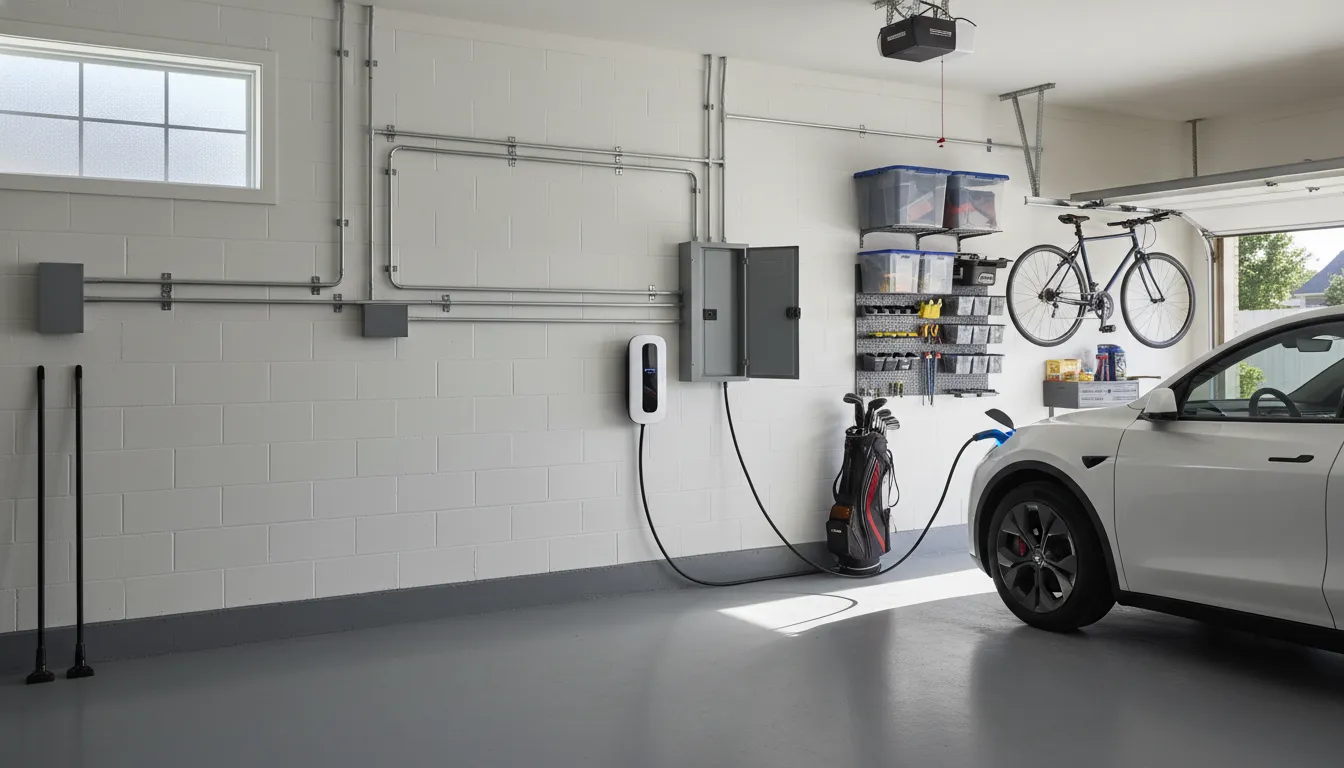
Searchers comparing Level 1 vs Level 2 EV charging are usually trying to answer one question: will a basic outlet keep up with real life? If you drive a few miles a day and park for long periods, Level 1 may be enough. If you commute across the Metroplex, charge a larger battery EV, or want the vehicle ready every morning, Level 2 is usually the more practical home setup.
The decision should still be based on your actual home, not just the charger box. TLC Electrical evaluates charger location, circuit needs, available panel capacity, and code requirements before recommending an installation path. If Level 2 makes sense, TLC can help with a professional EV charger installation that supports safer, more reliable home charging.
When is Level 1 charging enough for a DFW home?
Standard Level 1 charging uses a common 120-volt household outlet. In contrast, a Level 2 setup requires a special 240-volt power supply. This slower option might seem outdated, but it is often the best choice for your budget. Comparing Level 1 vs Level 2 EV charging helps you avoid costly upgrades.
Many local homeowners find that basic charging meets all their weekly driving needs. You do not need to upgrade your home panel. If your daily driving habits match certain patterns, a standard outlet works well.
Plug-in hybrids and short commutes
If you drive a plug-in hybrid electric vehicle, you probably do not need a fast charger. These cars have small batteries. A standard Level 1 cord can easily fill a hybrid battery overnight while you sleep. This basic setup adds about five miles of driving range per hour of plug time.
This pace is also plenty for drivers with short daily commutes. If your office is nearby, you likely drive under thirty miles each day. Plugging your car in for six hours easily restores that range. You will always start the day with a full battery without spending extra money on installation.
Overnight charging and secondary cars
Most electric vehicle owners charge their cars at home during the night. According to the U.S. Department of Energy, many drivers meet their daily needs this way without extra installation costs. You only need a standard power outlet on a dedicated electrical circuit. This line keeps your breakers from tripping when the vehicle draws continuous power.
This simple method is perfect for a secondary family car. If one vehicle does most of the heavy driving, the other car probably sits in the garage for long periods. You can let the second vehicle charge slowly over eighteen to twenty hours. Slower charging is gentle on the battery and avoids placing a heavy load on your home system.
Workplace charging availability
Your home charger does not have to do all the work if you can plug in at your office. Many employers now offer charging options as a workplace benefit. You can charge your car while you work and use your home outlet for basic top-offs. This routine makes a standard home outlet more than enough to handle your remaining charging needs.
Relying on public stations during weekend trips also reduces your home charging needs. If you plug in at the grocery store or mall, your home outlet only does the minor work. You can save your money and avoid buying a costly fast charging station for your garage.
Who should upgrade to Level 2 charging?
Many electric vehicle owners start with standard charging. They plug their cars into a basic wall outlet. But they soon find that this method is too slow. Choosing between Level 1 vs Level 2 EV charging often depends on your daily driving routine. If you live in a DFW suburb like Southlake or Frisco, your daily drive times are often long. Commuting across the metroplex can drain your battery quickly. This makes standard wall outlet charging highly impractical.
Long commutes and busy schedules
A long daily drive is the main reason to upgrade your setup. Highway driving at high speeds burns more energy, which reduces your driving range. Standard charging only adds about five miles of range per hour. If you drive more than thirty miles a day, you will struggle to get a full charge. A faster charger is also useful for people with unpredictable schedules. For these drivers, the federal government recommends Level 2 charging equipment to ensure your car is always ready.
Large batteries and multiple electric vehicles
Large battery electric vehicles take days to charge with a standard outlet. A full charge from near-empty can take up to fifty hours. A Level 2 system uses a 240-volt power supply. This system fully charges a large battery in six to ten hours. Upgrading is also smart if your household shares more than one electric vehicle. You can charge one car in the evening and swap it for the second car before bed.
You might not need to upgrade if you only drive short distances. But certain signs show that a faster home charger is a better choice. Consider upgrading if you face any of these situations:
- You drive a full battery electric vehicle with a large battery capacity.
- You want to get a full charge overnight.
- Your household has two or more electric vehicles.
- You have an unpredictable work schedule or take sudden trips.
Home electrical capacity and future readiness
Installing a faster charger requires a professional EV charger installation. TLC Electrical offers a full on-site assessment to check your home’s capacity. Your home must have enough electrical panel capacity to handle the extra load safely. The National Electrical Code views these systems as a continuous load. This means they draw high power for hours. A professional electrician can check your system and add a dedicated electrical circuit to protect your home.
Upgrading your electrical system also makes your home future-ready. Many modern Level 2 chargers have smart features. These systems let you track data, set charging timers, and use displays. Some chargers are also built for outdoor use. If you must charge your vehicle in the rain, you must use outdoor-rated equipment. A professional can help you choose the best charger and check for local utility incentives to lower your costs.
Electrical requirements for Level 2 EV charging
When comparing Level 1 vs Level 2 EV charging, the main difference is the voltage and speed. Level 1 charging uses a standard 120-volt household outlet, which often comes with your vehicle. This option is slow. It adds about 5 miles of range per hour of charging. For a full battery electric vehicle, a full charge can take 20 to 50 hours. Level 2 charging requires a 240-volt power supply. This setup delivers 7 to 11 kilowatts of power. It allows you to charge the same vehicle in just 6 to 10 hours. This higher speed is what makes Level 2 the standard choice for home charging.
Power supply and dedicated circuits
To run a Level 2 charger, your home must have 240-volt electrical service. This is the same type of power used by large appliances like clothes dryers or electric ovens. A professional electrician must install a dedicated electrical circuit for your charging unit. A dedicated circuit ensures that the charger does not share power with other devices in your home. Sharing a circuit could trip your breaker and interrupt your charge. This dedicated line runs straight from your main electrical panel to the charger location.
Before you buy a Level 2 unit, check your electrical panel capacity. It is a crucial first step. This simple check shows if your home can handle the extra load. Many older homes need a panel upgrade to support the extra demand. An electrician can add this new circuit safely.
Amperage limits and the continuous load rule
Level 2 chargers operate at different amperage levels, usually ranging from 16 to 80 amps. Most home installations use a 40-amp or 50-amp circuit. But you cannot use the full limit of the circuit breaker for continuous charging. Under the National Electrical Code, EV charging infrastructure is a continuous load. This rule means the charger will draw a steady current for three hours or more.
Under the electrical code, you must size the circuit breaker for 125% of the charger’s output. For example, a charger that draws 40 amps requires a 50-amp breaker. This buffer is vital. It prevents the wiring from overheating during long sessions and keeps your home safe.
Choosing a smart charger can also help you manage your power use. These devices have great features. They include charging timers and wireless data tracking. Timers let you set your vehicle to charge during off-peak hours. This timing can lower your bill if your utility company offers lower overnight rates. Your electrician can recommend the best model for your home.
Hardwired installations versus plug-in setups
When installing a Level 2 charger, you must choose between a hardwired connection and a plug-in setup. A plug-in charger connects to a 240-volt outlet. This is usually a NEMA 14-50 outlet. This option allows you to remove the charger easily if you move or need repairs. But plug-in connections can be less reliable over time. They also limit your maximum power.
A hardwired charger connects directly to your home’s electrical wiring. This setup is permanent. But it allows for much higher charging speeds. Hardwiring is also the safest option for outdoor installations. While you can charge in the rain, outdoor use requires outdoor-rated equipment.
Finally, you must get the proper permits before starting any installation. Permits are required. Your electrical work must comply with all local and state building codes. These rules protect your home. An electrician will handle this process for you and submit the paperwork. They will also calculate your electrical load. This step ensures your system is safe before they install the charger. Once the work is done, an inspector must verify the installation.
Panel capacity and load calculation questions to ask
The role of electrical panel capacity
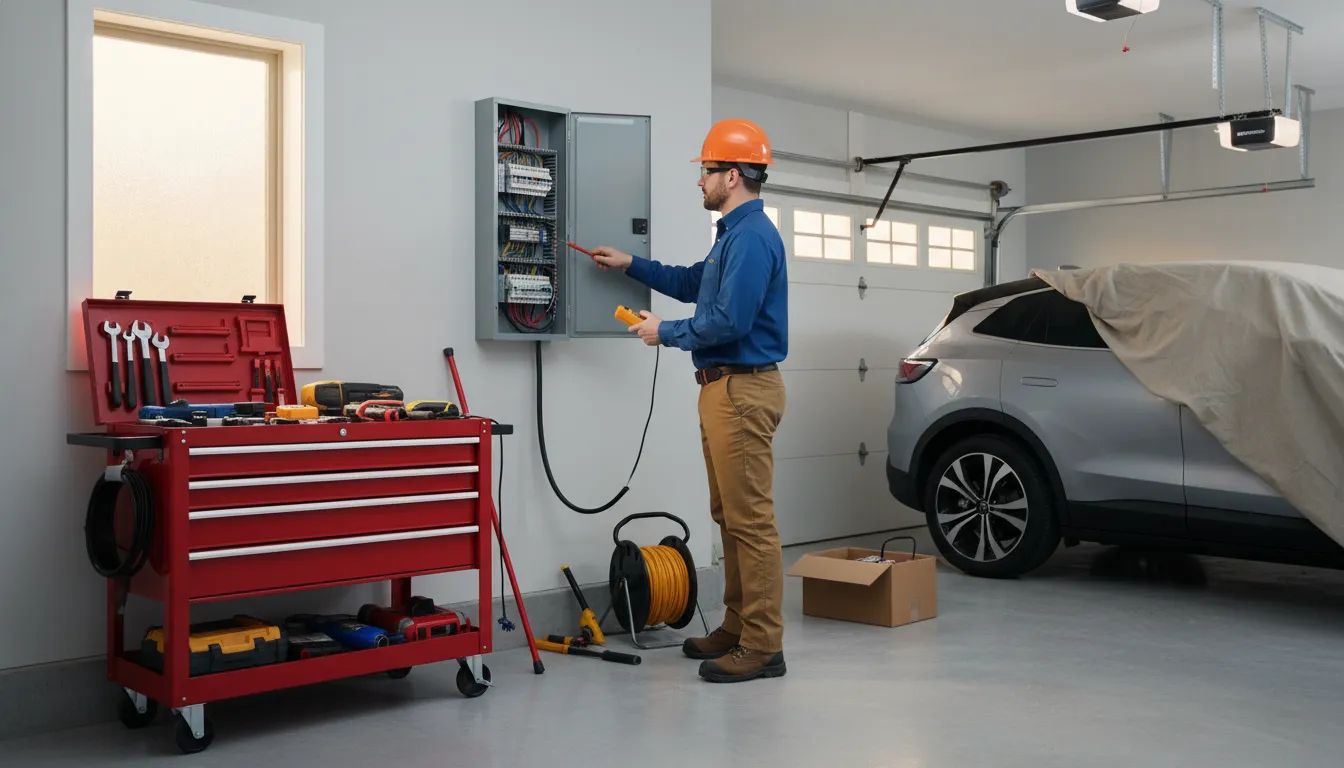
When comparing Level 1 vs Level 2 EV charging, you must think about your home’s power supply. Level 1 charging uses a standard 120-volt household outlet and adds about 5 miles of range per hour of charging. This slow rate is fine for some drivers, but Level 2 charging is much faster. But Level 2 requires a 240-volt power supply. A professional must evaluate your electrical panel capacity to see if it can support this system.
Older homes in Southlake or Frisco often have 100-amp panels that lack the room for new equipment. According to the federal guide on home electrical capacity, some homes have insufficient capacity for Level 2 chargers. An overloaded panel can trip breakers, melt wires, or start a fire. Adding a new charger often requires a panel upgrade to 200 amps.
Load calculations and high-demand appliances
Electricians run a detailed load calculation to find the total power your home needs. This check adds up the power from high-demand appliances like your air conditioner. The National Electrical Code considers EV charging to be a continuous load. This means the charger runs at full power for three hours or more, which heats up the wires.
Your electrical box must have available breaker space for a new double-pole breaker. Because of National Electrical Code continuous load rules, this circuit needs an extra 25% safety margin. Each Level 2 charger requires a dedicated electrical circuit. Without this dedicated line, the charger will overload your existing household circuits and create severe safety hazards.
Essential questions for your on-site evaluation
Before you choose a charger, we recommend scheduling an on-site evaluation with our team. During this visit, we look at your existing system and do the load calculation. This process gives you clear facts and upfront pricing before any work starts. You will know if you can safely install a Level 2 unit or if you need an upgrade.
An expert evaluation helps you avoid surprises during the installation. To help you prepare, here are several key questions you should ask our licensed electrician during your assessment:
- Does my current electrical panel have enough amp capacity for a Level 2 charger?
- Do I have enough physical space in my breaker box to add a new double-pole breaker?
- Will my high-demand appliances, like the air conditioner, conflict with my EV charging times?
- Does my local city require a specific building permit for this installation?
- Would a panel upgrade to 200 amps be the best choice for future-proofing my home?
Our expert electricians at TLC are ready to guide you through this electrical check. We ensure your system stays fully compliant with local codes. This upfront work prevents unexpected power outages and protects your home investment.
How to choose the right charger without overbuilding
Buying an electric vehicle is an exciting step, but choosing how to power it can feel confusing. You do not want to spend thousands of dollars on electrical upgrades if you do not need them. You also do not want to be stuck with a slow charger. Finding the right balance between Level 1 vs Level 2 EV charging depends on your driving habits and your home layout. A careful comparison will help you make a smart choice for your budget.
Key factors for your home charging setup
Your daily driving distance is the most important factor in this choice. Level 1 charging uses a standard 120-volt household outlet, which is already available in almost every garage. Many EV owners can meet their daily driving needs by charging overnight with Level 1 equipment. This option requires no extra installation cost if you have a dedicated electrical circuit ready to use. It adds about five miles of range per hour, which is perfect for short commutes.
If you drive longer distances or have a busy schedule, you may need a faster option. Level 2 equipment provides higher-rate AC charging through a 240-volt power supply. The U.S. Department of Energy recommends Level 2 for drivers with longer commutes or larger batteries. But this setup requires a professional installation. A qualified technician must evaluate your electrical panel capacity to ensure your home can handle the extra continuous electrical load.
You should also look at the type of Level 2 equipment you choose to buy. Basic models deliver power. Smart chargers offer advanced features like charging timers and wireless displays. Buying a basic model can save you money if you only need a simple way to charge your car.
A step-by-step selection process
To find the best option for your home without spending too much, you can follow a simple process. These steps will help you evaluate your daily needs and find the right equipment. This diagnostic approach ensures you do not waste money on unnecessary work.
- Calculate your daily mileage to see how much range you need to add each night. If you drive less than 30 miles a day, a standard Level 1 charger is usually enough to keep your battery full.
- Check your vehicle type and battery size, as plug-in hybrids charge much faster than full battery electric vehicles. A hybrid might need just a few hours on a standard outlet, while a full electric car will take much longer.
- Inspect your parking area to find the nearest outlet. You should check if it sits on a dedicated circuit. If you must charge outdoors, you will need to buy outdoor-rated charging equipment to ensure safety.
- Consider your future vehicle plans if you expect to buy another electric car later. Installing a higher-power Level 2 circuit now can save you money by avoiding another upgrade in the future.
- Evaluate your electrical panel to see if it has space for a new 240-volt circuit breaker. If your panel is full, you will need a professional panel upgrade before you can install a faster Level 2 system.
- Research local utility programs to see if you can get rebates. Many power companies offer utility incentives to help offset the cost of purchasing and installing your new equipment.
Book a code-compliant Level 2 EV charger assessment for your DFW home today.
Frequently Asked Questions
How long does it take to charge an electric vehicle with Level 1 vs Level 2?
Standard Level 1 chargers add about five miles of range per hour. This charging speed requires 20 to 50 hours to fully charge a battery electric vehicle. In contrast, Level 2 systems provide seven to eleven kilowatts of power. This setup charges most electric cars in six to ten hours. According to Qmerit, plug-in hybrids with smaller batteries can achieve a full charge in two to four hours.
Can I install a Level 2 EV charger on my own?
No. Homeowners should not install Level 2 chargers themselves. Level 2 charging requires a dedicated 240-volt circuit. Working with high-voltage systems carries significant risk of shock and electrical fire. Additionally, the National Electrical Code classifies EV charging infrastructure as a continuous load, according to the Alternative Fuels Data Center. A licensed electrician must complete the installation. Professionals will manage permits and perform load calculations. You can schedule a professional EV charger installation to guarantee safety and compliance.
Does Level 2 EV charging require a professional electrical assessment?
Yes. A professional evaluation is highly recommended before installing a faster charging system. A qualified electrician needs to check your home’s electrical panel capacity. They must ensure your panel can handle the extra electrical demand. Some homes have insufficient capacity and require a panel upgrade. As noted by the Alternative Fuels Data Center, a professional contractor can calculate your total electrical load and add circuits to accommodate the vehicle. This step prevents overloaded circuits and potential fire hazards.
What is the cost difference between Level 1 and Level 2 EV charger installation?
Level 1 charging generally costs nothing upfront since the equipment comes with your vehicle and plugs into a standard outlet. Conversely, a Level 2 installation involves purchasing the charging unit and hiring an electrician to install a dedicated electrical circuit. According to the Alternative Fuels Data Center, utility and state incentives are often available to offset these installation costs. A professional evaluation provides clear pricing for the circuit installation and any necessary panel upgrades.
Ready to upgrade your DFW home charging speed?
Sticking with a slow standard household outlet means waiting multiple days for your electric vehicle to charge, which limits your daily driving schedule. Without a dedicated electrical circuit, you risk overloading your home electrical panel and causing serious electrical hazards or frequent breaker trips. Booking a professional panel capacity review today prevents these safety issues and ensures your DFW home is fully prepared for faster charging.
Ready to schedule? Contact TLC Electrical to schedule an EV charger assessment and secure your appointment. Our experienced electricians are ready to evaluate your home system and help you choose the best Level 2 charging setup. We provide upfront pricing and professional service to ensure your new charging station is installed safely and to current code standards.