
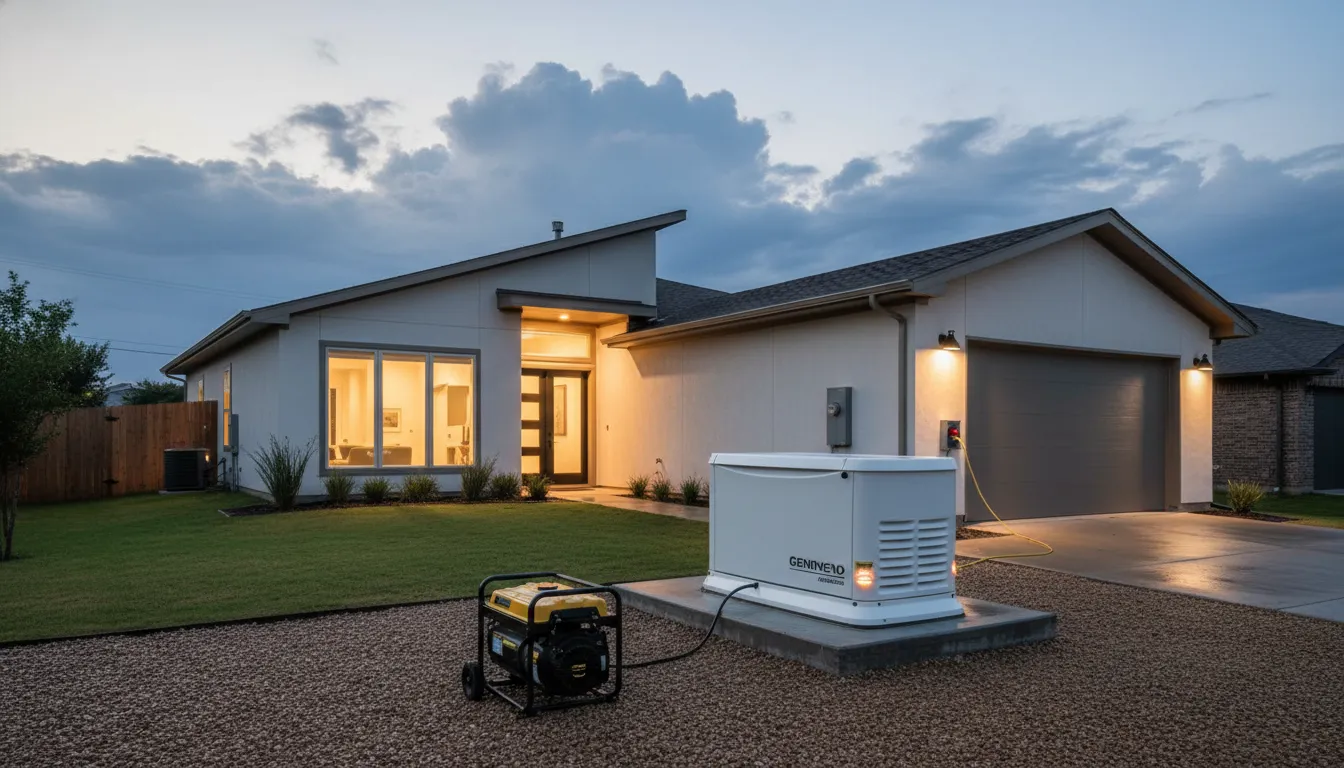
North Texas storms can cut power when heat, food, and safety matter most. The backup plan you choose decides whether power returns automatically or demands outdoor setup in dangerous weather.
Whole home generator vs portable generator choices in North Texas come down to safe connection, loads, and work during an outage. A whole home standby unit is permanently installed, starts automatically, and uses a transfer switch and load calculation to serve home needs safely. A portable generator may power essentials at a lower upfront cost, but requires outdoor placement, fuel handling, and manual startup. If connected to household circuits, it requires a properly installed transfer switch. Never connect a portable generator directly through an outlet, since unsafe backfeeding can endanger workers and your electrical system. As a Generac Certified Installer, TLC Electrical can size a standby system, integrate the transfer switch, and explain clear options for Dallas-Fort Worth storm readiness.
If you are weighing emergency power before the next outage, the right answer depends on circuits, safe connection, and storm-time effort. Next, Whole home generator vs portable generator: the quick North Texas answer lays out that choice in plain terms. Here’s how.
Whole home generator vs portable generator: the quick North Texas answer
For many Dallas-Fort Worth homeowners, the quick answer starts with what must stay powered during an outage. A whole home standby generator is a permanent system that starts automatically when utility power fails. A portable generator is brought out, fueled, connected, and started by hand. It is usually chosen to supply selected essentials rather than broad home coverage.
North Texas storms can interrupt normal routines at the worst time. The right plan is not a promise that every outage will be easy. It is a clear choice about cooling needs, refrigeration, medical equipment, lighting, communication, and safe operation when conditions are stressful.
The basic difference
In a whole home generator vs portable generator decision, convenience and load planning often separate the choices. A standby system is installed outside the home and paired with transfer equipment. An electrician sizes it around the circuits or loads the homeowner wants to support. Homeowners exploring that option can review the professional whole home generator installation process before selecting equipment.
| Comparison point. | Whole home standby generator. | Portable generator. |
|---|---|---|
| Setup. | Permanent outdoor installation. | Stored until needed. |
| Starting power. | Automatic with transfer equipment. | Manual setup and startup. |
| Load plan. | Sized for chosen home loads. | Used for limited essentials. |
| Fuel handling. | Planned as part of the system. | Fuel must be available and managed. |
| Outage routine. | Less hands-on work during storms. | Requires hands-on operation. |
Which option fits an outage plan?
A portable unit can make sense when a household accepts manual operation and needs a smaller emergency power plan. It still requires careful placement, correct connections, fuel planning, and a firm list of which items it will serve. Trying to power more than the planned load can create trouble when the household needs stability most.
A standby unit can suit homeowners who want automatic backup for selected home needs during severe weather outages. It can reduce the work required after power goes out, especially if no one is home. It must still be properly sized and installed; it does not remove the need for an outage plan.
Planning before the next storm
Start by listing the circuits that matter during an outage, such as refrigeration, lighting, communications, and cooling priorities. Then compare that list with the capacity and operating routine of each generator option. TLC Electrical explains the benefits of standby generators for homeowners considering a permanent backup system.
A North Texas homeowner should ask one practical question before choosing: who will set up power safely during a storm? If automatic operation and broader planned coverage matter, a standby system may fit. If selected essentials and hands-on operation fit the household, a portable unit may be enough.
Why transfer switches and safety matter most
In a whole home generator vs portable generator choice, safe connection matters as much as power output. A generator should power chosen circuits without creating new hazards at the panel, cords, or exhaust outlet.
Carbon monoxide and cord safety
The CDC’s generator guidance warns that fuel-burning generators make carbon monoxide and should never run indoors. Carbon monoxide cannot be seen or smelled, so safe placement is vital. Keep the unit outdoors, away from doors, windows, and air intakes.
Extension cords can serve a small group of plug-in items, but they do not turn a portable unit into whole-home backup. Cords must match the load and outdoor use. They also add trip hazards, open-door routing issues, and more setup work during an outage.
- Place a portable generator outdoors in a safe, open location before starting it.
- Use only cords made for the appliance load and outdoor conditions.
- Do not connect a generator to a wall outlet or improvise a panel connection.
Backfeeding and manual transfer switches
Backfeeding can happen when a portable generator sends power into home wiring through an unsafe connection. This can put workers and household circuits at risk. A manual transfer switch keeps generator power separate from utility power and directs it to planned circuits.
For a portable generator, a licensed electrician can install an inlet and match selected circuits to the generator’s output. That approach avoids a web of cords. It also gives the homeowner clear steps for safely starting and connecting backup power.
A transfer switch is not a way to make a portable generator power every load. It is a safe way to route the power available. Circuit choices should reflect needs such as refrigeration, lights, or key medical equipment.
Automatic switching for standby power
A whole-home standby system is built around an automatic transfer switch. When utility power fails, the switch moves assigned home loads to generator power. When grid power returns, it shifts those loads back. This fixed setup reduces manual connection steps during an outage.
Standby equipment still depends on proper electrical work. Load planning, panel connection, permits, and code checks belong with a licensed electrical professional. TLC Electrical’s professional whole home generator installation overview explains that installed backup-power process.
The safer option is not simply the generator that can run more equipment. It is the system with a planned transfer method, safe exhaust location, and sound installation before the next outage.
What can each generator type actually power?
Essential circuits on portable power
In a whole home generator vs portable generator choice, start with the loads that must stay on during an outage. A portable generator may support a focused plan: a refrigerator, a few lights, internet equipment, or approved medical devices.
This plan calls for hands-on load management. Some appliances use more power when a motor first starts than while it runs. That brief startup demand matters, especially if the refrigerator and another motor-driven device switch on together.
With portable power, homeowners often need to choose their essential circuits in advance. A medical device may take priority over a convenience outlet or extra room lighting. Clear priorities make it easier to manage an outage without expecting one unit to power every circuit.
Central air and larger loads
Central air conditioning changes the power plan because the system includes large motor loads. The needed startup power must be considered along with refrigerator, lighting, internet, and medical equipment needs. A portable generator should not be assumed to run all of these loads together.
A standby generator can be selected for a broader set of circuits, including planned HVAC support. It can also be designed around the home’s key loads, rather than a loose list of appliances. TLC outlines this approach through its whole-home standby generator service for Dallas-Fort Worth homeowners.
Load calculations and system sizing
Backup power needs vary from one home to the next. One household may focus on refrigeration, essential lights, internet access, and a medical device. Another may also need central air, home office equipment, or more than one refrigerator during an outage.
For standby generator work, TLC performs load calculations and system sizing for the circuits the homeowner plans to support. The review includes the power used while equipment runs and the added demand when motors start. This process keeps the recommended system tied to the home’s planned backup use.
Load planning also shows the practical difference between the two generator types. A portable setup may fit a limited essential-circuit plan that a homeowner manages during the outage. A standby system may fit a plan that includes more circuits and less hands-on switching.
Before choosing a system, homeowners can list the circuits that protect health, food, comfort, and communication. They can then discuss whether automatic backup power is part of the goal. TLC’s guide to professional whole home generator installation explains the installed system path in more detail.
Cost, convenience, and maintenance tradeoffs
Comparing the full quote
When comparing a whole home generator vs portable generator, start with total ownership needs, not one sticker price. A portable unit can fit a smaller backup plan with more hands-on work. An installed standby project may include equipment, site planning, electrical work, fuel work, startup, and future service.
Ask for a written quote based on the loads you want during an outage. TLC Electrical’s generator installation cost considerations can help you review line items, instead of comparing equipment alone. This makes it easier to see what is included and what needs site review.
- Needed circuits, generator size, and transfer equipment.
- Fuel source, operating fuel needs, and refueling plans.
- Placement, access, electrical work, and startup testing.
- Warranty terms, routine maintenance, and service support.
Outage convenience and storage
A portable generator asks more of the homeowner during an outage. You need a storage plan, ready fuel, setup time, and a way to power selected loads. You must also plan for refueling while the outage continues.
A standby system is selected for a different routine. Fixed placement and transfer equipment support automatic operation when utility power fails. If that convenience matters, review the benefits of standby generators alongside the installed scope and service plan.
Noise and storage may shape the choice before a storm arrives. A portable unit needs a place to be stored, moved, and used when needed. A standby unit remains in its planned outdoor location, so discuss placement and sound expectations during the quote.
Testing and long-term reliability
Both options need attention between outages. A portable plan includes fuel planning, condition checks, and a test routine before severe weather. A standby plan includes scheduled service and testing, so automatic backup is more likely to be ready.
Long-term reliability depends on fit and upkeep, not generator type alone. Ask who will perform testing, routine maintenance, warranty work, and repairs. Also ask how the fuel plan changes during a long outage, when refueling may be less convenient.
For Dallas-Fort Worth homeowners, the tradeoff is practical. Balance the installed scope against manual work, storage space, noise expectations, fuel access, and the maintenance plan you will follow.
How should you choose for your home?
The whole home generator vs portable generator choice starts with your outage plan, not the equipment label. Think through what must stay on, how you will use the system, and what setup your home can support safely.
Your outage and load needs
A portable unit may fit a short outage plan built around a refrigerator, lights, and device charging. A standby system may fit homes where cooling, medical needs, work, or long outages make automatic backup power more important.
Before comparing equipment, write down your needs in plain terms. Note which rooms must remain usable and which appliances can wait. This list helps an electrician size safe backup power instead of planning from a guess.
- Review your outage pattern. Note how often you lose power and how long past outages lasted. Include storms, travel, and any times no one may be home to start equipment.
- List must-run loads. Separate true needs from comforts. Refrigeration, lighting, internet equipment, medical devices, sump pumps, security systems, and selected HVAC loads may change generator sizing.
- Set a working budget. Compare the purchase cost with installation, connections, maintenance, and fuel use. A smaller starting price is not the full cost of safe backup power.
- Check fuel access. A portable unit needs fuel that can be stored and refilled during an outage. A standby option may use an available natural gas or propane supply.
- Map the timeline. Portable backup may be quicker to prepare when the safe connection setup is ready. A standby installation needs planning, sizing, placement, and electrical work before use.
- Plan for safe operation. Decide where equipment can run and how power reaches needed circuits. Do not assume a cord or panel connection is safe without review.
- Consider future plans. A home addition, new HVAC system, electric vehicle charger, or aging-in-place needs may affect today’s selection. Choose with the next few years in mind.
Safe setup before storm season
Portable generator safety is part of the decision, not an afterthought. The CDC generator safety guidance says to keep a generator outdoors, at least 20 feet from doors, windows, and vents.
Also plan how power will enter the home. An electrician can review circuits, inlet locations, and transfer equipment, so a portable setup does not create an unsafe connection. A standby system also requires correct placement, load planning, and transfer switch integration.
A clear next step
If your list includes central cooling, frequent outages, or automatic operation, ask for a home electrical evaluation. If your plan covers only a few essential loads, an evaluation can still show a safe portable setup and realistic limits.
TLC Electrical can review loads, fuel access, panel needs, placement, safety setup, timing, and future plans. Read about professional whole home generator installation, then request clear options and upfront pricing for your Dallas-Fort Worth home. Ask about two-hour arrival windows when scheduling an evaluation.
Where TLC Electrical fits into the decision
A decision based on your home’s loads
Choosing a whole home generator vs portable generator starts with what must stay powered during an outage. In Dallas-Fort Worth, TLC Electrical reviews needed circuits and expected loads before recommending a standby system. This step helps match generator size to priorities such as refrigeration, lighting, HVAC, or medical equipment.
TLC is a Generac Certified Installer for standby generator work. Its backup generator installation service covers the path from equipment choice through final startup. An electrician can calculate loads instead of using a general wattage guess. The review also shows how a planned generator will connect to the home.
Installation and safe power transfer
A standby generator is more than outdoor equipment. The project includes transfer switch integration, so selected home circuits can receive generator power during an outage. If the panel cannot support the planned setup, TLC can explain if a panel upgrade is needed. This work falls within its residential electrical services.
Safety also matters when a homeowner is comparing standby power with a portable option. Portable generators must remain outdoors and at least 20 feet from doors, windows, and vents. This direction comes from the CDC’s generator safety guidance. A fixed standby installation avoids portable setup steps, but it still needs correct wiring, transfer controls, and safety checks.
Once the system is installed, TLC performs startup testing and safety verification. Testing checks that the generator starts as intended and that transfer equipment works with the electrical system. The electrician can also review maintenance needs. Homeowners then know which planned loads the installed system is set up to serve.
What to expect from TLC
TLC serves homeowners across Dallas-Fort Worth as an independent company focused on electrical work. Homeowners can learn about its local background on the TLC Electrical about page. For a generator project, one electrical team can assess the service panel, plan a needed upgrade, and install the standby connection.
The service process includes upfront pricing, so recommended work can be reviewed before installation begins. TLC offers 2-hour arrival windows, which makes an in-home assessment easier to plan. During that visit, homeowners can compare portable backup and a Generac standby system. The discussion can cover loads, installation scope, transfer switch details, and safety needs.
Frequently Asked Questions
Is a whole home generator worth the cost compared to a portable generator?
A whole home generator can make sense for North Texas homeowners who want automatic backup power and fewer manual steps during storm outages. A portable generator may fit a smaller budget when the goal is powering selected essentials. According to TLC Electrical, standby systems provide automatic operation, while portable units require manual setup and fueling. The right choice depends on needed loads, fuel access, and installation costs.
How do I safely connect a portable generator to my home?
Never plug a portable generator into a household outlet. Connecting selected circuits safely requires a properly installed manual transfer switch and inlet box. The transfer switch keeps generator power separated from utility lines, reducing backfeed risk for crews and equipment. An electrician can calculate the loads you need during an outage and install the correct equipment for those circuits, as described by TLC Electrical.
What safety precautions are necessary when using a portable generator?
Run a portable generator only outdoors, never in a home, garage, carport, or enclosed area. The CDC says to keep generators at least 20 feet from doors, windows, and vents. Direct exhaust away from the house, use carbon monoxide alarms, and allow the unit to cool before refueling. Carbon monoxide is colorless and odorless, so safe placement is essential.
Can a portable generator run my central air conditioning system?
Some larger portable generators may support an air conditioner, but capacity alone does not settle the question. Central air has a high startup load and must be matched to the generator, panel connection, and transfer equipment. Portable units are generally intended for selected essentials, while standby systems can be sized around heavier home loads. A qualified electrician should complete a load calculation before central air is included in an outage plan.
Does a whole home generator require professional installation?
Yes. A whole home standby generator is permanently connected to the electrical system and fuel source, with a transfer switch that manages utility and backup power. Installation requires correct sizing, placement, permits where applicable, and safe panel integration. TLC Electrical is a Generac Certified Installer, and its generator installations include transfer switch integration, load calculation, and safety code compliance for Dallas-Fort Worth homes.
Schedule your North Texas generator evaluation
If you are comparing a whole home generator vs portable generator, the safest next step is a professional electrical evaluation. TLC Electrical can review your panel capacity, essential loads, transfer switch needs, and standby generator options for your Dallas-Fort Worth home.
Call (817) 424-2684 to schedule backup generator service, or visit our backup generator installation page to learn how our Generac Certified Installer team approaches sizing, installation, and safety verification.