
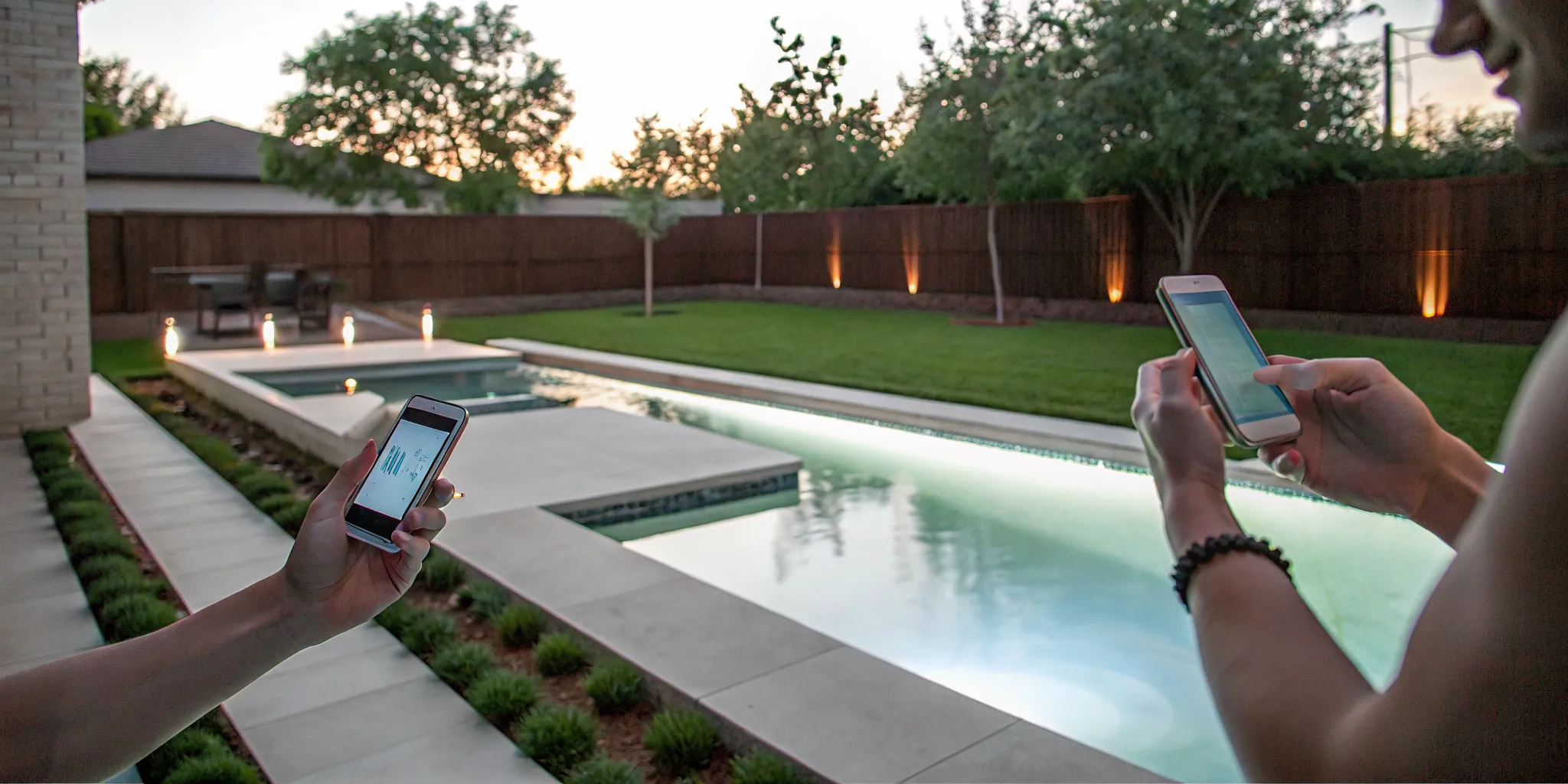
Pool automation installation connects compatible pumps, heaters, lights, and other equipment to a central control system. Depending on the selected equipment, homeowners may manage schedules and settings from a panel or phone app. The right design depends on existing equipment, electrical capacity, communication protocols, and the features you want to control. A professional evaluation can identify practical upgrades without assuming that every brand or device will work together.
You might wonder which parts of your backyard setup can be linked to a smart hub. Seeing what pool automation installation can control is the first step toward a simpler summer.
What pool automation installation can control
Modern pool automation installation connects your equipment to one easy system. This setup lets you manage your pool from a wall panel or a phone app. You can handle standard gear like pumps and filters with one touch. This centralized control is key for both ease of use and saving energy in your DFW home.
Pumps, heaters, and filters
The heart of your pool is the pump and filter system. A smart controller lets you set run times and speeds for your pool pumps. You can also start the heater from your phone before you get home. This ensures the water is ready for a swim when you are. Automated systems help keep water moving to keep the pool clean and safe for everyone.
Consistent water flow is vital for your pool. It helps mix chemicals and stops algae from growing. Smart tools monitor these systems day and night. Experts from the National Institutes of Health note that proper care is needed for all types of home pools to keep people safe. Automation makes this care much easier to handle.
Lighting and water features
You can also integrate pool lighting into your system. This lets you change colors or set light themes for a party. If you have waterfalls or deck jets, you can turn them on with a tap. This adds style to your DFW backyard without the need to flip manual switches by the equipment pad.
Safety is a big part of pool light setup. Each light must use a ground-fault circuit interrupter to prevent shocks. High standards from government health codes require these safety tools for underwater lights. A professional installation ensures your smart lights meet these local rules and keep your family safe while they swim.
Custom schedules and app control
The best part of a new system is the custom schedules. You can program your pool to clean itself during off-peak power hours. Most systems use a simple app that works on any smartphone. This gives you total control over your pool from anywhere in the world. You no longer have to walk out to the equipment shed in the Texas heat to change a setting.
High-value pool automation upgrades for DFW homes
Modern pool tools give you better control over your backyard. Many homes in the DFW area have older pools built in the 1990s or early 2000s. These often lack the smart tech found in newer builds. Upgrading your pool equipment can change how you manage your water and power use. You can link your pumps, heaters, and lights into one simple system.
Working with a pro ensures your new gear meets local safety codes. Proper professional pool automation installation helps your system run well for years. A licensed team can check your wiring and add safety tools like GFCIs to protect you from shock. These devices are key for any underwater lighting systems to keep your family safe while they swim.
Automate your pool pump and heater
Your pump and heater are the most important parts of your pool. A smart system lets you set a tight plan for water flow. This helps keep your pool clean without wasting power. You can start the heater from your phone before you get home. This way, the water is at the best heat when you are ready to jump in.
Automation also helps with water health. It keeps the water moving at the right times to stop algae growth. Most systems use a phone app to let you monitor your pool equipment from any spot. You can check the heat or turn on the filter with one tap. This saves you trips to the equipment pad in the Texas heat.
Lighting and custom pool scenes
Smart lights can make your pool look great at night. You can integrate pool lighting and automation to create custom “scenes.” With one button, you can dim the yard lights and turn the pool water blue or green. You do not have to flip five different switches to set the mood for a party.
Timed lighting also adds safety to your yard. You can set the lights to turn on as soon as the sun goes down. This keeps the pool area bright so people do not trip or fall. A smart hub makes it easy to change these times as the seasons shift. You get a safer yard and a better look with very little work.
| Upgrade Type | Primary Benefit | Control Method |
|---|---|---|
| Pump Scheduling | Better water flow | Phone app or timer |
| Heater Control | Set water heat early | Remote app access |
| Smart Lighting | Custom yard scenes | One-tap presets |
| Salt Systems | Keep water clean | Auto-level checks |
Timers and relay controls
Simple timers are the first step to a smart pool. Newer relay hubs can handle more than just the pump. You can link your spa jets or even a yard water feature to the same clock. This keeps all your outdoor gear on one plan. It stops you from leaving a fountain or a light on all night by mistake.
Using a pro to set up these hubs is vital. They know how to wire high-power gear so it does not trip your breakers. A solid setup can help you prevent pool injuries by keeping all wires in check. This gives you a system that is both easy to use and safe for your home.
How freeze protection fits into pool automation
North Texas winters bring sudden drops in temperature that can put your pool at risk. Frozen pipes or a cracked pump housing often lead to high repair costs that are easy to avoid. Modern pool automation installation helps solve this by using sensors to monitor the air. When the temperature falls near 38°F, the system starts the pumps automatically. This keeps water moving through the plumbing, which prevents it from turning to ice.
The role of freeze guard sensors
A freeze guard is a small sensor that acts as the brain of your winter safety plan. It sends a signal to your control board to turn on the filter pump and booster pumps when it gets too cold. Moving water stays liquid even when the air is well below 32°F. By circulating water through the pipes and heater, the system protects your equipment from the force of expanding ice. This level of pool equipment repair prevention is a key part of a smart setup.
Monitoring and manual checks
While automation is helpful, it is not a replacement for regular checks. Sensors can fail due to age or weather, so you should test yours before the first cold snap. Homeowners must still monitor their equipment during a hard freeze to ensure the pumps are running as they should. The Pentair safety guide notes that even with automation, you should verify flow and clear any debris from skimmers. This dual approach of smart tech and human oversight keeps your backyard safe all winter.
Professional setup and safety
Correct wiring is vital for your freeze protection to work when you need it most. A licensed electrician ensures the sensors connect properly to the automation panel and follow local safety codes. Proper bonding and GFCI protection are also essential to prevent electrical hazards in wet conditions. Professional installation gives you peace of mind that your pool will handle the next Arctic blast without damage.
Are app-based pool controls worth it?
Managing a pool takes a lot of time. You have to check the water, the heat, and the pump often. New apps make this work much easier. You can control your whole pool from your phone. For many local homeowners, professional pool automation installation is a great way to handle filters and lights in one spot.
Check your pool from anywhere
Smart pool tech lets you check your pool when you are not home. You can see the water heat or check the pump from work. These systems also send alerts if there is a glitch. This helps you find small faults before they lead to big fix costs. It is a good way to start upgrading your pool equipment so it runs well. If you catch a problem early, you save money and stress.
Set times and save power
Automation makes it easy to set times for your pump and heater. You do not have to walk out to a control box anymore. You can use an app to set run times when power costs are low. This keeps the water moving well all day. Good water flow is the best way to keep the pool clear. It also cuts down on the hard work you have to do. Studies show that proper pool maintenance is key to keeping people safe.
Smart lights and signal range
New systems let you integrate pool lighting and automation with one tap. You can change light colors or set timers for your spa from your seat. These tools are fun, but they need a strong web signal. If your Wi-Fi is weak near the pool, the app might not work. In these cases, you may need a signal booster. This ensures your phone can always talk to your pool gear without a lag.
Keep a manual backup
Even with a great app, you should keep manual switches. There may be times when the web goes down. Having real buttons at the pool pad means you can still turn off the pump or lights. A pro will set up automation for your pool pumps so you can still use manual flips. This gives you the best of both: easy tech and a safe way to run things if the app fails.
Will new automation work with existing pool equipment?
Many homeowners in the Dallas-Fort Worth area wonder if their older pools can support modern tech. Most pools built in the 1990s and early 2000s did not come with smart controls. But you can usually add a professional pool automation installation to your current setup. The process starts by looking at your pump, heater, and lights to see if they can “talk” to a new hub. Not every brand works with every hub, so a careful check is the first move.
Checking your pump and heater
The pump is the heart of your pool. Older single-speed pumps can often be turned on or off by a smart hub. But for the best energy savings, many people choose upgrading your pool equipment to a variable-speed pump. These pumps allow you to adjust flow rates from your phone. Heaters also need a look. Most modern heaters have a remote port that lets them connect to a controller. If your heater is very old, it might only have a manual knob. This makes smart control much harder. You might need a new control board or a full heater update to get remote features.
Integrating lights and accessories
Your pool lighting can also join the smart system. If you have old lights, you can integrate pool lighting and automation with a few wiring changes. Modern LED lights offer many colors that you can change from an app. Other tools like salt cells or pool cleaners can also link up. The key is the link wire that sends data between parts. Some systems use an RS-485 link, which is a common way for pool gear to share data. We check your heater and pump to see if they have the right ports for this link. If they do not, we might use a relay to control the power instead. This is still a good way to manage basic needs like run times.
Reviewing electrical and safety needs
Your electrical panel must have enough room for the new gear. Adding a smart hub requires extra breakers and wiring. Safety is the top goal when mixing water and power. Every ground-fault circuit interrupter (GFCI) must work perfectly to stop shock risks. Regular safety checks are a must for any residential swimming pool to keep your family safe while they swim. A licensed electrician can check your main panel to see if it can handle the extra load. If your home has an older panel, you might need a sub-panel just for the pool gear. This ensures your home grid stays stable while the pool runs.
To see if your pool is ready for a smart upgrade, follow this five-step guide:
- Make a list of every pump, heater, and light model you have in your yard.
- Check if your pump is a single-speed or variable-speed motor to find power needs.
- Look for a remote-control port or wire on the back of your heater unit.
- Ensure your home electrical panel has at least two open breaker slots for the hub.
- Ask a licensed electrician to verify your wiring and GFCI protection before you buy gear.
While most gear is compatible, some older parts might need a small upgrade. It is better to find these needs before you buy a new system. A pro can help you pick a hub that matches your existing brands so everything runs well together. This ensures your smart pool works without a hitch for years to come.
Why electrical safety matters during installation
Safe work is the most vital part of any pool project. Mixing water and power can lead to big risks if the job is not done right. When you start a professional pool automation installation, your expert must focus on safety first. This keeps your family safe and helps your gear last longer. Proper set up prevents shocks and keeps the system from failing during a storm.
Every pool type carries some risk, from big in-ground pools to small hot tubs. Modern systems need many parts to work together. This means more wires and more spots where things could go wrong. A pro check ensures that every part of the power path is secure. Using the right tools and parts is the only way to avoid health and safety risks in your backyard.
Critical shock protection
A ground-fault circuit interrupter or GFCI is a key safety tool. It watches the flow of power to your pool. If the tool finds a leak, it cuts the power in a split second. This quick stop can save lives by blocking a shock before it happens. Most older pools may not have the best GFCI parts. A new install is a great time to check these tools.
Your pro should test every GFCI during the work. This is key for underwater pool light systems where the risk is high. These lights sit in the water and need a strong shield. If a light seal leaks, the GFCI is the only thing that stops the power from hitting the water. Do not skip this check when you add new smart controls.
Grounding and bonding check
Grounding and bonding are two different tasks that work as a team. Grounding gives power a safe path to the dirt if there is a short. Bonding ties all the metal parts of your pool together. This includes ladders, pumps, and even the pool frame. Bonding keeps all these parts at the same power level. This stops a person from becoming the path for a shock when they touch two things at once.
- Bonding wire checks to find rust or breaks.
- Grounding rods to pull stray power away.
- Main panel checks for safe circuit ties.
- Metal frame ties to keep the area safe.
A good pro will check the bonding wire during the install. Over time, these wires can rust or break. If the bonding fails, you might feel a small zing when you touch the water. This is a big red flag that something is wrong. Fixing these paths during the automation set up ensures that your pool stays a safe zone for swimming.
Proper load check and boxes
Smart pool systems add a new load to your home power box. Your pro must check if your main panel can handle the extra work. If you add a heater, pump, and lights all at once, you could trip a breaker. A load check ensures that the system has its own circuit. This stops your pool from blinking out when you turn on the AC inside your house.
All pool gear needs a strong box to stay dry. Tough boxes protect the smart brains of your system from rain and heat. In Texas, the sun can be harsh on plastic and wires. Using heavy-duty boxes and tight seals keeps the tech safe for years. Your pro will pick the best spot for these boxes to keep them away from splash zones.
Working with a pro means you get a system that follows the rules. They know which wires to use and how to bury them deep enough. They also ensure that your equipment upgrades meet high standards. This peace of mind is worth the cost of a pro install. You can relax knowing that your smart pool is safe for your kids and guests to use all summer long.
How to plan a practical pool automation upgrade
Planning a smart pool starts with a clear goal. Most people want to spend less time on chores and more time in the water. A good professional pool automation installation lets you control your pool from a phone. This change turns a complex task into a simple one. It puts every switch and timer in the palm of your hand. You can check your water or change the heat from anywhere. This makes your daily routine easy and gives you back your time.
Find your main goals
Before you buy anything, think about what you use most. Do you want to warm up the spa before you get home? Do you want your lights to turn on at sunset? Modern systems use a smartphone app to manage pumps, heaters, and filters. This setup saves power and makes pool care easy. You can set schedules that keep the pump running when power costs are low. Pick your biggest needs first to get the most value. This ensures your new system does just what you need.
List your current gear and problems
Look at the gear you have now. Many pools built in the 1990s or early 2000s do not have smart controls. You should check the age and brand of your pump, heater, and salt cell. Also, take note of any current issues. Do you have noisy motors or leaky valves? Are there lights that do not turn on? Write down the model numbers for every part you see. This list helps an expert see what you can keep and what you need to swap out. It also helps them give you a fair and clear price for the work.
What to expect during a pro check
A pro will check your pool for safety and local code rules. They look at things like ground-fault circuit interrupters (GFCIs). These parts protect people from shocks in the water. The National Electrical Code requires GFCIs for pool lights to keep swimmers safe. Proper safety checks are needed for all pools to prevent injuries and stay safe while swimming. In DFW cities like Southlake or Frisco, local codes are very strict. An expert from TLC Electrical will look at your panel to see if it has room for new parts. They will check the wires for wear and tear. This ensures your system meets all laws and works right from the start.
Frequently Asked Questions
Are pool automation systems worth it?
Yes. A pool smart system saves time and money by making your pool gear run much better. You can control your pump, heater, and lights from a single phone app for more ease. This helps you use less power each month and keeps your pool water clean all year. Many owners find that the smart system pays for itself through lower energy bills. It also makes pool care much easier for busy families in the DFW area.
How much does pool automation installation cost?
The cost for a pro pool automation installation usually ranges from $2,500 to $7,500 for most homes. This price depends on the type of system you choose and how much gear you want to control. A basic setup costs less, while a system that runs everything from lights to water features costs more. According to TLC Electrical, pro setup ensures your pool stays safe and meets all local rules. Getting a pro quote is the best way to plan your budget.
Can you add automation to an older pool?
Yes. Many newer systems work well with older pools built in the 1990s or early 2000s. These older pools often lack smart controls because the tech was too pricey when they were first built. Modern kits let you add these features without the need for a full pool rebuild. This upgrade can make an old pool feel new and much simpler to manage. It is a great way to bring your backyard up to date while improving how your pool works.
How long does pool automation installation take?
Most pro teams can finish the install job in about one or two days. The time it takes depends on the state of your current gear and how many new parts you need. A complex system with many parts may take a bit longer to test and set up the right way. A skilled pro will check all your wiring and make sure the app works on your phone. This fast work means you can start using your smart pool right away.
Ready to simplify your DFW pool maintenance?
Keeping a pool in good shape in North Texas takes a lot of work. If you do not upgrade your old timers and switches now, you may face higher power costs and lost time each week. Old systems often fail when you need them most, which can lead to cloudy water or equipment that stops working in the heat. When you choose to switch to a smart system today, you get back hours of your life and peace of mind. You can check your pool from your phone and know it is safe and clean without any stress. Do not wait for a major breakdown to make a change that helps your home and your wallet.
Ready to schedule a pool control check? Call (817) 424-2684 to talk to a licensed electrician about your pool today.