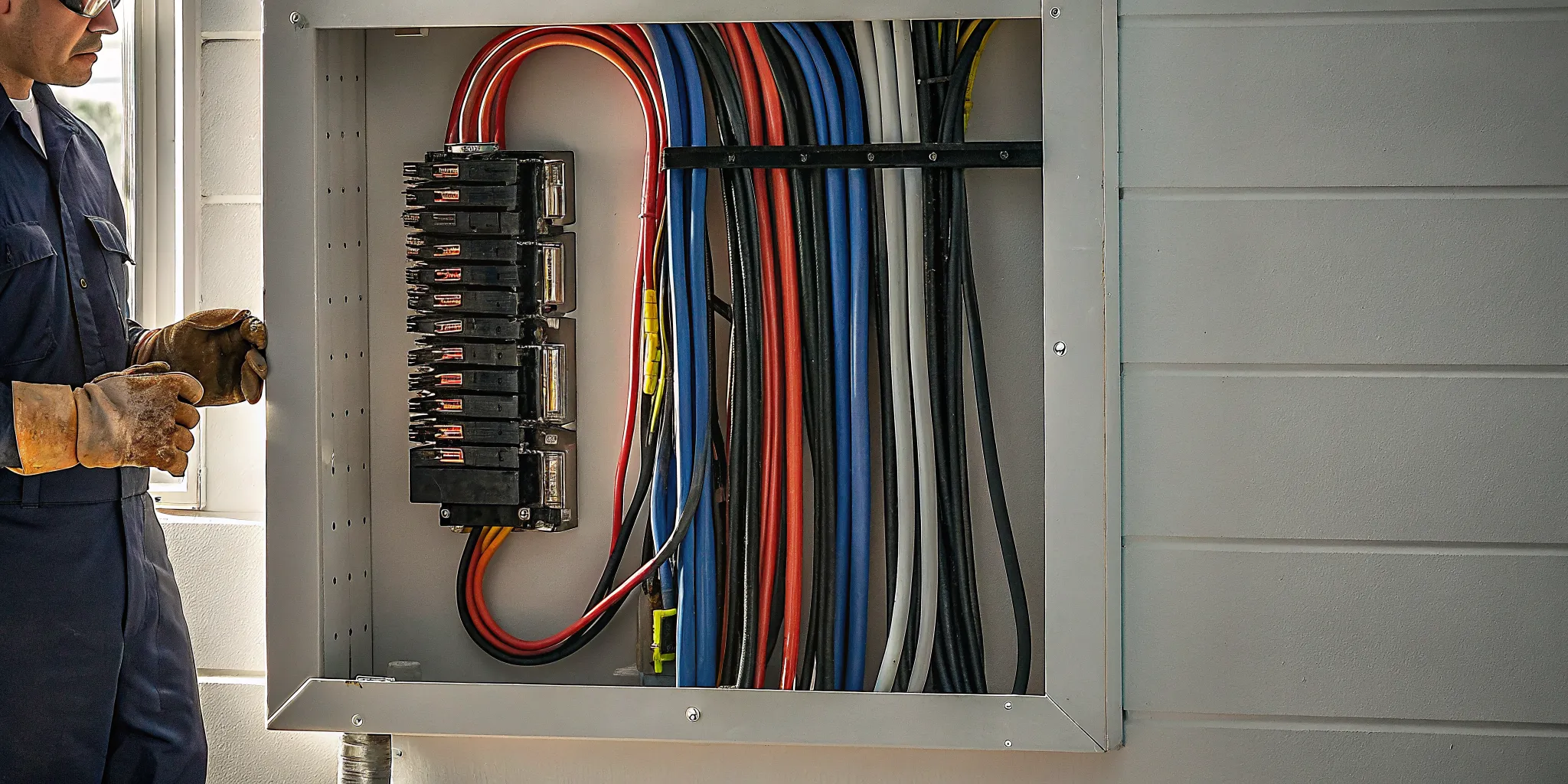
Your home’s breaker box works silently in the background, a forgotten hero in a metal case. Its one job is to protect your family and property from electrical fires and overloads. But what happens when this guardian gets old? An aging electrical panel can become the biggest fire risk in your home. Signs like rust, a faint burning smell, or buzzing sounds are urgent warnings that your system is failing. Ignoring them is a gamble you can’t afford to take. A timely breaker box replacement isn’t just an upgrade; it’s a critical safety measure that restores your home’s first line of defense and gives you invaluable peace of mind.
For homeowners comparing a breaker box replacement with a larger service upgrade, our cost to upgrade an electrical panel guide explains DFW price ranges, permits, and capacity planning.
Need Fast & Reliable Electrical Service?
Our licensed electricians are ready to help with repairs, installations, and emergency services. Get expert help you can trust today.
Key Takeaways
- Listen to Your Home’s Electrical System: Don’t ignore persistent issues like frequently tripping breakers, flickering lights, or burning smells from your panel. These are clear indicators that your system is overloaded and requires a professional safety assessment.
- Budget for a Complete and Compliant Upgrade: The cost of a new panel includes more than just the box itself; it covers expert labor, permits, and materials. Upgrading your amperage is often part of the project, ensuring your home can safely handle modern appliances.
- Protect Your Home and Family by Hiring a Pro: Replacing a breaker box is a dangerous task that should only be done by a licensed electrician. Professionals handle the high-voltage risks, manage required permits, and ensure the work is code-compliant, protecting your home’s safety and your insurance coverage.
What Is a Breaker Box?
Think of your breaker box as the central hub of your home’s entire electrical system. This metal box, also called an electrical panel, takes the main power feed from the utility company and safely distributes it throughout your house. Every light, outlet, and appliance gets its power from a dedicated circuit that starts right here. Its job is to manage the flow of electricity, making sure every room has the power it needs to function while also protecting your home from electrical hazards. Without it, you wouldn’t be able to flip a light switch or charge your phone.
How It Powers Your Home
Inside the breaker box, you’ll find rows of switches called circuit breakers. Each breaker is a small but mighty safety device designed to protect a specific circuit. If a circuit tries to draw too much electricity, which can happen if you plug in too many devices or if there’s a short circuit, the breaker automatically trips and shuts off the power. This single action is crucial for preventing electrical fires, protecting your expensive electronics from damage, and keeping your family safe from the risk of electric shock. It’s your electrical system’s first line of defense against overloads.
How Long Do Electrical Panels Last?
Most electrical panels have a lifespan ranging from 20 to 50 years. The exact duration depends on the quality of the original installation, your home’s electrical demands, and how well it has been maintained. If you live in an older home, it’s important to know the age of your panel. Over time, internal components can wear out, and older panels often can’t handle the power demands of modern appliances and technology. Plus, electrical codes and safety standards are updated regularly, so a panel that was safe 30 years ago might not be considered safe today.
Warning Signs You Need a New Breaker Box
Your electrical panel is the command center for your home’s power, but it won’t last forever. Over time, panels can become outdated, damaged, or simply unable to keep up with your family’s electrical needs. Ignoring the warning signs can lead to damaged appliances, power failures, and even serious fire hazards. It’s important to know what to look for so you can address problems before they become emergencies. If you notice any of the following issues, it’s a strong signal that your breaker box may need a professional inspection and potential replacement.
Constantly Tripping Breakers
Are you making frequent trips to the breaker box to reset a tripped circuit? While an occasional trip is normal, constant tripping is a clear sign of a problem. If your breakers trip every time you run the microwave and the air fryer at the same time, your panel is telling you it’s overloaded. This often happens in older homes where the electrical system wasn’t designed for modern power demands. A panel that can’t handle your appliances isn’t just an inconvenience; it’s a safety risk. Our team can perform a full range of electrical services to diagnose the issue and determine if an upgrade is needed to safely power your home.
Visible Rust, Corrosion, or Burn Marks
Take a look at your electrical panel. Do you see any rust on the metal box or corrosion on the circuit breakers? These are red flags that moisture has entered the panel, which can lead to connection failures and short circuits. Water and electricity are a dangerous combination, so any sign of rust means your panel is no longer safe. Even more alarming are scorch marks or discoloration around the breakers. This indicates overheating and is a serious fire hazard. If you see any of these signs, avoid touching the panel and call a licensed electrician right away to assess the damage.
Flickering Lights or Dead Outlets
If your lights dim whenever you turn on a large appliance like your AC unit, it’s not just a quirky feature of your house. Flickering or dimming lights often point to loose wiring or an overloaded circuit within your panel. Your electrical system is struggling to provide consistent power, which can wear out your appliances and electronics over time. Similarly, if you have outlets that have stopped working for no apparent reason, the issue could stem from a faulty breaker or a problem inside the panel itself. These are clear indicators that you need a professional to investigate your home’s electrical system.
Strange Smells or Sounds from the Panel
Your breaker box should be seen and not heard, and it definitely shouldn’t have a smell. If you ever notice a distinct burning odor coming from your electrical panel, treat it as an emergency. A burning smell is a serious warning sign that wires are overheating and their protective insulation is melting, creating a significant fire risk. You might also hear buzzing, hissing, or crackling sounds from the panel. These noises often mean a wire is loose or a breaker is failing. Don’t wait to act. Turn off the main breaker if you can do so safely and call a professional immediately.
Your Panel Can’t Handle Your Appliances
Modern life runs on electricity. From big-screen TVs and powerful kitchen appliances to home office setups, our power consumption has grown significantly. If you’re planning to add a major new appliance, like an EV charger or a hot tub, your current panel might not be up to the task. Many older homes have panels with 60 or 100 amps, but today’s standards often require 200 amps to safely manage the load. If your panel is full and has no room for new circuits, or if it simply can’t support your lifestyle, it’s time for an upgrade. A new panel ensures you have the power you need, safely and reliably.
Breaking Down the Cost of a Breaker Box Replacement
Let’s talk numbers. Figuring out the cost of a breaker box replacement can feel a bit overwhelming because it’s not a one-size-fits-all price. The final bill depends on your home’s specific needs, the type of panel you choose, and the complexity of the job. While the national average can give you a ballpark idea, that number is made up of several key components. Understanding what goes into the total cost will help you feel more prepared and confident when you get a quote. We can break it down into a few main categories: the cost of professional labor, the new panel itself, any upgrades you might need, and permits.
Professional Labor
This is almost always the biggest piece of the pie, and for good reason. Replacing an electrical panel is a complex and potentially dangerous job that should only be handled by a licensed and insured electrician. You’re paying for their expertise, safety training, and the peace of mind that comes with knowing the job is done right. Electrician rates typically range from $50 to $150 per hour. A straightforward panel swap might take four to eight hours, but if your project involves significant rewiring, it could take much longer. When you hire a professional for electrical services, you’re investing in your home’s safety and long-term reliability.
New Panel and Materials
The breaker box itself is surprisingly not the most expensive part of the replacement. A new panel can cost between $100 and $200, depending on the brand and size. Of course, the panel isn’t the only material needed. The total cost also includes new circuit breakers, wiring, connectors, and other small hardware required to complete the installation safely and correctly. Your electrician will source all the necessary high-quality materials, so you don’t have to worry about finding the right parts. This ensures everything is compatible and up to current electrical codes.
Upgrading Your Amperage
Many older homes were built with 60- or 100-amp panels, which was plenty of power decades ago. Today, our electrical demands are much higher. If you’re planning to add major appliances, a hot tub, or an EV charger installation, you’ll likely need to upgrade to a 200-amp panel. A higher-amperage panel costs more, but it’s essential for powering a modern home without constantly tripping breakers. Think of it as expanding the electrical highway to your house, allowing more power to flow in safely and efficiently when you need it.
Permit and Inspection Fees
Because a breaker box replacement is a major electrical project, it requires a permit from your local municipality. This isn’t just bureaucratic red tape; it’s a critical safety measure. The permit process ensures that the work is documented and that a third-party inspector will verify the installation meets all local and national safety codes. A professional electrician will handle the entire permitting process for you, from filing the paperwork to scheduling the final inspection. These fees are a standard part of the job and guarantee your new panel is officially approved and safe.
Potential Hidden Costs
Sometimes, a seemingly simple panel replacement can uncover other necessary work. It’s good to be aware of potential extra costs that might pop up. For instance, if the electrician discovers that your home’s wiring is outdated, damaged, or not up to code, some rewiring may be necessary, which can add to the final cost. Other factors that can increase the price include moving the panel to a new location or needing to upgrade the exterior meter box. A thorough initial assessment from your electrician will help identify these issues early on, giving you a clear and comprehensive quote before work begins.
What to Expect During a Breaker Box Replacement
Thinking about a breaker box replacement can feel like a huge undertaking, but it doesn’t have to be overwhelming. When you work with a professional electrician, the process is structured, safe, and surprisingly straightforward. Knowing what happens from start to finish can give you peace of mind and help you feel confident in your decision to upgrade your home’s electrical system. The entire project is centered around making your home safer and more capable of handling your modern electrical needs, from your kitchen appliances to your EV charger.
A professional replacement isn’t just about swapping out a metal box; it’s a systematic upgrade. From the initial assessment to the final power-up, every action is deliberate and follows strict safety protocols. This ensures the job is done right the first time, preventing future hazards and giving you a reliable electrical system for years to come. Your electrician acts as your project manager, handling everything from permits to inspections, so you can relax. Understanding the workflow demystifies the process and highlights why trusting a licensed professional is so important. Let’s walk through the five key stages of a professional breaker box replacement so you know exactly what to expect when our team arrives at your door.
Step 1: The Initial Assessment
The process begins with a thorough initial assessment. A licensed electrician from TLC Electrical will visit your home to evaluate your current electrical system. They’ll inspect the condition of your existing breaker box, calculate your home’s total electrical load requirements, and check for any outdated or problematic wiring. This step is essential for determining the right size and type of new panel for your needs. A detailed assessment helps identify potential hazards and ensures the new panel can safely meet your home’s electrical demands. This focus on a proper evaluation is a fundamental part of home electrical safety and sets the foundation for a successful upgrade.
Step 2: Handling Permits and Codes
Before any work begins, your electrician will handle the necessary permits. Most areas in Dallas-Fort Worth require a permit for major electrical work like a panel replacement. This isn’t just red tape; it’s a crucial safety measure. Obtaining a permit ensures that the project complies with local building codes and national safety standards. A professional team like ours manages this entire process for you, from filing the paperwork to scheduling inspections. Following these procedures ensures your installation meets all safety regulations, protecting your home and family while keeping your property compliant. It’s one less thing for you to worry about.
Step 3: Safely Disconnecting the Old Panel
On the day of the replacement, safety is the top priority. The first action your electrician will take is shutting off the main power to your home at the meter. Once the power is confirmed to be off, they will carefully disconnect and remove the old breaker box. During this process, each wire is meticulously handled and labeled to ensure it can be correctly reconnected to the new panel. This methodical approach is critical for preventing electrical shock and other dangers. Proper disconnection is a non-negotiable part of the job and a core principle of home electrical safety that professionals are trained to execute flawlessly.
Step 4: Installing the New Box and Circuits
With the old panel out of the way, it’s time to install the new one. The electrician will securely mount the new breaker box and connect it to the main power line. Next, they will carefully wire each circuit to the appropriate new circuit breaker, ensuring all connections are tight and secure. It’s vital that the new panel is correctly rated for your home’s electrical load to prevent future issues. The entire installation is performed according to the manufacturer’s instructions and local rules, following the electrical code basics that are designed to guarantee safety and proper function for years to come.
Step 5: Final Inspection and Power-Up
After the new breaker box is fully installed, a final inspection is often required by your local city or municipality. The inspector will review the work to confirm that everything is up to code. This third-party verification provides an extra layer of assurance that the job was done correctly and safely. Once the installation passes inspection, your electrician will restore power to your home. They’ll test each circuit to make sure everything is working as it should. This final check verifies that the installation is compliant with all applicable rules, as outlined in the National Electrical Code, and that your home’s electrical system is officially upgraded and ready to go.
Why You Shouldn’t Replace a Breaker Box Yourself
I love a good DIY project as much as anyone, but when it comes to your home’s electrical system, some jobs are best left to the professionals. Replacing a breaker box is at the top of that list. It might seem like a way to save money, but the risks involved are incredibly high, and a single mistake can have devastating consequences for your home and your family’s safety. Let’s walk through exactly why this is a project for a licensed electrician.
The Dangers of DIY Electrical Work
The main reason to avoid a DIY breaker box replacement is the extreme danger. You’re not just dealing with a single circuit; you’re working with the central hub that receives all the power from the utility line. Experts warn that replacing an electrical panel is very dangerous, and attempting it without proper training could lead to severe electrical shock, injury, or even cause a fire. Even if the main breaker is off, the main lugs that connect to the utility’s service line remain live. Contacting them can be fatal. A professional electrician has the training, experience, and specialized equipment to de-energize the system safely and perform the replacement without putting anyone at risk.
The Importance of Permits and Inspections
Beyond the immediate physical dangers, there are also legal and financial reasons to hire a pro. Major electrical work, including panel replacement, almost always requires a permit from your local municipality. This process ensures that the job is done correctly and adheres to strict safety standards. As one financial guide notes, DIY electrical work may not comply with local building codes, which can create major problems down the line. If unpermitted work is discovered, you could face fines and be required to have it redone by a professional. It can also void your homeowner’s insurance, leaving you unprotected in case of an electrical fire. A professional handles all the permitting and inspections for you.
How to Choose a Licensed Electrician
So, how do you find the right person for the job? The most important step is to always hire a licensed electrician to handle your electrical panel. Start by verifying their license and making sure they carry liability insurance and workers’ compensation. Ask for references from previous jobs and look at online reviews. A reputable company will be transparent about its qualifications and happy to answer your questions. At TLC Electrical, our team of experienced electricians is fully licensed and insured, providing safe and reliable electrical services across the Dallas-Fort Worth area. We prioritize your safety and ensure every job is done right and up to code.
Schedule Your Electrical Panel Upgrade with TLC Electrical
Upgrading your electrical panel is one of the most important investments you can make in your home’s safety and functionality. If your panel is over 25 years old or you’re noticing some tell-tale warnings, it’s time to call a professional. Things like frequently tripped breakers, flickering lights when you run the microwave, or outlets that feel warm are more than just minor annoyances. They are your home’s way of telling you its electrical system is under strain and could be a serious hazard.
According to experts, there are several signs that indicate you might need an upgrade, and ignoring them can lead to dangerous situations, including electrical fires. While the thought of a replacement might seem daunting, understanding the process can help. The cost can vary, but replacing an electrical panel usually costs around $1,342 on average. This is absolutely a job for a licensed electrician, as incorrect installation can void your homeowner’s insurance and, more importantly, put your family at risk.
At TLC Electrical, our team of licensed and insured electricians is ready to handle your upgrade with the care and expertise you deserve. We provide a full range of electrical services across the Dallas-Fort Worth area, ensuring your home’s power system is safe, reliable, and up to current codes. An upgrade not only protects your home but also prepares it for modern demands, like EV chargers or new appliances. Don’t wait for a small issue to become a major problem. Contact us today to schedule an assessment and keep your home powered safely for years to come.
Related Articles
- Panel Upgrades: Why They Matter Today – TLC Electrical
- What to Know Before Upgrading Your Electrical Panel in Your DFW Home – TLC Electrical
- Our Blog – TLC Electrical
Need Fast & Reliable Electrical Service?
Our licensed electricians are ready to help with repairs, installations, and emergency services. Get expert help you can trust today.
Frequently Asked Questions
How long will my power be out during a breaker box replacement? You should plan for your home to be without power for most of the replacement process, which typically takes between four and eight hours. Your electrician will need to shut off the main power supply for safety before they can begin working. They will give you a more precise timeline during the initial assessment so you can prepare accordingly. The good news is that a professional works efficiently to get your power restored as quickly and safely as possible.
Do I really need a whole new panel if only one breaker keeps tripping? Not always, but it’s a strong possibility. A single, frequently tripping breaker can sometimes be faulty and easy to replace. However, it often points to a bigger issue, like an overloaded circuit or a panel that can no longer support your home’s electrical demands. The best approach is to have a licensed electrician diagnose the root cause. They can determine if a simple repair will suffice or if the recurring trips are a symptom of a more serious problem that requires a full panel upgrade.
How can I tell how old my electrical panel is? Finding your panel’s age can sometimes be a bit of detective work. Often, you can find an installation date written on a sticker inside the panel door, left by the original electrician. If not, you can look for the manufacturer’s name and model number, then search online for its production years. If you live in an older home and the panel looks original, it’s safe to assume it’s as old as the house and likely due for an inspection.
Is a 200-amp panel the right choice for every home? A 200-amp panel has become the modern standard for most new homes, but it isn’t a universal requirement for every house. The right amperage depends entirely on your specific needs. A smaller home with gas appliances might function perfectly well on a 100-amp or 150-amp panel. However, if you have a larger home, use many high-draw electric appliances, or plan to install an EV charger or a hot tub, upgrading to 200 amps is a smart and often necessary investment for safety and capacity.
What happens if my panel fails the final inspection? A failed inspection might sound scary, but when you hire a reputable professional, it’s just a bump in the road, not a dead end. If an inspector finds an issue, they will provide a detailed list of the necessary corrections. Your electrician is then responsible for fixing those specific items to meet the code requirements. A professional company stands by their work and will handle all the corrections and schedule a follow-up inspection at no additional labor cost to you.